
Fig rust
Cerotelium fici
Description
Symptoms
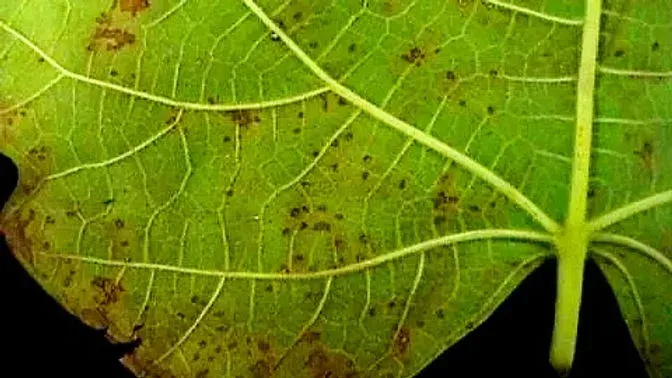
The most characteristic symptoms appear on the undersides of the leaves as small, yellow-to-orange or brown spots. These spots represent the development of pustules, which are clusters of fungal spores.
On the upper surface of the leaves, the infection manifests as yellowish or necrotic spots. As the infection progresses, these areas may merge, leading to large portions of the leaf dying off.
Severe infestations cause premature yellowing of the leaves, often referred to as chlorosis, followed by rapid leaf drop. The plant may become severely defoliated, which severely impacts its vitality.
A fine, powder-like substance on the leaf surface is a clear indicator of active spore production. This dust is easily visible when rubbing the affected area, indicating the presence of the pathogen.
In advanced cases, the disease can spread to the twigs and fruits, causing stunted growth and preventing the plant from producing healthy fruit crops.
Pathogen
The causal agent of this disease is the fungal pathogen Cerotelium fici, which belongs to the Basidiomycota phylum. It is an obligate parasite that specifically infects various species of the Ficus genus, including Ficus carica.
The fungus feeds on the host plant's tissues, extracting nutrients and disrupting normal plant physiology. Its life cycle involves the formation of telia and uredinia on the underside of the foliage.
Spores are produced in large quantities and are easily dispersed by wind, splashing water, and even insects. This allows the disease to spread rapidly within a greenhouse or an orchard environment.
The pathogen is capable of surviving on fallen leaves, serving as a primary source of inoculum for the next growing season. It thrives in humid conditions and can be persistent if not managed correctly.
Understanding the biology of Cerotelium fici is crucial for timing fungicide applications effectively. Its ability to produce multiple generations of spores within a season makes it a challenging pest.
Conditions for development
Fig rust flourishes in environments characterized by high relative humidity and moderate temperatures. The fungus requires moisture on the leaf surface for its spores to germinate effectively.
Temperatures ranging from 18°C to 26°C are ideal for the rapid development of Cerotelium fici. These conditions are frequently met in overcrowded greenhouses or during rainy seasons.
Poor air circulation plays a major role in the spread of the fungus. When plants are crowded together, moisture persists on the foliage, creating a perfect microclimate for the infection to take hold.
Inadequate cultural practices, such as overhead irrigation that keeps the foliage wet for extended periods, significantly increase the risk of an outbreak in both home and commercial setups.
The disease cycle is often perpetuated by failure to remove contaminated plant material. Fallen leaves harboring spores act as a reservoir, re-infecting the plant once weather conditions become favorable.
Why it matters
The primary damage caused by fig rust is the loss of photosynthetic area due to premature leaf drop. Without healthy foliage, the tree cannot produce enough energy to support growth and fruit production.
Trees affected by rust become weak and susceptible to other environmental stresses, including drought, cold temperatures, and secondary pest attacks by sap-sucking insects.
For commercial growers, fig rust leads to significant economic losses. Reduced yield, poor fruit quality, and the cost of disease management programs negatively impact profitability.
In decorative settings, the unsightly appearance of rusty leaves makes the plants less desirable. Heavy defoliation may take a long time to recover from, affecting the plant's long-term health.
In worst-case scenarios, a fig plant that is consistently attacked by rust for several seasons can suffer from crown dieback and may eventually perish if left untreated.
Protection
Effective control starts with strict sanitation. All fallen leaves must be raked and destroyed to reduce the fungal spore load in the immediate environment of the tree.
Fungicidal treatments are often necessary for managing severe outbreaks. Copper-based sprays or specialized systemic fungicides approved for ornamental or food crops should be applied according to the label.
Pruning is essential to improve airflow through the canopy, which helps foliage dry quickly after rainfall or irrigation. Ensuring adequate spacing between plants is another vital preventative measure.
Avoiding overhead irrigation and ensuring the plant is kept in a well-ventilated area can significantly inhibit the growth of Cerotelium fici by limiting moisture availability.
- Remove and burn infected leaves.
- Apply fungicides during the early stages.
- Increase plant spacing to improve ventilation.
- Avoid overhead watering methods.
- Disinfect pruning tools between uses.
Discussion
No discussions yet — be the first.