
Cercospora leaf spot
Cercozoa
Description
Symptoms
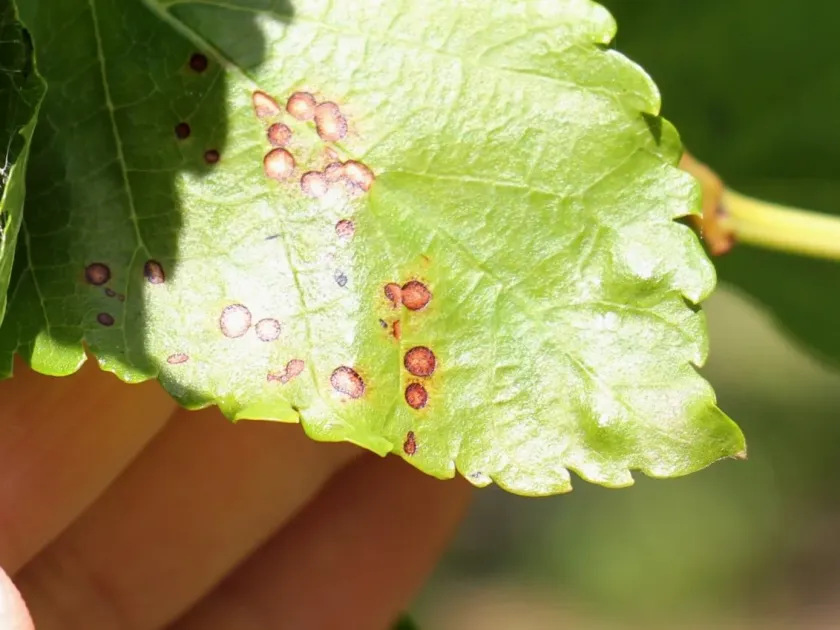
The primary symptom is the appearance of small, circular to irregular spots on the leaves. Initially, these spots are light-colored, but they often develop a reddish-purple or dark-brown margin as they mature.
As the disease progresses, the centers of the spots may turn grey or tan due to the production of conidia, giving them a dusty appearance under high magnification or humid conditions.
When the infection is severe, the spots coalesce, leading to extensive necrosis of the leaf blade. Eventually, the affected leaves turn yellow (chlorotic), wilt, and fall off prematurely.
Besides leaves, the disease can also manifest on petioles and stems, appearing as elongated lesions that can weaken the plant's structural integrity.
Early diagnosis is vital, as the symptoms often begin in the lower canopy where microclimates are more humid, making initial detection difficult without regular scouting.
Pathogen
Cercospora leaf spot is a prevalent fungal disease caused by various species of the genus Cercospora. It is one of the most economically significant foliage diseases affecting a wide range of horticultural and field crops.
The pathogen typically survives in crop debris, where it persists as mycelium or stromata. During favorable spring conditions, the fungus produces conidia, which serve as the primary inoculum spread by wind, rain splashes, and irrigation water.
The fungus enters plant leaves primarily through the stomata. Once inside, it develops within the intercellular spaces, releasing toxins like cercosporin, which cause localized cell death and the characteristic spotting observed on foliage.
The disease is characterized by a high degree of host specificity, meaning that individual species of the fungus are typically adapted to infect specific plant hosts, such as sugar beets, celery, or soybeans.
Persistence of the pathogen in the soil or on infected seeds makes it a recurring threat that requires consistent management across multiple growing seasons.
Conditions for development
Cercospora leaf spot thrives in warm and humid environments. Temperatures between 20°C and 30°C, combined with prolonged leaf wetness, are optimal for rapid disease development.
Frequent rainfall, heavy dews, and high relative humidity levels allow the fungus to produce and disperse spores continuously throughout the growing season.
Cultural practices that promote poor air circulation, such as planting at high densities, significantly increase the severity of the disease by maintaining moisture on the leaf surfaces.
Fields with inadequate weed management often experience earlier and more severe outbreaks, as weeds can act as alternate hosts for the fungal pathogen.
The timing of the initial infection is strongly correlated with the onset of warm summer weather, making mid-to-late season periods particularly critical for disease management.
Why it matters
The disease causes significant damage by reducing the plant's photosynthetic capacity. This leads to a substantial decrease in the accumulation of biomass and essential storage compounds.
In sugar beets, for example, the disease causes a sharp decline in sugar content and root weight, which significantly impacts the economic returns of the harvest.
For vegetable crops, the damage is primarily aesthetic and qualitative, as damaged leaves reduce the marketability and storage life of the produce.
Premature defoliation caused by severe outbreaks can lead to plant death or stunted development, significantly increasing the risks of secondary pathogen infections.
The cumulative effect of these losses, combined with the high cost of fungicides, makes Cercospora leaf spot a major limiting factor in the profitable production of many crops.
Protection
Effective management begins with strict crop rotation, ensuring that susceptible host plants are not planted in the same field for at least 3 years to break the infection cycle.
Deep plowing and proper residue management are crucial to bury infected plant material, facilitating its decomposition by soil microorganisms and reducing the primary inoculum source.
Selecting resistant or tolerant cultivars is a cornerstone of integrated disease management, providing a sustainable way to minimize both yield loss and chemical reliance.
- Applying protective or systemic fungicides based on monitoring and disease forecasting models.
- Ensuring proper plant spacing to improve airflow and reduce humidity levels.
- Maintaining effective weed control programs to remove potential pathogen reservoirs.
Consistent scouting and early intervention are essential to preventing widespread epidemics and maintaining plant health throughout the peak growing period.
Discussion
No discussions yet — be the first.