
Cercospora leaf spot of cucurbits
Cercospora citrullina
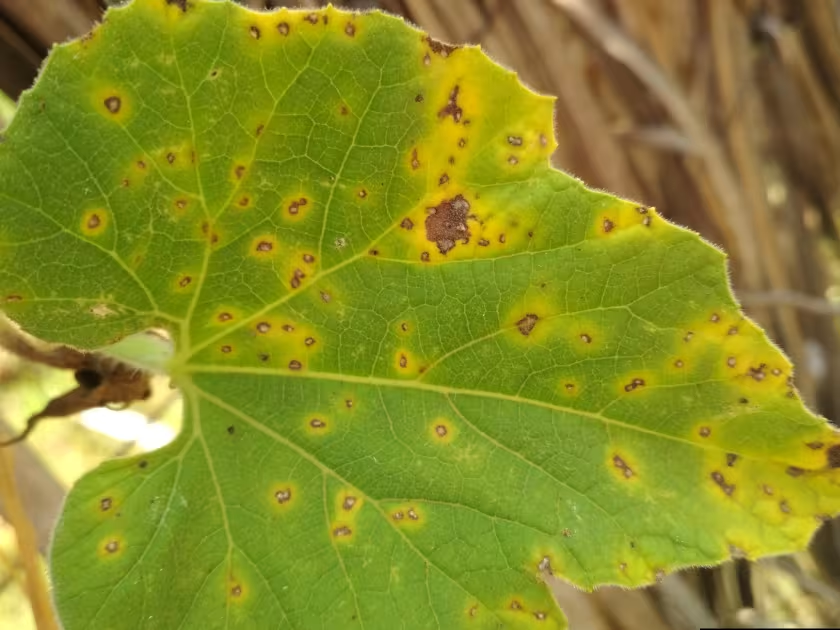
Description
Symptoms
The initial symptoms appear as small, circular or angular spots, typically 2–4 mm in diameter, on the older leaves. These spots feature a characteristic greyish-white center surrounded by a dark brown or purple halo.
Under conditions of high relative humidity, a greyish-olive velvety mold develops on the underside of the leaf spots. This mold consists of conidiophores and abundant conidia, which give the spots a fuzzy appearance.
As the infection progresses, the spots enlarge and frequently coalesce, killing large sections of the leaf blade. This extensive tissue damage leads to curling and premature death of the foliage.
While the disease primarily targets the leaves, heavy infestation causes significant defoliation. This exposure of the stems and fruits can lead to further damage due to lack of shade and reduced nutrient flow.
Plants affected by severe Cercospora leaf spot often appear scorched, and the canopy may dry out completely, which severely disrupts the plant's ability to complete its reproductive cycle.
Pathogen
The causal agent of this disease is the fungus Cercospora citrullina (synonym: Cercospora cucurbitae). It is a filamentous fungus belonging to the class Hyphomycetes, which specifically targets cucurbit crops.
The pathogen survives the winter in infected plant debris left in the field or in the soil. It can persist as mycelium or conidia, making contaminated soil a major source of primary inoculum for subsequent planting seasons.
During the growing season, the fungus spreads primarily through airborne conidia. These spores are dispersed by wind, splashing rain, or overhead irrigation, facilitating the rapid spread of the disease within the field.
Once a conidium lands on a susceptible leaf surface, it germinates under moist conditions. The fungus produces a germ tube that enters the leaf tissue through the stomata, subsequently colonizing the internal cellular structure.
The disease cycle can repeat multiple times throughout the season, especially under humid conditions, leading to rapid disease escalation and potential widespread outbreaks across commercial farms.
Conditions for development
The development of Cercospora leaf spot is strongly favored by warm and humid weather conditions. Optimal growth occurs at temperatures ranging between +25°C and +30°C.
High relative humidity, typically above 80%, is essential for the germination of spores and the infection process. Frequent rainfall, heavy morning dews, and prolonged fog are critical environmental factors for disease spread.
Poor air circulation within dense canopies creates a microclimate that retains moisture on the leaf surfaces for longer periods, significantly increasing the probability of fungal infection.
Agronomic practices that leave infected crop residue on the field surface promote the survival of the pathogen, providing a ready source of inoculum for the next crop cycle.
Plants under stress—due to nutrient deficiency, waterlogging, or insect damage—are significantly more susceptible to infection by Cercospora citrullina compared to healthy, well-managed plants.
Why it matters
The primary economic impact of this disease is the drastic reduction of the photosynthetic leaf area. When leaves die prematurely, the plant loses its ability to synthesize energy for fruit development.
This loss of vigor directly translates into lower yields and reduced fruit quality. Fruits from severely infected plants often have lower sugar content, smaller size, and poor shelf-life.
In humid seasons, uncontrolled outbreaks can lead to yield losses ranging from 30% to 60%, significantly impacting the profitability of watermelon, melon, and cucumber production.
The rapid loss of foliage removes the natural canopy that protects the developing fruits, leading to sunscald, which further devalues the marketable portion of the harvest.
Ultimately, the weakened plants are more susceptible to secondary infections and opportunistic rots, which may lead to total collapse of the crop in severely infested fields.
Protection
- Implement a crop rotation schedule, avoiding cucurbits in the same field for at least 3–4 years.
- Remove and destroy all crop residues immediately after harvest to eliminate fungal overwintering sites.
- Utilize resistant or tolerant varieties of cucurbits developed for the specific growing region.
- Apply preventive fungicide treatments, including copper-based products or systemic fungicides like strobilurins and triazoles, at the first sign of symptoms.
- Ensure proper plant spacing to facilitate air movement and reduce humidity around the plant canopy.
Discussion
No discussions yet — be the first.