
Ceratiomyxomycetes slime molds
Ceratiomyxomycetes
Description
Symptoms
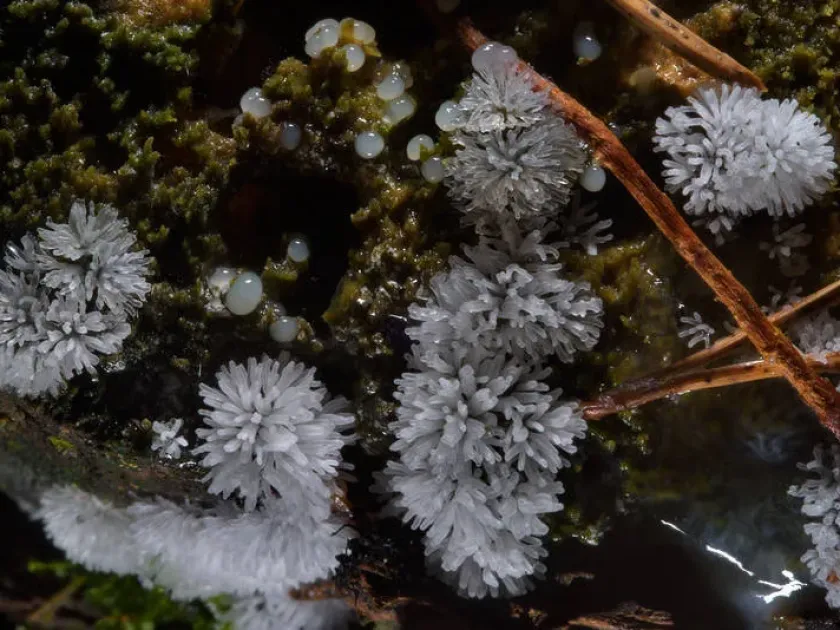
The presence of Ceratiomyxomycetes is typically marked by the appearance of translucent, white, or yellowish branched structures on wood or decaying plant material.
These organisms form distinct fruiting bodies that can look like tiny frosty patches or delicate, porous webs covering the surface of stems and debris.
Unlike parasitic fungi, they do not usually create lesions, but they form a noticeable coating that can obscure the plant's natural surface.
Under magnification, the spore-bearing structures appear as numerous individual thread-like stalks, which is a key diagnostic feature for this group.
As they mature, these structures may darken and become brittle, indicating the release of spores into the surrounding environment for further dispersal.
Pathogen
Ceratiomyxomycetes are a group of slime molds (myxomycetes) that primarily function as saprotrophs in damp environments.
Their biological cycle includes a mobile, multinucleated mass known as a plasmodium, which feeds by engulfing bacteria and fine organic particles.
While they are not true plant pathogens that feed on living tissue, they are often encountered by farmers due to their association with moist, decomposing organic matter.
Their classification is unique because they produce spores on the outside of specialized stalks rather than inside traditional fungal sporocarps.
They thrive by breaking down decaying organic matter, playing a vital ecological role in nutrient cycling, even if they appear invasive on crops.
Conditions for development
High relative humidity and the presence of liquid water are the primary requirements for the development and movement of these slime molds.
Poor ventilation in greenhouses or densely planted fields creates stagnant air pockets that favor their growth and spread.
The accumulation of plant residues and leaf litter provides the necessary substrate for their plasmodia to colonize and form reproductive structures.
Moderate temperatures combined with frequent moisture cycles promote the rapid development of these organisms during the growing season.
Excessive irrigation that keeps the lower parts of stems constantly wet increases the likelihood of colonization by Ceratiomyxomycetes.
Why it matters
Although they are not direct parasites, the primary concern is the mechanical obstruction of gas exchange and light interception on the plant surface.
They create a persistent micro-environment of moisture that makes the plant surface highly susceptible to secondary bacterial and fungal infections.
For ornamental crops and market-ready produce, the aesthetic impact of the white or yellowish crust can significantly reduce market value.
In some cases, the contact between the slime mold and the plant can lead to surface cell degradation, providing an entry point for true pathogens.
Young seedlings are most vulnerable, as heavy colonization by slime can potentially lead to stress or stunted growth under high humidity conditions.
Protection
Effective management begins with improving airflow and reducing relative humidity through proper crop spacing and ventilation in greenhouses.
Sanitation is critical; removing decaying plant matter and ensuring good field hygiene eliminates the nutritional substrate these molds require.
Adjusting irrigation systems to ensure the crop surface dries out between waterings is one of the most successful preventive strategies.
If necessary, copper-based fungicides can act as a contact barrier to prevent the attachment and development of these organisms on plant surfaces.
Regular monitoring of plants, particularly after periods of prolonged rainfall, helps to detect and manage early signs before they expand.
Discussion
No discussions yet — be the first.