
Ceratiomyxales
Ceratiomyxales
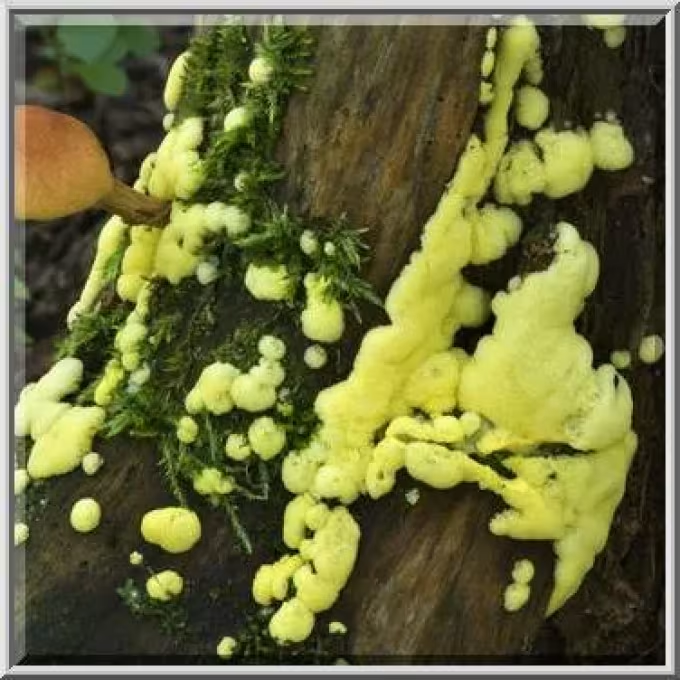
Description
Symptoms
The most common sign is the appearance of white, translucent, or yellowish slimy films on the lower stems of plants or moist soil surfaces.
During sporulation, these films develop into fine, branched, pillar-like structures that resemble a delicate, crystalline, or frosty coating.
Plants affected by these organisms often show surface discoloration in the areas where the slime has settled for an extended period.
In cases of high colonization, the base of the plant might exhibit a soft, spongy texture caused by the degradation of outer tissue layers.
- White or creamy translucent slimy coating.
- Fine, branched vertical sporophores.
- Surface residue on stems near the soil line.
- Softening of the superficial plant tissue.
Pathogen
Ceratiomyxales is an order of slime molds (myxomycetes) which are biologically classified as amoebozoans, closely related to fungal-like organisms rather than true fungi.
They exist primarily as saprotrophs, moving through damp organic matter as a multinucleate plasmodium, consuming bacteria and decaying vegetable components.
Their life cycle involves a reproductive stage where they form sporophores, which are structures that produce spores and are often visible to the naked eye.
Unlike parasitic plant pathogens, Ceratiomyxales do not typically infect living tissues, but rather colonize surfaces where there is moisture and accumulated organic debris.
Understanding their biology is essential for differentiating them from harmful plant diseases that require chemical intervention, as their presence often indicates excessive environmental moisture.
Conditions for development
High relative humidity is the primary driver for the development and spread of Ceratiomyxales in agricultural environments.
Optimal temperatures for their growth generally range from 15 to 25 degrees Celsius, providing the necessary warmth for the motility of the plasmodium.
The presence of abundant decaying organic matter on the soil surface serves as a primary food source and breeding ground for these organisms.
Poor aeration in greenhouses or dense crop spacing prevents the drying of plant surfaces, significantly increasing the probability of colonization.
Shaded areas with constant moisture retention are the preferred habitats for slime molds, making them more common in neglected or poorly managed sites.
Why it matters
While not primary parasites, the presence of Ceratiomyxales can be harmful by obstructing the stomata of plants and interfering with necessary gas exchange.
Their slimy secretions can facilitate the entry of secondary bacterial or fungal pathogens that cause severe decay in plant tissues.
They can significantly degrade the aesthetic quality of ornamental plants, leading to economic losses in the horticultural and greenhouse industry.
For young seedlings, a thick coating of slime can stunt growth and prevent the plant from establishing a strong root system during critical stages.
Persistent presence on harvested produce can lead to premature spoilage, as the slime creates a medium for other microbial growth during storage.
Protection
Improving field hygiene by removing decaying plant matter is the most effective method for controlling the population of Ceratiomyxales.
Enhancing soil and container drainage is vital to prevent waterlogging, which is the prerequisite for the survival of the plasmodium stage.
Increasing air circulation and ventilation within greenhouses is necessary to maintain dry surfaces and suppress the spread of slime molds.
Chemical control is rarely necessary; however, standard fungicidal treatments used for common diseases often help in suppressing slime mold activity.
Regular monitoring and thinning of crops help in creating an environment that is too dry and aerated for the colonization of these organisms.
Discussion
No discussions yet — be the first.