
Ceratiomyxa
Ceratiomyxaceae
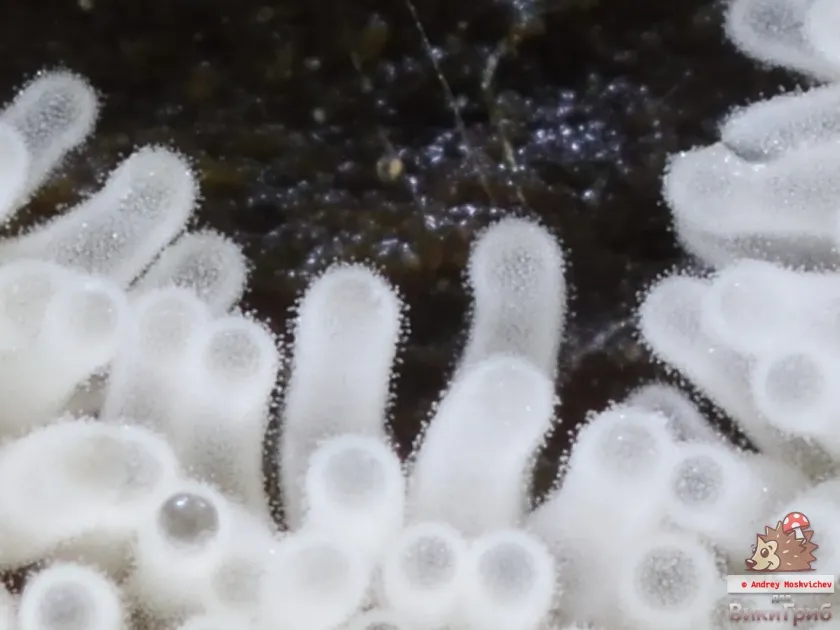
Description
Symptoms
The most visible symptom of Ceratiomyxa is the emergence of translucent, white, or yellowish gelatinous growths on plant stems, bark, or decaying mulch, which later develop a porous, spongy texture.
As the fruiting bodies mature, they often look like clusters of fine bristles or a crystalline crust covering the surface of the plant, especially near the base where humidity is highest.
Affected plants may exhibit localized chlorosis or tissue softening due to the persistent contact with the slimy mass, which prevents the surface from drying out properly.
The presence of these growths is often accompanied by an unpleasant odor if the pathogen is actively decaying organic matter underneath the plant foliage or at the soil line.
In greenhouses, these signs typically appear on the lowest, most shaded parts of the plants where water droplets accumulate and remain for extended periods, preventing the plant tissue from breathing.
Pathogen
Ceratiomyxa belongs to the phylum Myxomycota and is classified as a slime mold rather than a true fungus. These organisms exist as an acellular plasmodium during their vegetative stage, capable of amoeboid movement across damp surfaces.
The life cycle of this pathogen is complex, involving the formation of flagellated zoospores that aggregate to form a large, multinucleate plasmodium. This structure acts as the feeding and growth stage of the organism.
Reproductive structures, known as sporocarps, are the most recognizable feature of Ceratiomyxa. They appear as delicate, coral-like or spongy white outgrowths, which produce the spores necessary for the organism's dispersal.
While primarily saprotrophic, feeding on decaying organic matter, Ceratiomyxa can colonize living plant stems if the conditions of moisture and substrate health are compromised, acting as an opportunistic pathogen.
Because of its unique biological classification, standard fungicides effective against true fungi may not always work as expected against Ceratiomyxa, necessitating a focus on environmental management.
Conditions for development
High relative humidity, consistently above 85-90%, is the primary environmental factor that allows Ceratiomyxa to proliferate rapidly and transition into its reproductive phase.
Temperatures between 15°C and 25°C provide an ideal metabolic environment for the growth of the plasmodium, allowing it to expand its reach across the substrate effectively.
Stagnant air and poor ventilation are critical contributors to the spread of this organism, as they prevent the evaporation of surface moisture from plant stems and soil surfaces.
An abundance of organic waste, such as leaf litter or moist bark mulch, creates a perfect habitat for the slime mold to thrive before it spreads to more sensitive or valuable plant tissues.
Over-irrigation, especially when water is applied directly to the plant stems or the crown, ensures a constant moisture supply that sustains the active growth of the organism.
Why it matters
Ceratiomyxa causes significant harm by physically blocking the plant's pores, which restricts transpiration and gas exchange, ultimately weakening the plant's physiological functions.
The moist, decomposing mass provided by the slime mold serves as a vector and entry point for secondary bacterial and fungal pathogens, which can then cause lethal stem rots.
In ornamental and market gardening, the presence of these conspicuous slime growths renders the products aesthetically unacceptable, leading to significant economic losses for growers.
Young seedlings are particularly vulnerable, as the rapid growth of the slime mold can overwhelm the delicate tissues, leading to damping-off and the total loss of young plantings.
The persistent humidity required for the development of the organism also promotes other plant stresses, creating a cascading effect that degrades the overall health of the greenhouse crop.
Protection
The primary control strategy is the strict management of humidity levels within the production area, ensuring adequate ventilation and airflow around the plants at all times.
Good sanitation practices, including the removal of decaying organic material and debris from the soil surface, significantly reduce the available substrates for Ceratiomyxa colonization.
Adjusting irrigation methods to avoid wetting the foliage and the base of the plant stem is crucial to preventing the conditions necessary for the organism to establish itself.
Maintaining proper spacing between plants improves air circulation and prevents the formation of microclimates that trap moisture, thereby inhibiting the development of the pathogen.
While chemical controls like copper-based sprays can be used as a last resort, they are ineffective unless the underlying environmental conditions are corrected through better cultural management.
Discussion
No discussions yet — be the first.