
Ceratiomyxa porioides
Ceratiomyxa porioides
Description
Symptoms
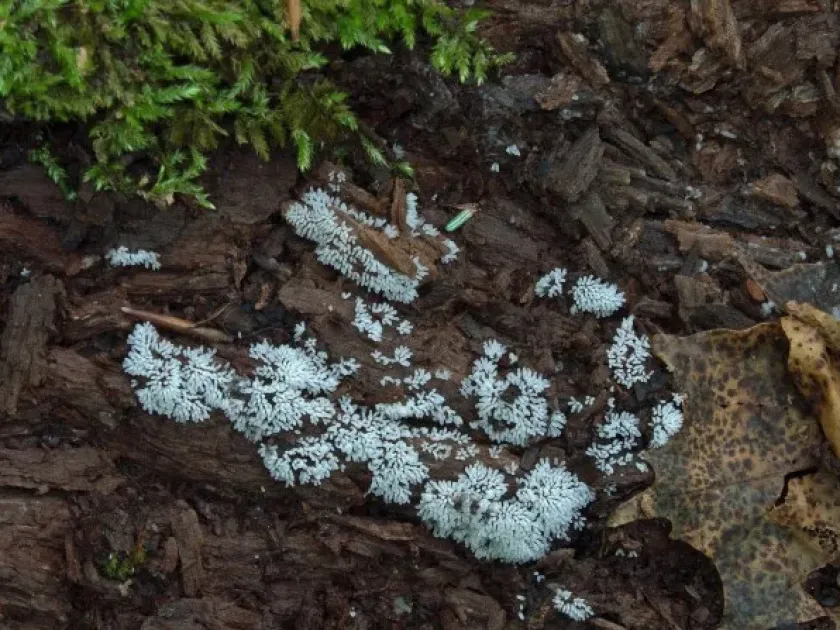
The characteristic sign of Ceratiomyxa porioides is the formation of white, porous, or honeycombed fruiting bodies on decaying logs or stumps.
The structures appear soft, watery, and sometimes jelly-like, particularly in high humidity. Their color typically ranges from white to pale yellow.
These fruiting bodies are superficial and do not penetrate the healthy tissue of the wood. They are easily detached from the surface upon contact.
The porous appearance, which gives the species its name, is caused by the intricate arrangement of the sporophores.
As the spores mature, the texture may change, and the fruiting body often becomes drier and more fragile before disintegrating entirely.
Pathogen
Ceratiomyxa porioides is a species of slime mold, belonging to the class Myxomycetes. It is important to clarify that this organism is not a plant pathogen and does not cause diseases in crops.
The organism functions as a plasmodium, a mobile mass that feeds on decaying organic matter. It plays a role as a decomposer within the forest and garden ecosystems.
Unlike fungi, which have a mycelial structure, Ceratiomyxa consists of naked protoplasm. It reproduces through spores that form complex fruiting bodies under favorable conditions.
Scientific interest in this species relates to its unique biology and its position in the transition between unicellular and multicellular life forms.
As a saprotrophic organism, it solely relies on dead organic materials, meaning it does not pose a threat to the vitality of living plants.
Conditions for development
The development of this slime mold is strictly tied to moisture levels. It flourishes in damp, shaded environments where air circulation is limited.
It prefers decaying organic substrates, such as rotting wood, logs, or accumulated leaf litter, where microbial activity is already present.
Temperature is another crucial factor, with the organism performing best under mild, temperate conditions during the growing season.
Areas with poor drainage and stagnant air create the perfect microclimate for the plasmodium to emerge and form fruiting bodies.
Because it requires high surface moisture, it is rarely seen in dry, sunny, or well-maintained locations with effective airflow.
Why it matters
Ceratiomyxa porioides causes no harm to crops, vegetables, or ornamental plants. It is not an infectious agent and does not impact plant health or productivity.
The presence of this organism is merely an indicator of existing decay in organic materials like dead wood or forest debris.
While it is harmless, some gardeners may mistake it for a fungal pathogen and attempt unnecessary chemical treatments, which should be avoided.
There is no economic loss associated with this slime mold, and it does not affect the marketability or quality of harvested produce.
Its role is exclusively that of a decomposer, helping to break down dead organic matter and returning nutrients to the soil.
Protection
No specific control measures are needed for Ceratiomyxa porioides since it is not a threat to agricultural production.
- Maintain good garden hygiene by removing old stumps and piles of dead wood.
- Improve air circulation around plants to prevent the buildup of stagnant moisture.
- Keep the area clean of unnecessary leaf litter and decaying organic debris.
- Ensure proper soil drainage to avoid waterlogged conditions near plants.
If the appearance of the slime mold is undesirable for aesthetic reasons, simple mechanical removal is sufficient.
Focusing on general garden health and reducing moisture levels is the most effective way to prevent the recurrence of any myxomycetes.
Discussion
No discussions yet — be the first.