
Carrot mosaic
Carrot mosaic virus
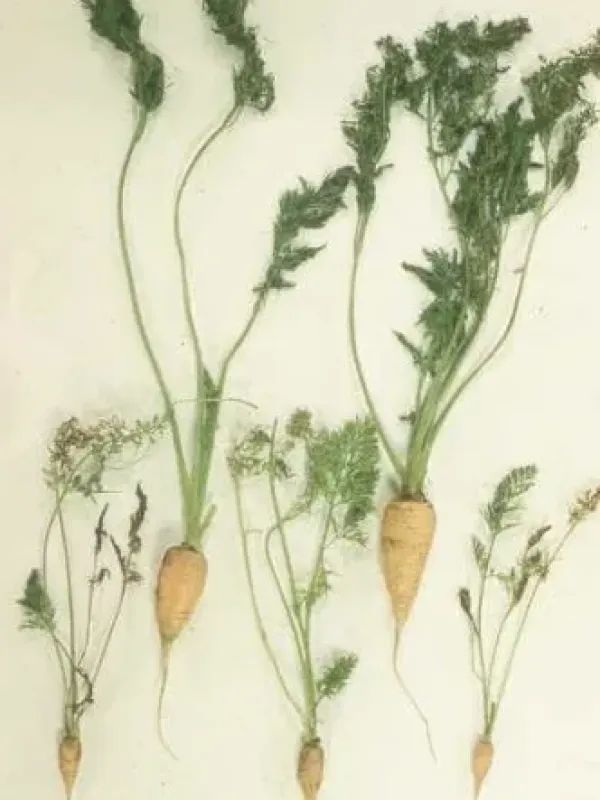
Description
Symptoms
Initial symptoms of carrot mosaic appear on the foliage, manifesting as a characteristic mosaic pattern. The leaves show a mixture of light green, yellowish, and normal dark green patches, creating a distinct mottled appearance.
As the disease progresses, leaves often become deformed, curled, or crinkled. The leaflets may appear stunted, and the overall plant growth is significantly reduced compared to healthy specimens in the same field.
The taproots of infected plants often exhibit stunted development. They are typically smaller and thinner than expected, and may show surface irregularities, bumps, or deep cracks that downgrade the marketability of the product.
In cases of severe infection, the entire plant may show signs of dwarfing. The internodes shorten, giving the carrot a condensed, unthrifty appearance, which directly impacts the potential yield and overall vigor of the crop.
- Mottled or mosaic discoloration on leaves.
- Chlorotic yellowing of leaf tissues.
- Leaf curling and deformation.
- Stunted root growth and poor development.
- Reduced plant vigor and overall yield loss.
Pathogen
Carrot mosaic is caused by a complex of viruses, most notably the Carrot mosaic virus (CMoV), which belongs to the Potyvirus genus. As an obligate parasite, this virus requires a living host cell to replicate and cannot survive independently in the environment.
The primary transmission vector is the aphid. These insects acquire the virus during brief feeding probes on infected plant tissues and subsequently transmit it to healthy plants. This non-persistent transmission allows the virus to spread rapidly throughout a field.
Mechanical transmission is another route, occurring when infected sap is transferred to healthy plants via tools, clothing, or farm machinery. While the virus does not persist in the soil for long periods, it thrives in overwintering roots and various perennial weeds.
The viral particles exhibit a typical filamentous structure characteristic of potyviruses. Once inside the host cell, the virus hijacks the metabolic pathways, inhibiting chlorophyll production and causing physiological disruption that hinders normal growth.
Because there is no cure once a plant is infected, understanding the host-vector relationship is crucial. Controlling weed reservoirs and managing aphid populations serve as the primary barriers against viral spread.
Conditions for development
The development and spread of carrot mosaic are heavily dependent on aphid activity. Hot and dry weather conditions favor rapid aphid reproduction and migration, significantly increasing the risk of widespread infection in carrot fields.
The presence of perennial weeds near the planting area acts as a constant reservoir for the virus. Aphids often colonize these wild hosts during the early season, picking up the virus before moving to the carrot fields to feed.
High-density plantings or poor canopy ventilation create a microenvironment that is highly favorable for aphid colonization. Crowded leaves provide protection for the insects, allowing them to spread the virus without detection.
Late sowing schedules often coincide with peak aphid migration, making young, tender seedlings particularly vulnerable. Maintaining spatial isolation from older carrot patches is essential to protect newer sowings from early infection.
Poor agricultural practices, including inadequate weed management, keep the infection cycles active. Maintaining a clean field environment is the single most important factor in reducing the viral load within an agroecosystem.
Why it matters
The primary economic impact of carrot mosaic is a drastic reduction in total yield. By disrupting photosynthesis, the virus prevents the plant from partitioning sufficient energy into the taproot, resulting in undersized and poor-quality carrots.
Marketability is significantly compromised due to physical deformities such as twisting, cracking, or stunted sizing. Such produce often fails to meet consumer standards, leading to substantial financial losses for commercial growers.
Viral infection alters the internal quality of the root, reducing sugar content and carotenoid levels. This not only decreases nutritional value but may also affect the storage longevity of the carrots in post-harvest conditions.
Weakened plants are far more susceptible to secondary infections, such as bacterial or fungal rots, which can develop during the growing season or in storage. This makes the crop less reliable throughout the entire supply chain.
In severe cases, farmers may face crop failures exceeding 50%. Given that no chemical treatment can eradicate the virus once established, the damage remains a major concern for large-scale carrot production.
Protection
Preventative management is the cornerstone of controlling carrot mosaic. The most effective strategy is the timely application of insecticides to keep aphid populations below the economic threshold and disrupt viral transmission.
Rigorous weed control around the field boundaries and inside the rows is mandatory. By removing alternative hosts for both the aphids and the virus, the likelihood of an initial outbreak is greatly minimized.
The use of certified virus-free seeds and resistant carrot varieties is highly recommended. Breeding for resistance remains the most sustainable approach to managing the disease over the long term.
Spatial isolation between different carrot crops prevents the carry-over of the virus from one field to another. Growers should avoid planting new crops immediately adjacent to overwintered or harvested fields.
Sanitation of agricultural equipment is vital. Cleaning tools, tractors, and machinery with appropriate disinfectants after working on potentially infected fields prevents the mechanical spread of the virus to healthy crop areas.
Discussion
No discussions yet — be the first.