
Description
Symptoms
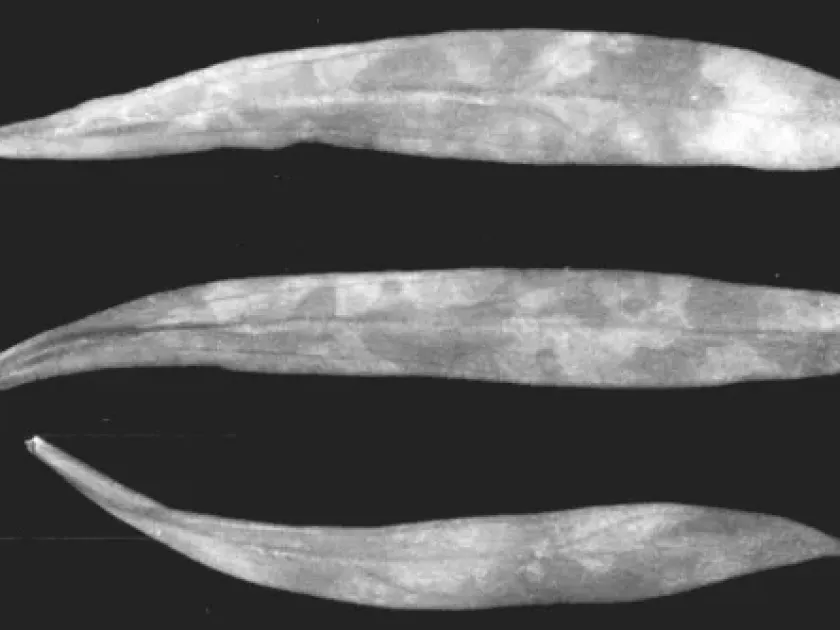
Symptoms initially appear as small, chlorotic flecks or spots on the leaves. As the disease progresses, these spots turn necrotic, taking on a brown or greyish appearance.
Stunting and malformation of the plant are common, particularly in susceptible cultivars. The leaves may show distinct streaks or stripes that follow the vascular pattern of the plant.
Infected plants frequently exhibit poor flower development. Blooms may fail to open fully, show petal deformation, or lose their characteristic vibrant coloration.
The overall vigor of the plant declines significantly, leading to a loss of turgor and premature senescence. The foliage loses its healthy green color, becoming yellowish and brittle.
The visibility of symptoms can vary based on environmental conditions and the specific viral strain, but the reduction in quality is consistent across all affected carnations.
Pathogen
The disease is caused by the Carnation necrotic fleck virus (CNFV), which belongs to the Closteroviridae family. This virus is highly host-specific and targets various cultivars of greenhouse carnations.
The virus is transmitted by aphids, with the peach-potato aphid (Myzus persicae) being one of the most significant vectors. It operates through a non-persistent transmission mechanism.
Because the virus is not seed-transmitted, the primary sources of infection are infected cuttings and propagules. Once introduced into a plant, the virus moves systemically throughout the phloem tissue.
The biological nature of this virus complicates management, as it cannot be eliminated with fungicides. Once a plant is systemically infected, it serves as a constant reservoir of the virus.
Laboratory diagnosis is essential for large-scale production, utilizing ELISA or RT-PCR tests to detect the presence of the pathogen before it causes widespread damage in the nursery.
Conditions for development
The development of the disease is closely linked to the presence and activity of aphid populations. In greenhouse environments, high humidity and warm temperatures create ideal conditions for rapid aphid reproduction.
Dense planting configurations facilitate the movement of aphid vectors from plant to plant, which increases the rate of transmission within the greenhouse facility.
Poor sanitation practices, such as the use of shared cutting tools without proper disinfection, significantly contribute to the mechanical spread of the virus.
Weed management around the growing area is critical, as various weeds can host both the virus and the aphid vectors, acting as a bridge for infection into the main crop.
Stressed plants, whether from improper irrigation or inadequate light, are more susceptible to the impact of the viral infection compared to healthy, vigorous specimens.
Why it matters
The primary economic harm of Carnation necrotic fleck is the loss of marketability. Flowers from infected plants lack the visual quality required for the cut flower industry.
Severe infestations can lead to total crop failure. The need to cull infected plants and replace them with new, healthy stock results in significant financial losses for growers.
Infected carnations are prone to secondary infections by various fungi, as the virus weakens the plant's overall defense mechanisms against environmental stressors.
Since the virus is systemic and persistent in vegetative tissues, it ruins the longevity of the plant, forcing producers to cycle their stock more frequently than intended.
Total yield reduction and increased labor costs for monitoring and sanitation make this disease a major challenge for profitable carnation production.
Protection
Strict phytosanitary practices are the foundation of control. Growers should only utilize certified virus-free planting material produced through meristem culture techniques.
Consistent aphid control is mandatory to prevent the spread of the virus. Using effective insecticides and integrated pest management (IPM) strategies is essential.
- Regular monitoring of crops for early detection of symptomatic plants.
- Immediate removal and disposal of any plants showing signs of infection.
- Strict disinfection of tools using alcohol or bleach solutions between plants.
- Maintaining a clean environment free of weeds and host reservoirs.
Isolation of new shipments of cuttings from existing production areas helps prevent the introduction of the virus into established greenhouses.
Regular laboratory testing of mother blocks ensures that the source material remains free from infection, preserving the long-term health of the floral crop.
Pathogens and affected parts
Affects crops · 1
Discussion
No discussions yet — be the first.