
Hippeastrum latent virus
Carlavirus latenshippeastri
Description
Symptoms
The Hippeastrum latent virus (HLV) is characterized by its ability to persist in the host plant for long periods without showing obvious symptoms. This latent phase makes early detection of the infection quite difficult.
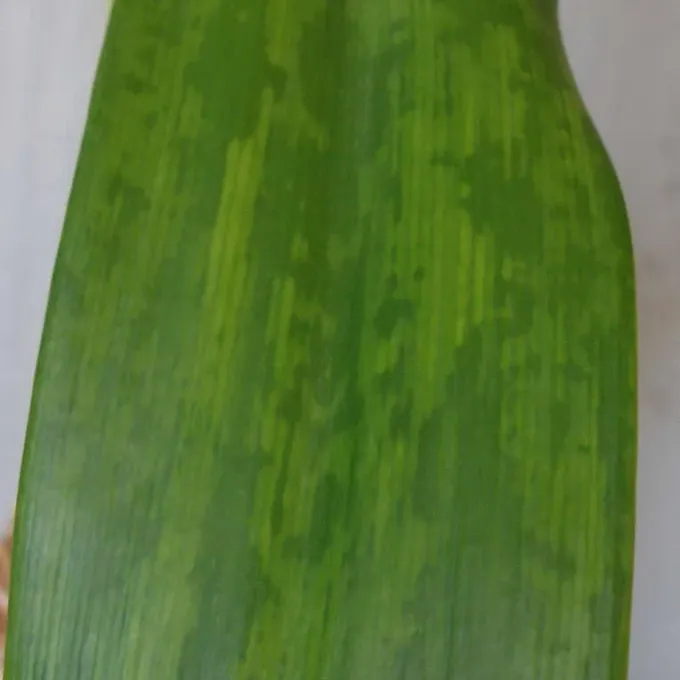
When symptoms do manifest, they typically appear as mild chlorotic spotting or mosaic patterns on the leaves. These spots can sometimes coalesce, forming lighter streaks or bands that run parallel to the leaf veins.
Infected plants often exhibit stunted growth, with shorter-than-average flower stalks and reduced overall vitality. The leaf tissue may become slightly deformed, exhibiting wavy edges or crinkling in more severe cases.
Flower symptoms include color breaking or variegation, where the petals show irregular white or pale patches. This breaks the solid color pattern of the variety and significantly reduces the ornamental value of the plant.
As the infection progresses, the plant becomes increasingly weak. The bulb size often decreases over time, resulting in fewer flowers and reduced ability to produce healthy offsets for vegetative propagation.
Pathogen
The causal agent is the Carlavirus latenshippeastri, a member of the genus Carlavirus within the Betaflexiviridae family. It is a filamentous virus particle that contains single-stranded RNA.
This virus specifically infects plants within the Amaryllidaceae family, with Hippeastrum being the primary host. Other bulbous species can also act as reservoirs for this viral pathogen, facilitating its spread in diverse collections.
Mechanical transmission is the most common way the virus spreads in cultivation. Pruning tools, knives, and shears used on infected plants without sterilization effectively act as vectors, moving the virus to healthy bulbs.
Sucking insects, particularly aphids, play a crucial role as biological vectors. As they feed on infected tissues, they pick up viral particles and transfer them to healthy plants, ensuring the rapid spread of the disease.
The virus is systemic, meaning it colonizes the entire plant, including the bulb. Consequently, any offset derived from an infected bulb will also be infected, making propagation a primary pathway for spreading the virus.
Conditions for development
Environmental stress significantly influences the development of the viral infection. High temperatures and fluctuating humidity levels can accelerate viral replication within the bulb tissues, triggering a transition from a latent to an acute state.
Poor cultivation practices, such as improper watering or insufficient lighting, weaken the plant's natural immune response. Plants subjected to these stressors are far more susceptible to infection compared to those grown in optimal conditions.
Crowding plants in greenhouses or nurseries promotes viral transmission. High density ensures that contact between foliage is frequent, allowing for potential virus transfer via mechanical contact or shared insect vectors.
The presence of insect pests in the growing environment is a major factor in spreading the infection. A population of aphids that remains uncontrolled will inevitably lead to an epidemic of viral disease within a collection.
Failure to quarantine new bulb acquisitions is the most common cause of introducing the virus into a clean environment. Since symptoms are often hidden, newly arrived bulbs may appear healthy while harboring the latent pathogen.
Why it matters
The primary harm caused by HLV is economic, particularly for growers producing Hippeastrum for the cut flower market or bulb trade. Infected plants fail to meet quality standards, leading to the destruction of entire batches.
The disease is irreversible because it is a systemic infection. Currently, there is no effective treatment to eliminate the virus from the plant, necessitating the removal of infected bulbs to protect the healthy population.
Reduced aesthetic quality is a direct consequence, as color breaking and deformity make the flowers unmarketable. This impacts the reputation of growers and the value of specific plant varieties.
Over time, the virus causes the progressive degeneration of the bulb. This leads to a decline in the number of daughter bulbs, reduced flower count, and the potential for a complete loss of the genetic line in the collection.
Increased vulnerability to secondary pathogens, such as fungal bulb rot, is a major side effect. Weakened plants cannot defend themselves, leading to premature plant death and total loss of valuable specimens.
Protection
Rigorous sanitation protocols are essential for management. All cutting tools must be thoroughly disinfected with alcohol or other effective sanitizing solutions after every use to prevent mechanical transmission.
Maintaining a strict insect control program is vital to manage vector populations. Consistent application of systemic insecticides against aphids and other sucking insects is necessary to minimize the risk of virus transmission.
Regular monitoring of plants for signs of mosaic, streaking, or deformation is critical. If a plant shows any symptom of virus infection, it should be isolated or destroyed immediately to stop the spread.
Source only from certified, virus-tested nursery stock. Starting with healthy, disease-free bulbs is the most effective way to prevent the virus from ever entering your garden or professional collection.
Focus on providing optimal growth conditions to maintain plant vigor. A healthy, well-cared-for Hippeastrum with balanced nutrition and proper light is better equipped to withstand environmental stress and potentially resist early-stage infection.
Discussion
No discussions yet — be the first.