
Shallot latent virus
Carlavirus latensallii
Description
Symptoms
As the name implies, the Shallot latent virus is characterized by its latent (asymptomatic) nature, where infected plants often show no visible signs of distress.
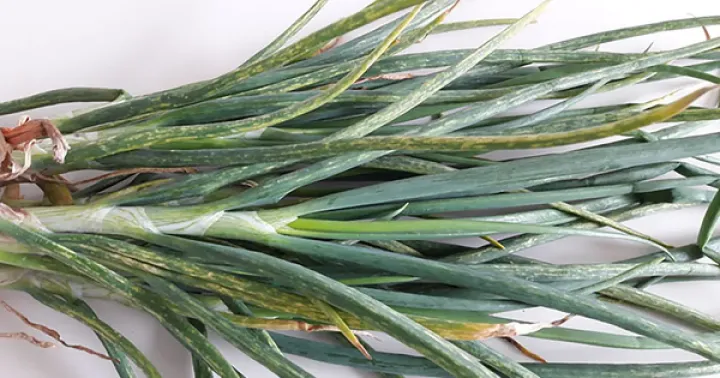
In some instances, particularly in sensitive cultivars, plants may exhibit mild mosaic patterns, leaf chlorosis, or subtle yellowing of the leaf tips.
Growth reduction is often so slight that it remains unnoticed without comparative studies between healthy and infected plants grown under identical conditions.
Because visual inspection is unreliable, laboratory techniques such as ELISA (Enzyme-Linked Immunosorbent Assay) are required to confirm the presence of the virus.
The absence of obvious symptoms is particularly deceptive, allowing the virus to spread undetected throughout a crop cycle.
Pathogen
The Shallot latent virus (SLV) is a plant virus belonging to the genus Carlavirus within the Betaflexiviridae family, known to infect various Allium species.
The virus consists of filamentous particles and is known for its ability to persist in infected bulbs, making it a difficult pathogen to eliminate once established.
Transmission occurs primarily through aphid vectors, such as Myzus persicae, which acquire the virus while feeding on infected plant sap.
Mechanical transmission is also a significant pathway, as the virus can be spread by farm equipment and gardening tools during routine crop maintenance.
The virus is systemic, meaning it spreads throughout the entire plant tissue, including the roots and the bulb, ensuring long-term persistence in the host.
Why it matters
The primary damage caused by SLV is a gradual reduction in overall yield and a decrease in the quality of onion bulbs over successive planting seasons.
Infected plants are often more susceptible to secondary infections, such as fungal pathogens, which can lead to premature bulb rot during storage.
The virus can reduce the germination energy of planting stock, leading to uneven stands and potentially lower harvest density in the following year.
In commercial seed production, the presence of the virus is a critical issue that necessitates the disposal of infected lines to maintain quality standards.
Economic losses accumulate through reduced bulb size and decreased shelf life, which directly impacts the marketability of the harvested onions.
Protection
The most effective strategy for managing SLV is the use of virus-free planting material, often produced through meristem-tip culture and heat therapy.
Integrated Pest Management (IPM) practices focusing on the control of aphid populations are essential to interrupt the primary transmission cycle of the virus.
Spatial separation between new plantings and older perennial onion crops is vital to prevent the spread of the virus from reservoir hosts.
Standard sanitation procedures for tools and equipment help mitigate the risk of mechanical transmission, especially during harvesting and sorting.
Regular phytosanitary monitoring of fields is crucial to identify and rogue out suspicious plants before the virus can spread further in the crop.
Discussion
No discussions yet — be the first.