
Calosphaeria dieback
Calosphaeria princeps
Description
Symptoms
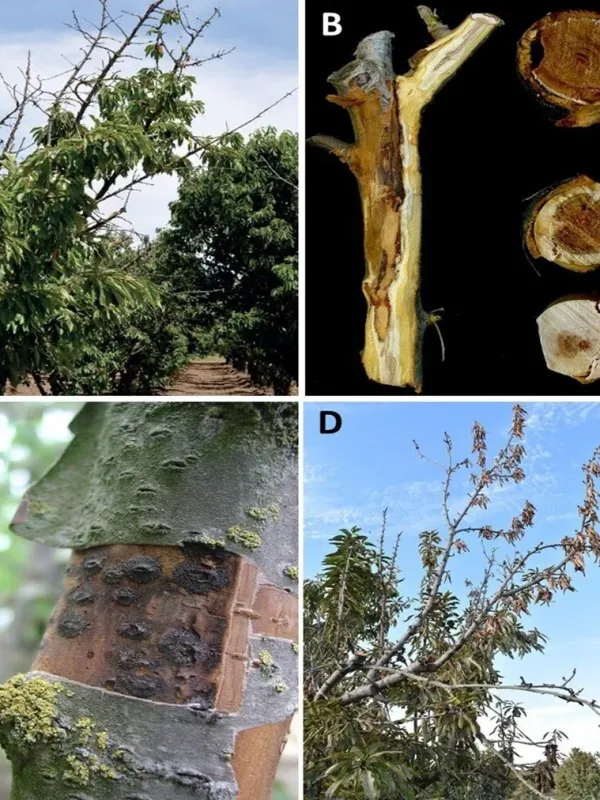
The primary symptom is localized wood necrosis, often manifesting near pruning wounds or areas damaged by mechanical equipment.
Infected vines exhibit stunted growth, leaf chlorosis, and the sudden wilting of individual cordons or canes during the active growing season.
Small, black, pimple-like structures—which are the protruding necks of the fungus's perithecia—are visible on the surface of the affected bark.
A cross-section of the infected wood reveals dark, brownish-black discoloration spreading from the center or the wound site outward.
Over time, the affected branches become brittle and dry, eventually failing to produce any foliage or fruit, leading to overall plant decline.
Pathogen
The causative agent of the disease is the ascomycete fungus Calosphaeria princeps, which is known to colonize the xylem of woody plants.
This fungus acts as an endophyte, existing silently within the internal tissues of the vine for extended periods before manifesting symptoms.
It colonizes the vascular system, gradually deteriorating the wood structure and disrupting the flow of water and essential nutrients throughout the vine.
The fungus reproduces by forming perithecia, which are small fruiting bodies that release spores, facilitating spread via rain splashes and wind.
Because it can survive in dead wood, the fungus remains a persistent threat within the vineyard environment long after initial symptoms appear.
Conditions for development
Infection primarily occurs through wounds created during pruning, which serve as direct entry points for the fungal spores.
High humidity levels and prolonged rainy weather create optimal conditions for spores to germinate and colonize the freshly cut wood surfaces.
Vines weakened by winter frost or improper vineyard management practices are significantly more susceptible to Calosphaeria princeps attacks.
Crowded plantings and lack of airflow within the canopy contribute to higher moisture retention, favoring the development of the pathogen.
Using contaminated pruning tools without sterilization is the most common way the fungus is transmitted from diseased to healthy vines.
Why it matters
The disease causes significant economic loss by gradually killing cordons and entire vines, leading to reduced vineyard longevity.
It severely impacts yields, as damaged vascular tissues cannot support the nutrient demand of the developing grapes, leading to poor fruit quality.
Chronic infection weakens the plant, making it highly susceptible to other environmental stresses and secondary wood-decaying organisms.
The necessity for frequent vineyard replanting and the removal of infected wood adds significant labor and maintenance costs for growers.
Since the pathogen persists in the wood, it poses a long-term threat to the establishment of new, healthy vineyard blocks in the same location.
Protection
Sanitation is paramount; pruning tools must be disinfected with alcohol or other appropriate solutions between every vine to stop spread.
Removal and immediate destruction of all infected or dead wood are necessary to minimize the source of inoculum in the vineyard.
Pruning should be scheduled during dry, low-humidity periods to ensure that fresh wounds dry quickly and become less susceptible to infection.
Applying protective wound sealants or fungicidal pastes to pruning cuts provides a physical and chemical barrier against spore entry.
- Maintaining optimal soil and plant health to enhance vine immunity.
- Conducting prophylactic copper-based sprays after pruning operations.
- Sourcing certified disease-free cuttings for new vineyard developments.
Discussion
No discussions yet — be the first.