
Wheat spindle streak mosaic
Bymovirus triticitessellati
Description
Symptoms
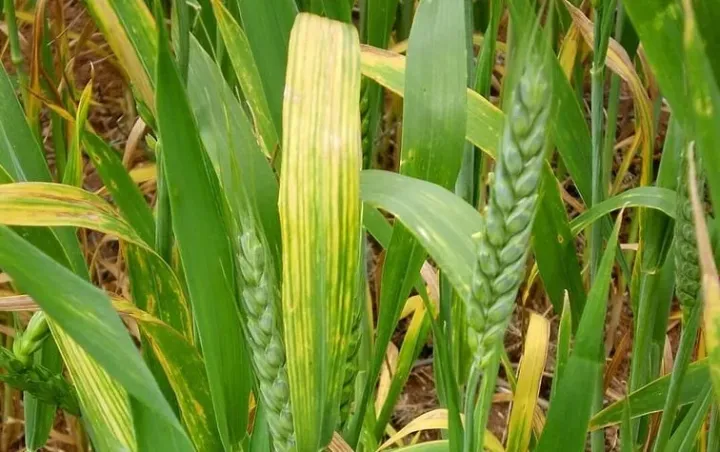
Symptoms typically appear in early spring as soon as plant growth resumes. Leaves exhibit characteristic chlorotic streaks, stripes, and spots, which often develop a spindle-like shape.
Infected plants exhibit stunted growth compared to healthy neighboring crops. When viewed from a distance, the field appearance is patchy or mottled, which is particularly evident on sunny spring days.
As the disease progresses, leaves may turn yellow or pale green. Severe infections can lead to tissue necrosis along the veins of the leaf blades.
The infection often stimulates excessive tillering, but these secondary tillers are usually weak and often fail to develop viable, productive heads.
Symptoms are most pronounced during cool weather (temperatures between +5 and +15 degrees Celsius) and tend to disappear or mask when warmer temperatures arrive in late spring.
Pathogen
The causal agent of this disease is the Wheat spindle streak mosaic virus (WSSMV), belonging to the genus Bymovirus. It is a single-stranded RNA virus known for its high persistence in soil environments.
The primary reservoir and vector for this virus is the soil-borne obligate parasite Polymyxa graminis. The zoospores of this organism infect wheat roots in the soil, introducing the viral particles into the plant cells.
The virus affects various cereal crops, including wheat, barley, and rye. Infection typically occurs in the autumn shortly after germination and seedling emergence.
The vector, Polymyxa graminis, survives in the soil in the form of dormant cysts for up to a decade, making traditional crop rotation a long-term strategy rather than a quick fix for soil-borne viral infections.
Viral replication is closely linked to the lifecycle of the vector, which requires moist soil conditions to actively move and infect the root systems of young wheat plants.
Conditions for development
Disease development is highly dependent on environmental conditions during the autumn and spring. A prolonged, cool, and wet autumn is considered the ideal environment for the disease.
Excessive soil moisture and low temperatures during the autumn vegetative phase provide the necessary conditions for the activity and proliferation of Polymyxa graminis.
Optimal infection conditions for winter wheat occur when soil temperatures are in the range of +8 to +12 degrees Celsius, coinciding with the seedling emergence window.
The virus spreads across fields mechanically through the movement of infested soil particles via agricultural machinery, runoff water, and flooding events.
The disease incidence is generally higher in fields where winter cereals are grown continuously or in close rotation, allowing the vector to maintain high populations in the soil.
Why it matters
The primary impact of the virus is a significant reduction in overall yield. By disrupting the photosynthetic process, the virus limits the energy reserves needed for proper grain filling and development.
Yield loss is primarily manifested through a reduction in the number of grains per head, grain shriveling, and lower overall biomass production, affecting both yield and quality.
Infected plants are physiologically weakened and become more susceptible to secondary stressors, such as winter damage, drought, or opportunistic fungal pathogens.
- Reduced tiller survival and developmental failure of heads.
- Yield losses ranging from 10% to 30% depending on the infection pressure and time of onset.
- Degradation of grain physical properties and milling quality.
Economic damage is most severe when infection occurs early in the autumn, as this significantly limits the yield potential of the wheat crop from the beginning of the season.
Protection
The most effective management strategy is the use of resistant or tolerant wheat varieties, as there are no direct chemical treatments available to control systemic viral infections in the field.
Strategic crop rotation is essential. It is recommended to avoid planting wheat in infested fields for at least 3–5 years following a confirmed outbreak of the mosaic.
Agronomic practices should focus on improving soil drainage to minimize waterlogging, which directly correlates with the activity level of the Polymyxa graminis vector.
Farmers should avoid early planting dates in areas with a history of the disease to reduce the window of exposure during the critical cool-temperature infection period.
Strict hygiene protocols, including thorough cleaning of machinery and tools to remove soil before moving from infested fields to clean areas, are vital to prevent the spread of the vector.
Discussion
No discussions yet — be the first.