
Tospoviruses
Bunyaviridae
Description
Symptoms
Symptoms of Tospovirus infection are highly diverse, often varying significantly depending on the specific host plant, variety, and the developmental stage at which infection occurs.
Common clinical signs include necrotic spots, chlorotic rings, stunting, and mosaic patterns on foliage, which are frequently mistaken for fungal pathogens or nutrient deficiencies.
Stem necrosis and vascular browning are prevalent in many crops, leading to the collapse of shoots, leaves, and eventually the entire plant if the infection is systemic and severe.
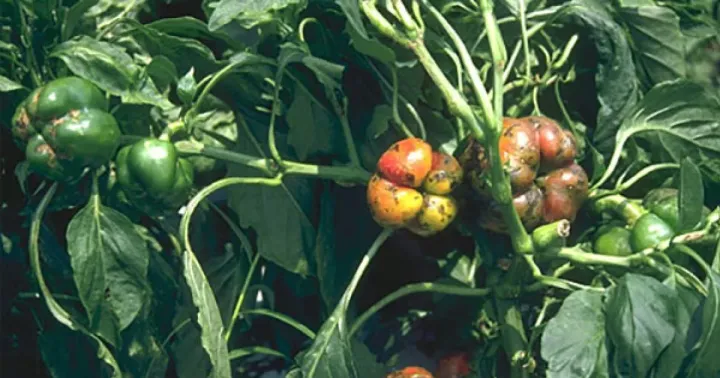
Fruit symptoms are particularly damaging to marketability, often appearing as ring spots, surface pitting, irregular ripening, and severe color distortion in tomato and pepper crops.
- Chlorotic or necrotic rings on leaves.
- Severe stunting and stunted growth habit.
- Stem striping and necrotic lesions.
- Fruit deformation and abnormal ripening.
- Dieback of growing points and terminal shoots.
Pathogen
The Bunyaviridae family (now classified under the order Bunyavirales, family Tospoviridae) includes significant plant pathogenic viruses, with the Tomato spotted wilt virus (TSWV) being the most prominent example.
These viruses are characterized by a segmented, negative-sense, single-stranded RNA genome, which contributes to their high biological adaptability and genetic evolution within agricultural ecosystems.
They act as obligate intracellular parasites that hijack host plant metabolic processes, specifically affecting protein synthesis and photosynthesis, which leads to systemic physiological decline.
The primary method of transmission in field and greenhouse conditions is via thrips species (most notably the Western flower thrips, Frankliniella occidentalis), which acquire the virus during the larval stage.
Once infected, the vector transmits the virus by injecting saliva into plant tissues during feeding, after which the virus moves systemically throughout the host plant via vascular bundles.
Conditions for development
The spread of Tospoviruses is inherently linked to the population dynamics of its insect vectors, particularly thrips, which thrive in specific environmental conditions.
Greenhouse environments provide optimal conditions for both thrips reproduction and virus transmission, as steady temperatures and high humidity foster year-round pest activity.
The presence of wild reservoir hosts, including common weeds like Amaranthus or Solanum species, provides a bridge for the virus to survive between crop planting cycles.
High population densities of thrips, coupled with favorable climate conditions (moderate to high temperatures), significantly increase the risk of rapid epidemic outbreaks in susceptible crops.
The movement of plant material, including infected transplants or nursery stock, acts as a primary pathway for introducing the virus into new, previously clean agricultural areas.
Why it matters
Tospoviruses are considered highly destructive globally, capable of causing substantial yield losses ranging from 30% to total crop failure under severe epidemic conditions.
The primary economic harm stems from the loss of fruit quality, as affected produce fails to meet strict market standards, leading to significant financial losses for producers.
In addition to yield reduction, infected plants are frequently more susceptible to secondary pathogens, further complicating disease management and overall farm productivity.
The necessity for intensive pest control programs to manage the vector increases input costs, thereby reducing the net profitability of agricultural operations growing susceptible crops.
Because there are no chemical "cures" for established plant viral infections, growers must invest heavily in preventive measures, making early detection and exclusion critical.
Protection
Integrated Pest Management (IPM) is the gold standard for controlling Tospoviruses, with a primary focus on the drastic reduction of thrips populations using both chemical and biological agents.
Preventive strategies include the use of reflective mulches and blue/yellow sticky traps to monitor and reduce vector populations before they successfully colonize the crop.
The cultivation of genetically resistant or tolerant hybrids provides the most robust protection, although growers must monitor for the emergence of new virus strains that overcome resistance.
Rigorous sanitation practices, such as eliminating weed hosts around greenhouses and fields, and strictly enforcing greenhouse quarantine protocols, are essential for virus containment.
Immediate roguing and destruction of symptomatic plants are mandatory to prevent the further spread of the virus by insect vectors from infected to healthy plants within the field.
Discussion
No discussions yet — be the first.