
Buckthorn witches broom
Buckthorn witches
Description
Symptoms
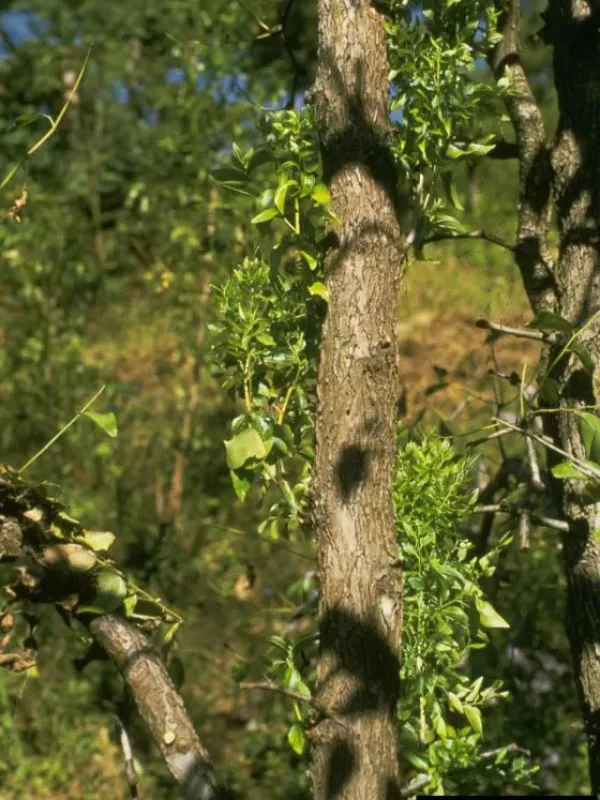
The most distinctive symptom of this disease is the development of dense, clustered shoots that resemble a broom. These structures emerge from dormant buds that are triggered into abnormal growth by the pathogen.
Affected branches lose their natural structure, often becoming twisted, stunted, and fragile. This deformity prevents the shrub from maintaining its typical aesthetic appearance and architecture.
Leaves on the affected sections are frequently smaller, chlorotic, or misshapen, reflecting the severe disruption of the plant's metabolic and photosynthetic processes.
The overall vigor of the shrub decreases significantly as the plant diverts its energy to sustain the pathological growth of the broom-like clusters, leading to stunted development.
In advanced stages, the infected branches begin to die back, and the plant may eventually succumb to the systemic stress caused by the persistent pathogen infection.
Pathogen
The causative agents are phytoplasmas, which are specialized, wall-less bacteria that reside specifically within the phloem tissue of the host plant.
These pathogens are obligate parasites and are incapable of surviving outside of their host or their insect vector, making their biological cycle highly dependent on specific conditions.
Transmission occurs primarily through sap-sucking insects, such as leafhoppers and psyllids. These vectors acquire the pathogen while feeding on an infected plant and transmit it to healthy ones.
Once inside the host, phytoplasmas spread systemically throughout the plant's vascular system, causing long-term physiological changes that lead to the characteristic broom symptoms.
Because these organisms are localized in the phloem, they are difficult to target with standard chemical sprays, as they are protected within the plant's internal transport channels.
Conditions for development
The spread of the disease is heavily influenced by the population density of its insect vectors, which thrive in warm, dry weather conditions during the growing season.
Crowded plantings and poorly ventilated areas create ideal microclimates for insects to feed and reproduce, significantly increasing the probability of pathogen transmission.
The presence of weeds around the base of the buckthorn provides a crucial refuge for leafhoppers, allowing them to survive and potentially carry the disease to the shrubs.
Environmental stress factors, including drought or nutrient deficiencies, weaken the plant's natural resistance and can make it more susceptible to successful colonization by the phytoplasma.
The peak risk period coincides with the time of year when insect vectors are most active, typically during the mid-to-late spring and early summer growth phases.
Why it matters
The primary harm is the permanent disfigurement of the shrub, which renders it unsuitable for ornamental use and ruins its landscape value.
Infected plants become chronic reservoirs for the pathogen, endangering other susceptible species in the vicinity and complicating overall garden health management.
The disease drains the plant's energy reserves, reducing its ability to produce flowers and fruits, and leaving it vulnerable to secondary infections or environmental damage.
If left unmanaged, the infection will continue to progress, eventually leading to the death of individual branches and potentially the entire plant over several growing seasons.
For professional nurseries, the presence of witches broom is particularly devastating, as it requires the immediate disposal of stock to prevent the spread of the infection to healthy plants.
Protection
The most effective management practice is the early identification and physical removal of infected branches or the entire shrub if the infection is widespread, followed by burning the debris.
Implementing a strict pest management program to control populations of leafhoppers and other sap-sucking insects is essential to minimize the risk of pathogen transmission.
Maintaining a weed-free environment around the shrubs reduces available habitats for vectors and helps in preventing the local spread of the disease within the garden.
Prioritizing the purchase of high-quality, certified disease-free nursery stock is the best preventive measure to ensure the long-term health of your plantings.
Providing proper irrigation and balanced fertilization helps to maintain plant vigor, which may assist the shrub in better coping with environmental stress and potentially slowing down disease progression.
Discussion
No discussions yet — be the first.