
Description
Symptoms
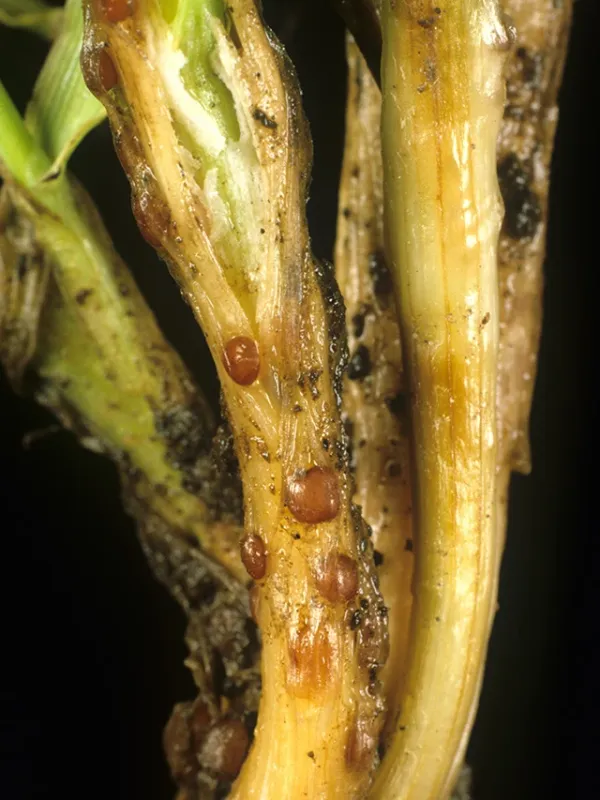
The first signs of brown root rot become apparent in early spring, immediately after the snow melts and the plants begin to break dormancy. Roots turn dark brown to black, exhibiting clear symptoms of necrosis.
Above-ground, the affected plants show reduced vigor, stunting, and yellowing. In severe cases, the infected patches in the field may fail to thrive, leading to sparse plant stands.
The root system becomes brittle and decays, which severely impairs the plant's ability to take up water and nutrients from the soil. This leads to a systemic stress in the plant that limits its growth potential.
Under humid conditions, mycelium may grow on the surface of the root tissues. Microscopic examination or visual inspection often reveals the presence of small, dark sclerotia on the root cortex, which is a definitive sign of the infection.
The damage is typically patch-like, forming dead or weak spots in the field. As the season progresses, plants might partially recover if conditions become warmer, but the yield potential is usually permanently lowered.
Pathogen
The causative agent of brown root rot is the fungus Leptosphaeria sclerotioides. This pathogen is a serious threat to various cereal crops, primarily affecting winter wheat, rye, and barley during the cool season.
The biology of the pathogen is centered on the production of microsclerotia. These small, durable structures allow the fungus to persist in soil and crop debris for several years, even under freezing conditions.
The life cycle involves both a saprotrophic phase in soil organic matter and a parasitic phase where it attacks the root tissues of host plants. The pathogen survives between growing seasons in the form of these microsclerotia in the topsoil.
Leptosphaeria sclerotioides is a psychrophilic organism, meaning it prefers cool temperatures. This trait is critical for its pathogenicity, as it allows the fungus to become active while the host crop is still in a cold-stressed state after winter.
The fungus is highly resilient, making it a persistent problem in agricultural regions with long, cold winters where winter cereals are the dominant crops in the rotation cycle.
Conditions for development
The development of brown root rot is strongly favored by low positive temperatures, specifically between 0 and 10 degrees Celsius. These conditions often coincide with early spring in many wheat-growing regions.
Excessive soil moisture, particularly in poorly drained fields, is a significant driver for the rapid spread of the disease. Water-logged soil creates a perfect environment for the fungus to infect the weakened root systems.
Continuous cropping of winter cereals without adequate rotation is a primary reason for the accumulation of Leptosphaeria sclerotioides in the soil, leading to an increasing disease pressure over time.
Poor aeration in compacted or heavy clay soils contributes to the severity of the infection. Roots under oxygen stress are much more susceptible to the necrotic damage caused by this specific fungus.
Nutritional imbalances, such as excessive nitrogen leading to lush, soft root tissues, can make the plants more susceptible to penetration by the fungal mycelium.
Why it matters
The damage caused by brown root rot is significant, often resulting in lower grain yields. The impairment of the root system means that even with optimal moisture later in the season, the plant cannot perform at its best.
Yield losses occur due to both a reduction in plant density (due to early-season death) and a reduction in the number of grains per head in surviving plants, as their development is stunted by poor nutrient intake.
Grain quality is negatively impacted by the infection. The resulting grain is often shriveled, lighter in weight, and has lower protein content, which reduces its market value and potential for industrial use.
Physiologically weakened plants are significantly more vulnerable to secondary infections, drought, and pest attacks during the later stages of the growing season, further compounding the losses.
In cases of heavy infestation, the economic impact includes the costs of reseeding the affected areas or the application of additional crop protection measures to salvage the remaining stand.
Protection
Implementing a robust crop rotation is the most effective way to manage the pathogen. By alternating host crops with non-host crops, the survival and proliferation of the fungus in the soil can be effectively disrupted.
Seed treatment with systemic fungicides is a crucial step in early-season plant protection. Applying approved active ingredients helps shield the germinating seeds and roots from initial soil-borne infections.
- Utilizing disease-resistant wheat and cereal varieties.
- Ensuring proper field drainage to prevent excess soil moisture.
- Optimizing phosphorus and potassium fertilization to build stronger roots.
- Maintaining soil fertility and structure to avoid plant stress.
Monitoring fields in the early spring is essential for identifying potential infection hotspots. This allows for targeted management and helps in deciding whether immediate intervention is required.
Integrated pest management (IPM) strategies, which include the use of beneficial soil microbes that outcompete the pathogen, are becoming increasingly important for long-term sustainable control of root-infecting fungi.
Pathogens and affected parts
Affects crops · 1
Discussion
No discussions yet — be the first.