
Description
Symptoms
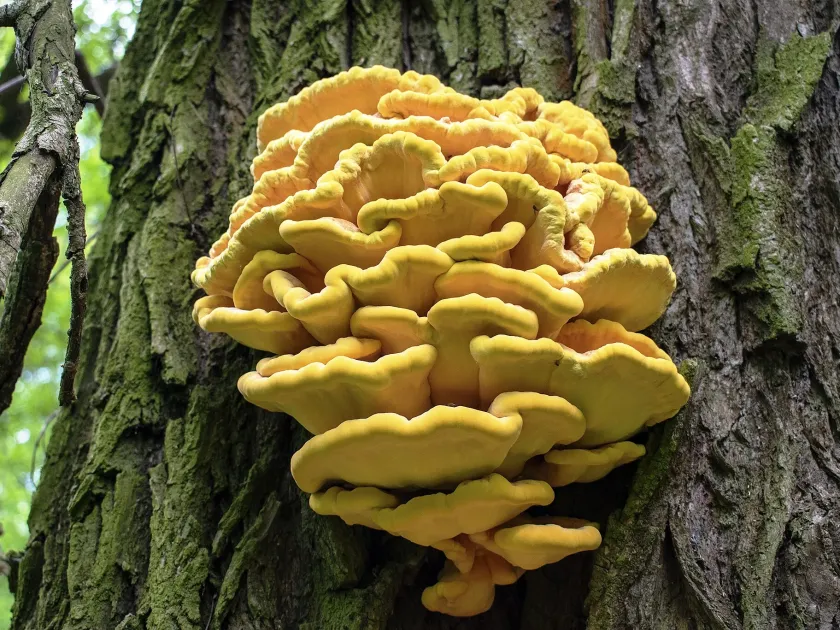
The most visible symptom is the presence of bright yellow to orange shelf-like fungal bodies on the trunk or branches.
These fruiting bodies appear in overlapping clusters, typically during the summer months, and represent the reproductive phase of the fungus.
Internal wood decay exhibits a distinct brown rot, where the wood becomes brittle and crumbles into small cubical pieces.
The foliage of infected trees may look normal for a long time, masking the internal damage occurring deep within the trunk.
The structural weakness caused by the fungus often leads to hollowed-out trunks that are prone to snapping in high winds.
Pathogen
The causative agent of the disease is the fungus Laetiporus sulphureus, commonly known as the chicken of the woods.
This pathogen acts as a destructive wood-decay fungus, primarily targeting the heartwood of the tree through wounds or root systems.
The fungus breaks down the structural components of wood, specifically cellulose and lignin, leading to severe decay.
As the mycelium colonizes the internal tissues, it creates a massive network that gradually weakens the host plant's structural integrity.
The pathogen is highly persistent and can survive for many years within the wood until the host tree finally succumbs to structural failure.
Conditions for development
The fungus thrives in moist and temperate climates, which are optimal for the germination of its airborne spores.
Trees that are stressed by poor growing conditions, drought, or prior injuries are much more susceptible to colonization by Laetiporus sulphureus.
Mechanical injuries, such as broken branches or bark damage from equipment, provide perfect entry points for the fungal spores.
Douglas fir (Pseudotsuga) is among the coniferous species that can be severely impacted by this wood-decay fungus in forest environments.
Lack of proper pruning and the accumulation of dead wood in the vicinity create a reservoir for the pathogen to spread to healthy plants.
Why it matters
The primary damage caused by this fungus is the rapid reduction in the structural strength and commercial value of the timber.
Infected trees represent a significant hazard in residential areas and public parks due to the risk of limb breakage or tree fall.
Forest stands infected with the fungus experience significant volume loss as trees become unsuitable for wood products.
The systemic nature of the decay makes it almost impossible to cure once the mycelium has reached the center of the tree.
The loss of mature trees leads to ecological and economic disruption in both forest management and private landscaping.
Protection
Effective management begins with strict sanitation practices, including the removal of infected trees and fallen logs.
Protecting trees from physical damage is essential, as any break in the bark serves as a potential entry point for infection.
- Regular monitoring of tree health to detect early signs of infection.
- Applying protective wound sealants to any pruned branches or broken limbs.
- Maintaining optimal stand density to ensure good air circulation.
Promoting tree vigor through proper fertilization and watering can improve the host's natural defense mechanisms against fungi.
If fruiting bodies are observed, they should be removed and destroyed to minimize the release of spores into the surrounding area.
Pathogens and affected parts
Affects crops · 1
Discussion
No discussions yet — be the first.