
Description
Symptoms
Initial signs of decay include a slight yellowing or browning of the wood. As the infection progresses, the wood turns into a deep reddish-brown color and becomes brittle, eventually breaking into distinct cubes.
A definitive diagnostic sign is the presence of thick, white mycelial mats located within the shrinkage cracks of the decaying wood. These mats are dense and can often be found when peeling back the bark.
The emergence of the perennial fruiting bodies (conks) on the trunk is a visible indicator of significant internal decay. Once these conks appear, the tree is usually heavily infested and structurally compromised.
Affected trees may show symptoms such as thinning foliage, yellowing needles, and poor annual growth rates. In severe cases, the tree may exhibit crown dieback due to the disrupted nutrient transport.
- hoof-shaped perennial conks on the bark;
- dark brown wood with cubical cracking;
- visible white fungal mats in wood fissures;
- increased susceptibility to windthrow;
- gradual thinning and yellowing of the crown.
Pathogen
The causative agent of this disease is the fungus Fomitopsis pinicola. It is a widespread wood-decaying pathogen that belongs to the Polyporaceae family and is commonly found in temperate forests worldwide.
The disease is characterized as a brown cubical rot, also known as brown trunk rot. The fungus acts as a facultative parasite, meaning it can infect living trees while also thriving as a saprotroph on dead wood.
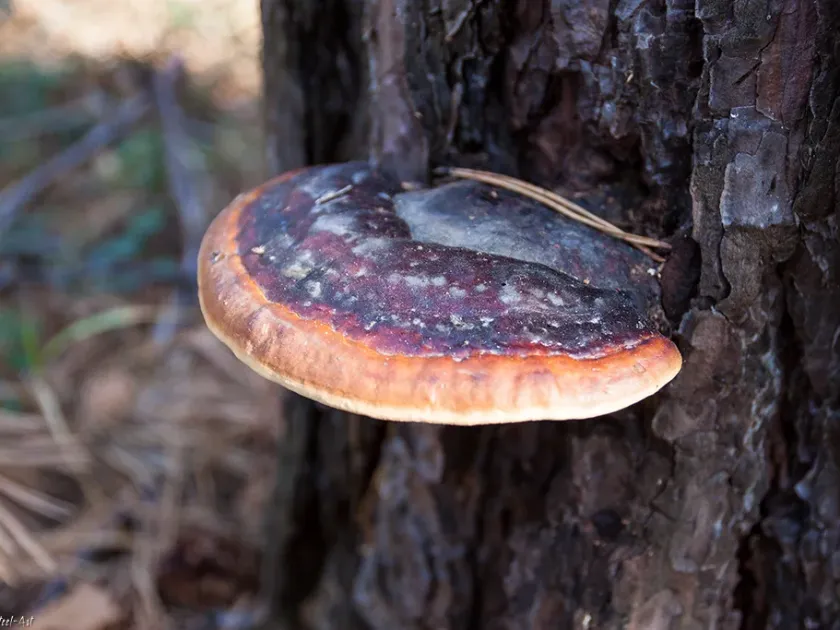
The fungus produces perennial, hoof-shaped fruiting bodies known as conks. These structures are hard and woody, often featuring a distinct reddish-brown or orange band near the margin, which is a key diagnostic feature.
The mycelium of Fomitopsis pinicola secretes enzymes that break down cellulose within the wood cells. As the lignin remains mostly unaffected, the wood loses its structural integrity and changes chemically.
Spores are released from the underside of the fruiting bodies and dispersed by wind. They colonize trees through wounds, branch stubs, or damage caused by frost, initiating the decay process inside the heartwood.
Conditions for development
The fungus flourishes in high-humidity environments and moderate temperature ranges. It primarily targets stressed or damaged trees that lack the defense mechanisms to contain the initial fungal infection.
High concentrations of downed wood or logging residues create an ideal environment for spore production. In such conditions, the pressure from the pathogen increases, making it easier for it to infect neighboring healthy trees.
The optimal temperature for mycelial growth is between 15°C and 25°C. During these conditions, the fungus can rapidly expand throughout the interior of the tree, consuming wood tissue as its primary carbon source.
Mechanical damage to the bark, caused by harvesting equipment or wildlife, is a major factor in disease spread. Species like the Douglas-fir (Pseudotsuga) are particularly vulnerable if wounds are left untreated.
Extended periods of wet, cool weather facilitate the germination of spores on exposed woody surfaces. Poor forest ventilation and high tree density can also contribute to the creation of a favorable microclimate for the fungus.
Why it matters
The primary economic impact is the degradation of timber quality. Wood affected by brown cubical rot loses all its structural value, rendering it useless for construction, furniture, or high-quality lumber production.
Infested trees become significantly weaker and prone to windthrow. This poses a serious risk to forest safety, as damaged trees can fall unexpectedly, causing damage to property or posing threats to forest workers.
The disease reduces the long-term productivity of forest stands. As trees die or break, they leave gaps in the canopy, which leads to structural changes in the forest ecosystem and loss of timber yield.
The pathogen is highly persistent and can survive for many years in stumps and logs. This creates a reservoir of infection that can affect succeeding generations of trees if the forest is replanted without proper site sanitation.
Biodiversity can also be impacted negatively in production forests. While the fungus is part of natural cycles, in managed stands, it leads to the loss of large, mature trees that provide critical habitat and carbon storage.
Protection
The most effective management strategy is regular sanitation logging. Removing infected trees with visible fruiting bodies is essential to reduce the total spore load and limit the spread of the fungus to healthy trees.
Good forest hygiene is crucial, which involves the removal of logging residues and deadwood. By eliminating the food source for the fungus, the risk of new infections is significantly reduced within the stand.
Preventing physical damage to remaining trees during logging operations is vital. Using care when moving equipment and marking trees for removal helps avoid unnecessary wounding of standing timber.
For high-value trees or in parks, applying wound protectants to pruning cuts can help prevent fungal spores from entering the tree. This is especially relevant for Douglas-fir trees in susceptible areas.
Monitoring the forest for early signs of decay and implementing a management plan can prevent large-scale outbreaks. Consistent observation allows foresters to address potential hazards before they reach a critical stage.
Pathogens and affected parts
Affects crops · 1
Discussion
No discussions yet — be the first.