
Description
Symptoms
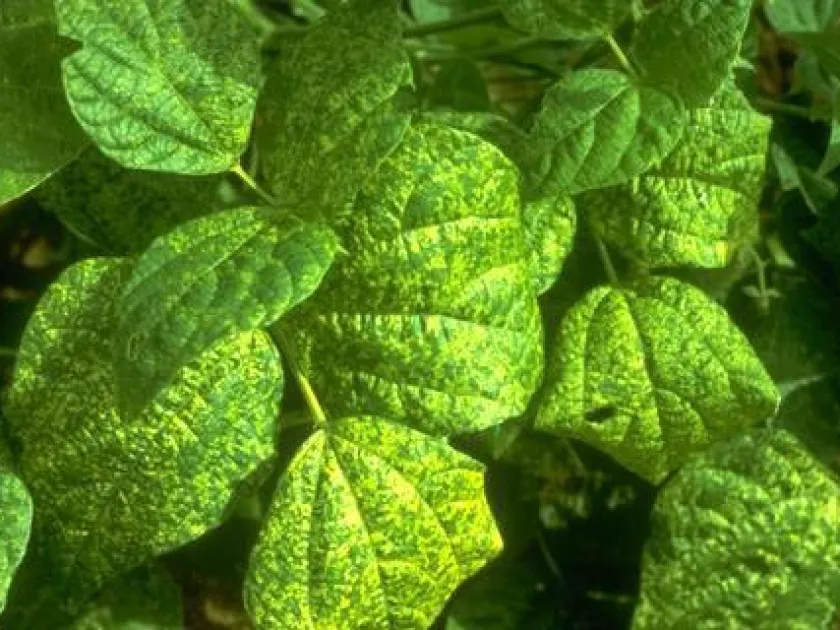
The primary symptom is the appearance of a mottled or mosaic pattern on the leaves, featuring alternating patches of light green, yellow, and dark green colors.
Leaves often exhibit deformation, curling, or wrinkling, which is a classic sign of the viral interference with normal leaf tissue development.
Stunting of the entire plant is commonly observed, often accompanied by shortened internodes and a reduced number of pods and seeds per plant.
In lentils and broad beans, infection can also manifest as chlorosis on the apical parts of the stems, leading to reduced vegetative biomass.
Affected plants often show a lack of vigor, pale coloring, and in severe cases, the development of necrotic spots along the veins of the leaves.
Pathogen
Broad bean mosaic is a viral disease primarily caused by the Cucumber mosaic virus (CMV), although other mosaic-type viruses may also be involved in specific regions.
It is classified as a systemic viral infection, which means the pathogen spreads throughout the entire plant system, affecting its growth and development.
The virus is highly transmissible and persists in a wide range of host plants, including many perennial weeds that act as overwintering reservoirs.
The main vectors for the transmission of this virus are aphids, which acquire the pathogen while feeding on infected plant tissues and move it to healthy crops.
The viral particles interfere with the plant's metabolic processes, essentially reprogramming the cellular functions to facilitate their own replication and spread.
Conditions for development
Viral development is highly dependent on environmental conditions that favor the activity and multiplication of aphid populations, typically warm and dry weather.
Disease outbreaks are frequently associated with the proximity of the crop to weed-infested areas or shelterbelts where the virus is maintained year-round.
Early-season infection is particularly damaging, as the virus has ample time to spread throughout the crop as the plants reach their peak growth stages.
High temperatures can stress the host plants, making them more susceptible to viral invasion and accelerating the manifestation of visible symptoms.
Management of the local ecosystem, including the removal of alternate hosts, is crucial to prevent the initial colonisation of the crop by virus-carrying aphids.
Why it matters
The disease causes significant economic loss by drastically reducing the yield potential of legume crops like lentils and broad beans.
By disrupting photosynthesis and nutrient translocation, the virus limits the energy available for seed formation, resulting in shriveled or smaller grains.
Infected plants have a diminished capacity for nitrogen fixation, which further weakens the plant and reduces its overall resilience in the field.
Productivity losses can vary based on the timing of the infection; plants infected early in the season suffer much greater damage than those infected later.
Poor seed quality from infected plants may also reduce the value of the harvest, making it unsuitable for commercial food production or as high-quality seed.
Protection
The most effective management strategy is integrated pest management, starting with strict weed control in and around the field to remove viral reservoirs.
Timely insecticidal application to control aphid populations is essential, especially during the early growth stages of the crop to prevent secondary spread.
Using certified, virus-free seeds and planting resistant or tolerant cultivars are foundational practices for mitigating the risks associated with this disease.
Crop rotation and spatial isolation from other susceptible legumes help in maintaining a lower viral pressure within the agricultural production system.
- Strict weed management.
- Vector control (aphid suppression).
- Use of resistant legume varieties.
- Proper field hygiene practices.
- Optimal crop nutrition to maintain health.
Pathogens and affected parts
Affects crops · 1
Discussion
No discussions yet — be the first.