
Botryosphaeria canker
Botryosphaeriaceae
Description
Symptoms
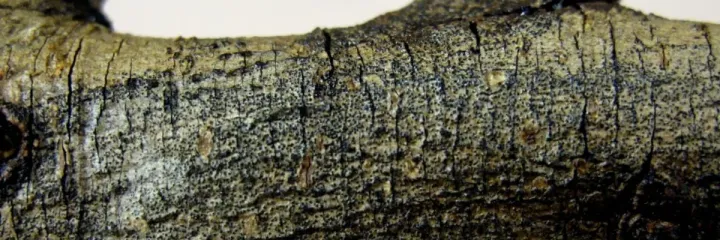
The primary symptom of the infection is the development of deep, sunken necroses (cankers) on the bark of trunks and branches, which eventually crack. The bark in the affected areas turns a dark, almost black color, often leading to the death of entire tissue sections.
On leaves, the disease manifests as brown spots with characteristic zonation that expand rapidly. Over time, the affected tissue may fall away, creating holes and reducing the photosynthetic capacity of the foliage.
Fruits are primarily affected during the ripening stage, developing soft, rotted spots that quickly encompass the entire fruit. Frequently, fungal fruiting bodies appear as small black bumps on the surface of the rot.
Internal tissues of infected branches and fruits often turn brown due to the destruction of cellular structures by the pathogen’s enzymes. Severe infestation results in premature wilting, fruit drop, and dieback of shoot tips.
Systemic infection leads to overall plant weakening, slowed vegetation, and a significant decrease in winter hardiness, making the tree highly susceptible to secondary infections.
Pathogen
The causal agents are fungi from the Botryosphaeriaceae family, belonging to the Ascomycota group. These are polyphagous organisms capable of infecting a wide range of woody and shrub species.
The fungus persists in infected bark tissues, fallen leaves, and mummified fruits as mycelium or fruiting bodies. In spring, the pathogen activates, releasing conidia and ascospores that are dispersed by wind and rain splashes.
Infection most commonly enters the plant through mechanical damage to the bark, sunburns, frost cracks, or pruning wounds. The pathogen produces specific enzymes that degrade the lignin and cellulose of the host tissues.
The fungal life cycle is closely linked to the weakening of the host’s immune system caused by environmental stress. Within the tissues, the fungus spreads through the vascular system, clogging it with its metabolic products.
The high specialization of the pathogen allows it to exist in a latent form, where the plant is infected, but external symptoms only manifest when favorable conditions arise for the fungus.
Conditions for development
The development of Botryosphaeria canker is favored by periods of high humidity and moderately warm temperatures, which stimulate fungal sporulation. Optimal infection conditions typically occur in late spring and summer.
A key factor in disease spread is the presence of plant wounds, which serve as entry points for the infection. Poorly healed pruning cuts are the most frequent sites where an epidemic begins.
Improper care, including excessive nitrogen fertilization that prevents wood hardening or severe moisture deficits, significantly increases plant susceptibility. Weakened trees cannot effectively resist mycelial penetration.
Dense, poorly ventilated crowns create a specific microclimate with high humidity, providing an ideal environment for spore germination. Overcrowded plantings accelerate the spread of the disease from tree to tree.
Frequent temperature fluctuations and early autumn frosts cause micro-cracks in the bark, through which the pathogen penetrates deep into the wood, becoming a source of chronic infection for many years.
Why it matters
Botryosphaeria canker poses a massive threat to commercial orchards as it causes mass dieback of scaffold branches and tree death. This results in loss of orchard productivity and the need for expensive removal and replanting.
Fruit infection makes the harvest unsuitable for market or long-term storage. Even with minor external signs, fruits rot quickly during transit or when stored in warehouses.
The disease disrupts sap flow and nutrient uptake, leading to critical exhaustion of the plant. The tree loses its ability to set flower buds, causing a sharp decline in crop yields in subsequent seasons.
Infected bark areas become hotspots for secondary infestation by stem-boring pests, such as bark beetles, which further weaken the tree. This creates a synergistic effect that accelerates the death of the plant.
Economic losses include not only the loss of marketable yield but also the costs associated with sanitary measures, fungicide applications, and replacing dead trees with young saplings.
Protection
The primary control method is strict adherence to cultural practices, including regular sanitary pruning. Removal of all infected branches must be performed, including a portion of healthy tissue, and the cut surfaces must be disinfected.
It is important to maintain proper bark care: removing dead tissue, whitewashing trunks, and timely treatment of wounds. Garden sealants or specialized pastes should be used to cover cuts and prevent spore entry.
Application of copper-based fungicides during dormancy (early spring and late autumn) helps reduce the infection load. During the growing season, preventive spraying with systemic fungicides according to regulations is recommended.
Mechanical damage to trunks during soil cultivation in tree basins must be avoided. A well-organized irrigation system and balanced mineral nutrition help maintain a high level of natural plant immunity.
In cases where outbreaks are detected in intensive orchards, it is recommended to use protection schedules that include rotating fungicides with different modes of action to prevent the development of pathogen resistance.
Discussion
No discussions yet — be the first.