
Bitter beech bolete
Boletus pulchrotinctus
Description
Symptoms
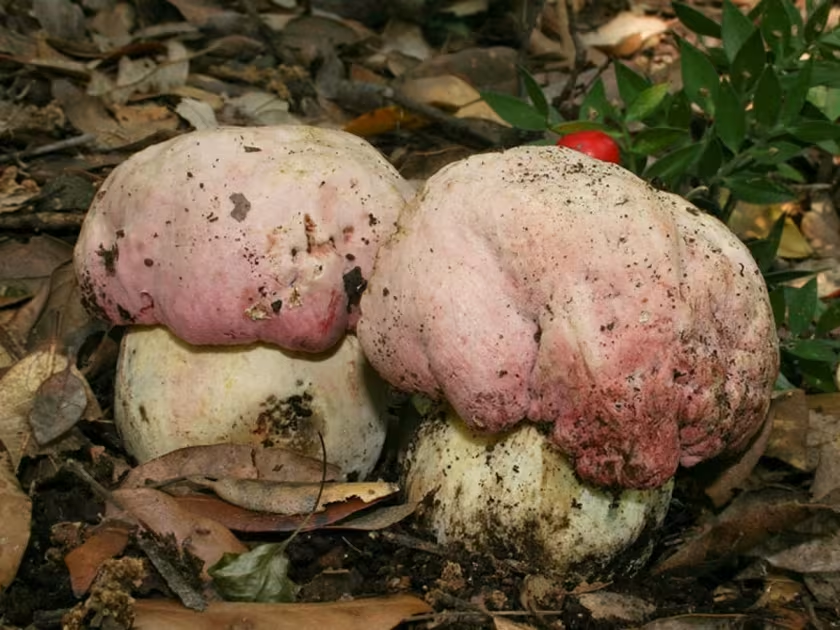
The fruiting body has a massive cap with a diameter ranging from 6 to 15 centimeters. The surface of the cap is colored in light pink or cream tones, often with a reddish hue, as reflected in its naming.
The hymenophore of the fungus consists of pores that are yellowish in young specimens and become more intense with age. Upon pressure, the flesh of the mushroom may turn slightly blue at the site of damage.
The stipe is firm and prominent, often yellowish in color with a characteristic pinkish or reddish reticulated pattern. The base of the stipe is usually thickened, which is typical for many representatives of the bolete genus.
The flesh of the mushroom, when sliced, may release a specific odor resembling raw meat or protein decomposition products. This serves as one of the diagnostic signs for identifying the species.
- Cap: hemispherical, then convex, pinkish.
- Pores: lemon-yellow, changing color when damaged.
- Stipe: tuberous with a distinct red network.
- Flesh: dense, with a characteristic smell.
Pathogen
The Bitter beech bolete (lat. Boletus pulchrotinctus) is a higher basidiomycete fungus belonging to the Boletaceae family. From a biological perspective, this object is not a pathogen of agricultural crops.
This fungus leads a saprotrophic or mycorrhizal lifestyle, inhabiting primarily deciduous forests consisting of oak and beech trees. In an agronomic context, it does not attack plant tissues or cause rot or infectious processes.
The mycelium of the fungus develops in leaf litter or soil, forming symbiotic relationships with the root systems of trees. It possesses no pathogenic properties against field or garden crops.
Botanically, it is a large mushroom with a fleshy cap and characteristic coloration, which can be mistakenly identified as an edible species. Its classification as a plant disease agent is a mycological error.
For agronomists, this object is of interest only in the context of site safety in agroforestry areas. It poses no threat to agroecosystems, therefore, phytosanitary control measures are not applied.
Conditions for development
The Bitter beech bolete prefers limestone soils rich in humus. It is frequently found in temperate climates within oak and beech forest stands.
The optimal time for the appearance of fruiting bodies is from July to September. The fungus requires sufficient soil moisture levels and moderate air temperatures, which are characteristic of early autumn.
Mycelium development is slow, penetrating deep into the forest litter. Favorable factors include the presence of mature host trees and the absence of intensive soil fungicide treatments.
The fungus is sensitive to sudden changes in humidity. During severe droughts, fruiting ceases, and the mycelium enters a dormant state until optimal conditions are restored.
In gardens or agroecosystems located near forest areas, the presence of this mushroom indicates a healthy forest soil condition and a stable biological cycle.
Why it matters
The primary danger of this species lies in its toxicity to humans and domestic animals if consumed accidentally. It is classified as an inedible and poisonous mushroom.
Ingestion causes significant gastrointestinal distress. Toxins affect the mucous membranes of the digestive tract, provoking severe nausea and vomiting.
The chemical composition of the fungus is not fully understood, but the presence of alkaloids classifies it as a potentially hazardous object. For livestock, accidental grazing on the fungus may lead to intoxication.
The fungus does not cause direct crop damage, quality reduction, or equipment degradation. Agronomic risk is limited strictly to food safety and occupational health concerns.
The economic impact of the mushroom's presence on a plot is practically zero. Measures to eradicate it from fields or gardens are usually unnecessary, as it is not a parasite of cultivated plants.
Protection
Specialized chemical control methods against this fungus have not been developed. Since it is not a pathogen, the use of fungicides is considered inappropriate and environmentally unjustified.
Prevention involves restricting access for domestic animals to areas of active fruiting if they are located on farm premises or pastures.
If mushroom removal is necessary in decorative gardens or residential areas, mechanical collection and disposal of fruiting bodies are recommended. This prevents spore dispersal in the immediate vicinity.
A crucial aspect is the education of personnel. Employees should be able to identify the fungus to prevent accidental inclusion in the food ration.
Maintaining optimal agrotechnical practices, including regular soil maintenance and clearing of excess forest litter, naturally reduces the likelihood of mycelium growth in areas of active agriculture.
Discussion
No discussions yet — be the first.