
Gangrene of potato
Boeremia foveata
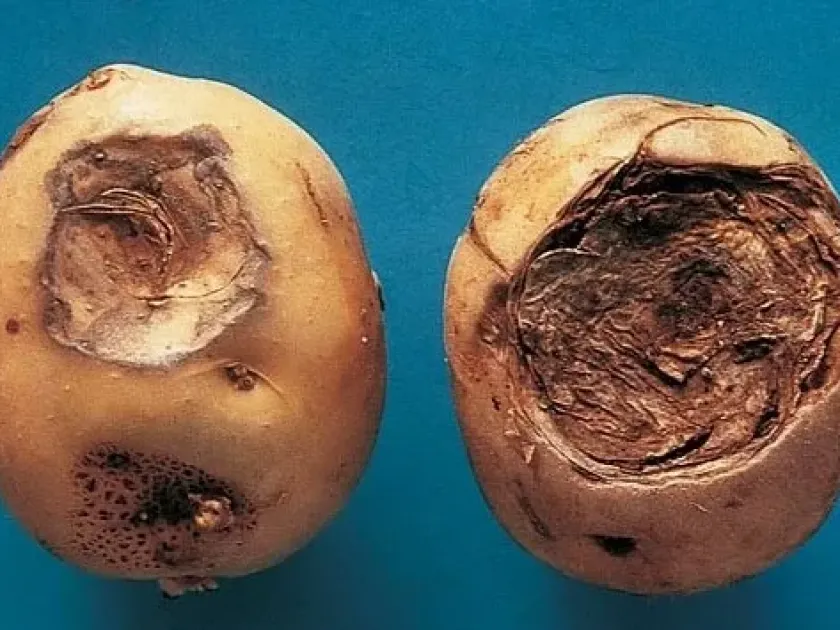
Description
Symptoms
Visible symptoms appear as dark, sunken, circular lesions on the surface of the potato tuber, often with a slightly puckered appearance.
Inside the tuber, the infected tissue becomes brown and dry, with a distinct, sharp boundary between the decayed and healthy parts of the potato.
One of the hallmark signs of gangrene is the formation of hollow cavities inside the tuber, which are often lined with a white or grey mycelial mat.
These cavities are frequently filled with pycnidia, appearing as tiny black pinheads that are easily visible upon slicing the tuber.
As the disease progresses, the potato loses its integrity and eventually shrivels, becoming brittle and turning into a dry, necrotic mass.
Pathogen
Potato gangrene is a serious fungal disease caused by the pathogen Boeremia foveata (formerly known as Phoma foveata), which primarily affects tubers.
The fungus is a soil-borne pathogen that can survive in the field for several years, waiting for suitable conditions to infect new potato crops.
The life cycle involves the formation of pycnidia, which are small fruiting bodies that produce spores, facilitating the rapid spread of the disease.
Infection usually occurs through wounds, cuts, or bruises caused during the harvesting process, allowing the fungus to colonize the tuber tissues.
Once inside, the pathogen invades the intercellular spaces and secretes enzymes that break down cell walls, leading to tissue degradation.
Conditions for development
The disease thrives in cool and damp conditions, which are typical for the autumn harvesting period and the initial storage phase.
Poor ventilation and high humidity in storage facilities significantly accelerate the spread of the pathogen from infected to healthy tubers.
The optimal temperature range for the development of the fungus is between +5°C and +15°C, making storage temperature control crucial.
Heavy, waterlogged soils at harvest time increase the pressure of infection on tubers, providing a moist environment for fungal colonization.
Any mechanical handling that results in skin damage or bruising creates an entry point for the fungus to establish its primary infection sites.
Why it matters
The primary damage caused by potato gangrene is substantial crop loss, which often manifests after the potatoes have been stored for several months.
It is particularly problematic for seed potato producers, as infected tubers lead to poor germination and weak, diseased plants in the field.
The rot is difficult to detect during the initial grading process, leading to the risk of "hidden" infections spreading throughout entire storage stacks.
Economic losses are compounded by the labor costs associated with sorting and discarding rotten tubers during the long-term storage period.
Secondary infections by bacteria and other fungi often follow the initial gangrene damage, resulting in a total breakdown of the stored product.
Protection
Integrated disease management begins with crop rotation to ensure the pathogen population in the soil is significantly reduced before planting potatoes.
Gentle handling during harvesting and sorting is the most effective preventative measure to minimize the wounds that allow the pathogen to enter.
Proper curing of potatoes after harvest is essential to allow the skin to heal and the tubers to form a protective barrier against fungal invasion.
Maintaining a strictly controlled temperature (ideally between +2°C and +4°C) in storage prevents the fungus from developing aggressively.
- Thorough cleaning and disinfection of storage bins.
- Using high-quality, certified seed potatoes.
- Avoiding harvest during excessively wet weather.
- Monitoring storage bins for early signs of decay.
Discussion
No discussions yet — be the first.