
Description
Symptoms
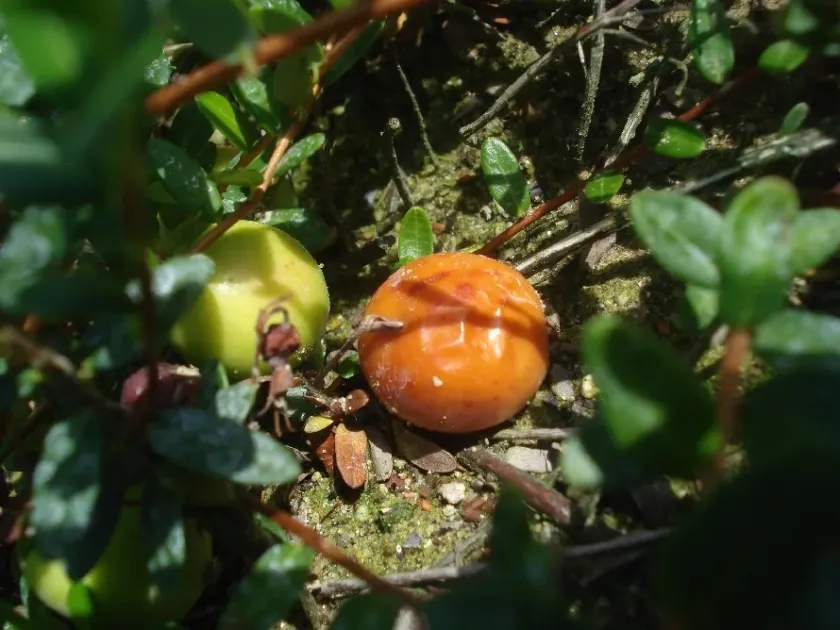
The most characteristic sign of the disease is the appearance of distinct spots on the berry surface. Initially, these appear as small, pale, or light-brown specks that expand over time, often featuring blurred margins.
As the infection advances, the spots turn into a darker brown or blackish color. The internal tissue of the berry softens, loses its firmness, and eventually becomes a watery, decaying mass, rendering the fruit commercially unmarketable.
Tiny black dots, known as pycnidia, often develop on the skin of affected berries. In high-humidity environments, these structures release masses of spores, signaling an active stage of the fungal infection.
Internal berry contents become watery and loose upon colonization by Physalospora vaccinii. Over time, the fruits shrivel and turn into dry, mummified structures that often remain attached to the pedicels.
The disease can affect individual berries or entire clusters. Visual inspection during the pre-harvest phase is usually effective for identifying symptomatic fruit, which often shows distinct color changes and deformations.
Pathogen
The causative agent of this disease is the fungus Physalospora vaccinii, which belongs to the class of ascomycetes. This pathogen primarily targets the reproductive organs of the American cranberry, developing within the tissues of ripening or mature berries.
The fungal life cycle involves the production of pycnidia and perithecia, which act as primary inoculum sources. The pathogen can persist for long periods in crop debris, fallen leaves, and mummified berries left on the field after harvest.
Spore dissemination occurs primarily through rain splashes, wind, and the movement of agricultural equipment across the field. Under high-humidity conditions, these spores germinate and infect the fruit through microscopic skin breaks or insect-induced wounds.
Once inside, the fungus colonizes the internal tissues of the fruit, systematically breaking down its cellular structure. The biological strategy of Physalospora vaccinii allows it to thrive during the critical fruit-filling stage, making the crop highly vulnerable.
Disease progression is closely linked to the plant's phenological phases. The peak infection period typically coincides with the time leading up to harvest, necessitating diligent monitoring for commercial growers.
Conditions for development
High relative humidity is the primary environmental driver for blotch rot development. Frequent rainfall, morning fog, and stagnant air within dense canopies provide the perfect conditions for fungal spore germination.
Moderate temperatures paired with excess moisture significantly shorten the incubation period of the fungus. Under such conditions, Physalospora vaccinii can spread rapidly throughout the entire plantation.
High planting density restricts airflow, causing dew and rainwater to remain on the berries for extended periods. This prolonged wetness is a major factor that facilitates fungal entry into the fruit tissue.
Improper irrigation management, such as overhead sprinkling during evening hours, keeps the canopy wet throughout the night. This practice is a common cause of fungal outbreaks in commercial cranberry bogs.
Insect damage to the berries creates entry points for the pathogen. Fields with high insect pressure are significantly more susceptible to blotch rot, as damaged skin provides an easy pathway for fungal penetration.
Why it matters
The primary economic impact is the direct loss of harvestable yield. Affected berries are unsuitable for fresh-market sale and cannot be processed, as the rot spreads rapidly during transit and storage.
Blotch rot severely reduces the shelf life of the entire batch. Even a small number of infected berries in a container can lead to total crop loss, as the fungus quickly moves from infected to healthy fruit through contact.
The disease increases production costs due to the need for labor-intensive fruit sorting. Managing contaminated yields requires extra equipment and time, which negatively impacts the farm's overall profitability.
Fungal by-products can degrade the quality of processed cranberry products, such as juices or preserves, lowering the final grade of the manufactured goods and potentially affecting consumer perception.
Chronic field infection leads to a buildup of inoculum over time. Without effective management, the disease pressure increases annually, potentially making the plantation non-viable due to consistent yield reductions.
Protection
Prevention starts with selecting proper planting sites, ensuring excellent air drainage, and installing efficient water management systems to avoid surface water stagnation.
Regular pruning and canopy management help maintain optimal plant density, improving airflow and ensuring that berries dry quickly after rainfall or irrigation events.
- Removal and destruction of mummified fruit to reduce the primary inoculum load.
- Integrated pest management to prevent fruit skin damage from insects.
- Scheduled fungicide applications during high-risk phenological stages.
- Optimal irrigation timing (morning watering to ensure rapid drying).
Chemical control involves the use of registered fungicides. Applications should be timed to coincide with flowering and fruit set to prevent the initial colonization of berries by Physalospora vaccinii.
Regular phytosanitary monitoring is essential for early detection. Removing local hotspots of infection immediately can help prevent a widespread outbreak and protect the healthy portion of the crop from fungal spread.
Pathogens and affected parts
Affects crops · 1
Discussion
No discussions yet — be the first.