
Description
Symptoms
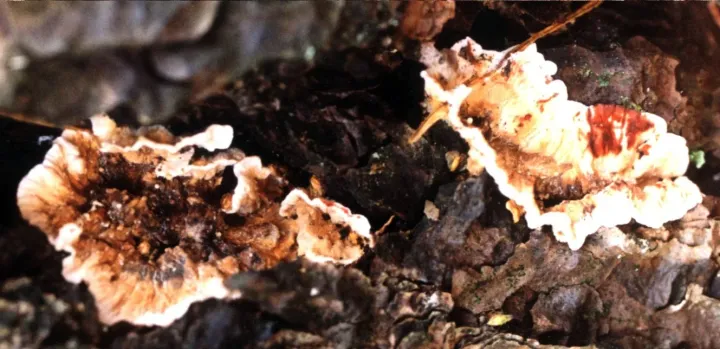
The most visible sign is the development of resupinate or shelf-like fruiting bodies on the bark of trunks. These bodies are brownish but turn bright red when wounded.
Internally, the wood undergoes advanced decay characterized by a brownish, crumbly, and brittle texture. The structural integrity of the affected log is severely compromised.
Affected trees often show signs of overall decline, such as chlorotic needles, thinning canopy, and stunted growth compared to healthy neighboring trees.
Resin exudation is a frequent response of the tree to the fungal invasion, resulting in noticeable resin flow on the bark surface near the infection site.
- Appearance of leather-like fruiting bodies
- Red pigment release when the fungus is damaged
- Advanced brown cubical rot of wood
- Increased risk of stem breakage
Pathogen
The causative agent of this disease is the wood-decaying fungus Stereum sanguinolentum, which belongs to the basidiomycetes group. It is a common pathogen known for causing brown rot in coniferous trees.
The fungal mycelium typically invades the tree through open wounds, pruning cuts, or broken branches. Once inside, it secretes enzymes that break down the complex structure of wood fibers.
The fungus is famously known as the bleeding fungus because its fresh fruiting bodies exude a deep red fluid when scratched or physically damaged.
Stereum sanguinolentum acts as a facultative parasite, meaning it can survive on both living wood and dead woody debris, making it a persistent threat in forests.
The spores produced by the fungus are wind-dispersed, allowing it to colonize new susceptible hosts over significant distances throughout the growing season.
Conditions for development
This fungus thrives in cool, moist environments. Dense forest stands with limited airflow create the high-humidity microclimate required for optimal spore germination.
Wounded trees are highly susceptible. Mechanical damage caused by logging equipment, storms, or wildlife activity significantly increases the likelihood of fungal colonization.
The disease is particularly aggressive in stands where trees are already stressed by drought, poor soil quality, or defoliating insect outbreaks.
Fresh stumps and slash left behind after timber harvesting are primary substrates that allow the fungus to build up its population before moving to living trees.
Prolonged damp seasons facilitate the growth of the fungal mycelium, allowing it to spread more rapidly through the heartwood of the tree.
Why it matters
The economic impact is substantial as the fungus destroys the quality of timber, making logs unsuitable for structural wood production due to internal decay.
The fungus causes butt and heart rot, which significantly reduces the tree's ability to withstand wind, leading to widespread windthrow and forest breakage.
By compromising the tree's vascular system, the fungus limits nutrient transport, causing severe growth suppression and reducing the total volume of usable biomass.
In Douglas fir plantations, this fungus can be devastating if young trees sustain physical injuries, potentially leading to widespread stand mortality.
The presence of the fungus creates hazardous conditions in managed forests, increasing the risk of sudden stem failure during heavy storms or winter snow loads.
Protection
Integrated forest management is the key to control. This includes removing infected trees and clearing hazardous debris to reduce the local spore load.
Minimizing physical injuries to the bark during silvicultural activities is essential. Protecting potential entry points prevents the initial establishment of the pathogen.
Applying fungicidal wound dressings to accidental bark injuries can help shield the tree while it naturally attempts to compartmentalize the damaged area.
Maintaining proper stand density is crucial for improving air circulation and preventing the accumulation of high humidity around the lower stems of the trees.
Regular forest health monitoring and the promotion of biodiversity help build resilient ecosystems that are better able to resist and compartmentalize fungal infections.
Pathogens and affected parts
Affects crops · 1
Discussion
No discussions yet — be the first.