
Description
Symptoms
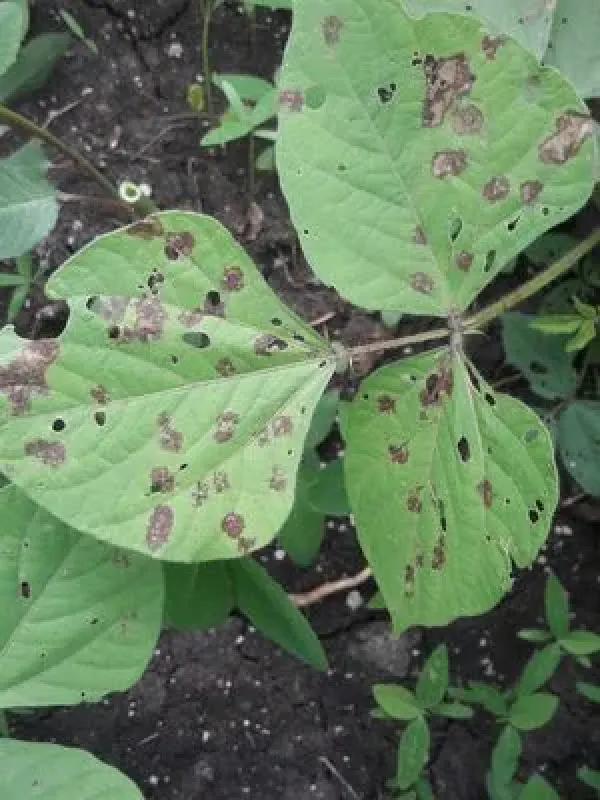
Initial symptoms are characterized by small, circular to irregular dark brown spots appearing on the leaves, usually with a light-colored center.
As the disease progresses, these spots expand in size and often merge, causing large, blighted areas across the leaf blade.
During humid weather, a grayish, fuzzy fungal growth appears on the center of the spots, identifying the active sporulation of the pathogen.
Severe infection causes yellowing (chlorosis) of the foliage, leading to premature leaf drop and a significant reduction in photosynthetic capacity.
Pods may also show circular, sunken lesions which can directly impact the quality and quantity of the seeds harvested.
Pathogen
The causative agent of this disease is the fungus Cercospora canescens, which is a common pathogen attacking various legumes.
This fungus exhibits a wide host range, infecting not only black gram (Vigna mungo) but also major crops like soybeans in tropical and subtropical regions.
The fungus survives between seasons in infected plant debris left on the field surface and within contaminated seeds used for sowing.
Spore production occurs during periods of moisture, allowing conidia to disperse via wind currents and splashing raindrops onto new leaves.
The pathogen thrives by colonizing plant tissues, secreting enzymes that lead to cellular breakdown and the characteristic necrotic spots.
Conditions for development
The disease development is highly favored by high relative humidity levels, typically exceeding 75% to 80% during the growing season.
Warm temperatures ranging from +24 °C to +30 °C provide the ideal environment for the rapid germination and growth of the fungus.
Frequent rainfall, prolonged cloud cover, and heavy morning dews contribute to the efficient spread and infection rate of Cercospora.
Dense plant canopies that lack proper air circulation create microclimates that keep the foliage wet for longer periods, promoting the disease.
Poor soil drainage and high plant density are agronomic factors that exacerbate the severity of the outbreak in the field.
Why it matters
The primary impact of the disease is a substantial loss in seed yield, resulting from reduced leaf area and limited nutrient accumulation.
In cases of severe infestation, crop losses can range from 30% to 60%, especially if the infection starts during the early flowering stage.
Seed quality is significantly diminished, resulting in shriveled, discolored, and low-germination seeds that are unsuitable for future planting.
The reduction in plant vigor makes the entire crop more susceptible to secondary pathogens and abiotic stress factors.
Economic damage is further compounded by the cost of chemical interventions required to halt the progression of the epidemic.
Protection
Implementing a diverse crop rotation is a fundamental management practice to prevent the build-up of the fungal inoculum in the field.
Sanitation practices, such as deep plowing to bury infested crop residues, help to minimize the primary source of the disease.
The use of high-quality, certified seeds treated with effective fungicides is recommended to eliminate seed-borne inoculum.
Applying preventative or systemic foliar fungicides at the onset of symptoms can effectively manage the disease under heavy pressure.
Selecting and planting resistant or tolerant cultivars is the most sustainable long-term strategy for managing Cercospora leaf spot.
Pathogens and affected parts
Affects crops · 1
Discussion
No discussions yet — be the first.