
Description
Symptoms
Early symptoms appear on leaves and cotyledons as greyish-brown spots peppered with black pycnidia, which are small fruiting bodies of the fungus.
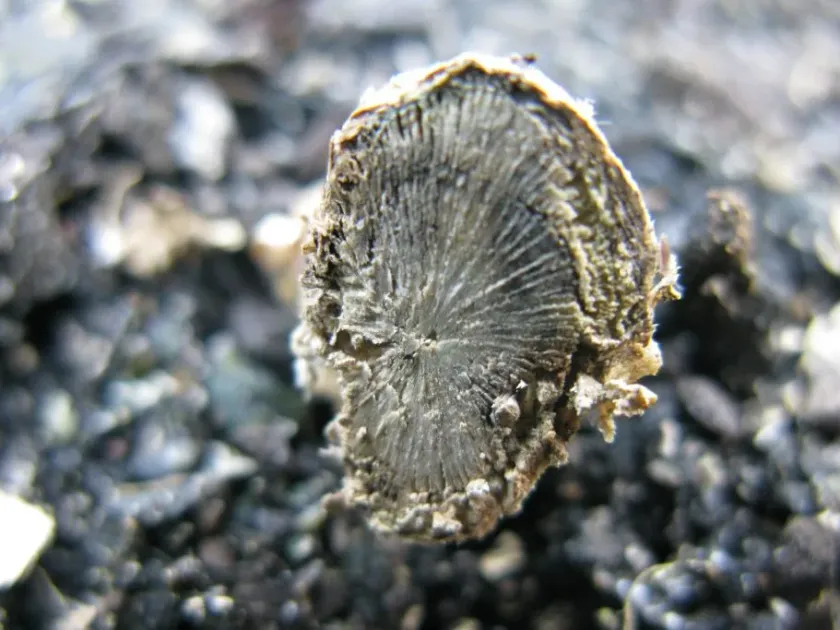
A distinctive sign is the development of a canker at the stem base, characterized by a brownish necrosis with a dark, often purplish-black, margin.
As the disease progresses, the stem tissue in the affected area dries out, cracks, and becomes brittle, often showing grey fungal mycelium inside the stem cavity.
Affected plants often display stunted growth, leaf chlorosis, and premature senescence of the lower leaves during the autumn and spring growth stages.
In advanced cases, the integrity of the stem is compromised, leading to premature lodging, which is particularly problematic during windy weather or harvest.
Pathogen
The causal agent of Phoma stem canker is the fungus Leptosphaeria maculans (anamorph Phoma lingam). It is a major pathogen of Brassica crops, including winter oilseed rape and radish.
The fungus produces two types of spores: pycnidiospores, which spread via rain splashes, and ascospores, which are wind-dispersed over long distances, facilitating rapid field colonization.
The pathogen overwinters on crop residues, infected seeds, and wild cruciferous weeds, remaining viable in the soil for several years and serving as a primary inoculum source.
The disease affects all parts of the plant. It begins as a leaf spot infection and progresses into a destructive stem canker that affects the vascular tissue of the plant.
Infection leads to systemic damage, disrupting water and nutrient transport, which ultimately causes severe physiological stress and potentially plant collapse.
Conditions for development
Phoma development is favored by moderate temperatures (20–25 °C) combined with high humidity and frequent rainfall, which trigger spore release and germination.
Dense crop stands create a humid microclimate that restricts airflow, providing optimal conditions for the fungus to spread from the lower leaves to the stem base.
Physical injuries caused by insects or machinery act as entry points for the pathogen, accelerating the infection process in the plant tissue.
Imbalanced soil nutrition, specifically high nitrogen coupled with a deficiency in boron and potassium, makes the plant significantly more susceptible to infection.
A mild, wet autumn promotes early infection of winter oilseed rape seedlings, which can severely jeopardize the crop's ability to survive the winter months.
Why it matters
Phoma stem canker is considered one of the most economically damaging diseases in oilseed rape production, capable of causing devastating yield losses globally.
Direct damage occurs through the destruction of the vascular system, which leads to reduced plant vigor, seed abortion, and smaller seed size at maturity.
The weakening of the root-stem junction leads to plant lodging, which complicates harvesting and increases grain loss in the field.
Severe infestations can lead to premature ripening of the pods, causing them to shatter and drop seeds before the harvesting operation can be completed.
Beyond yield reduction, the presence of fungal toxins can lower the quality of the harvested crop, making it less suitable for oil processing or animal feed.
Protection
- Rotate crops by avoiding Brassica species on the same land for at least 3 to 4 years.
- Use certified, high-quality, fungicide-treated seeds to eliminate initial inoculum.
- Control wild cruciferous weeds that serve as alternative hosts for L. maculans.
- Apply foliar boron fertilizers to strengthen plant tissue and improve natural resistance.
- Implement fungicide sprays during critical growth stages, particularly at the 4–6 leaf stage and during the flowering period, to manage infection pressure.
Pathogens and affected parts
Affects crops · 2
Discussion
No discussions yet — be the first.