
Bitter rot of grapes
Greeneria uvicola
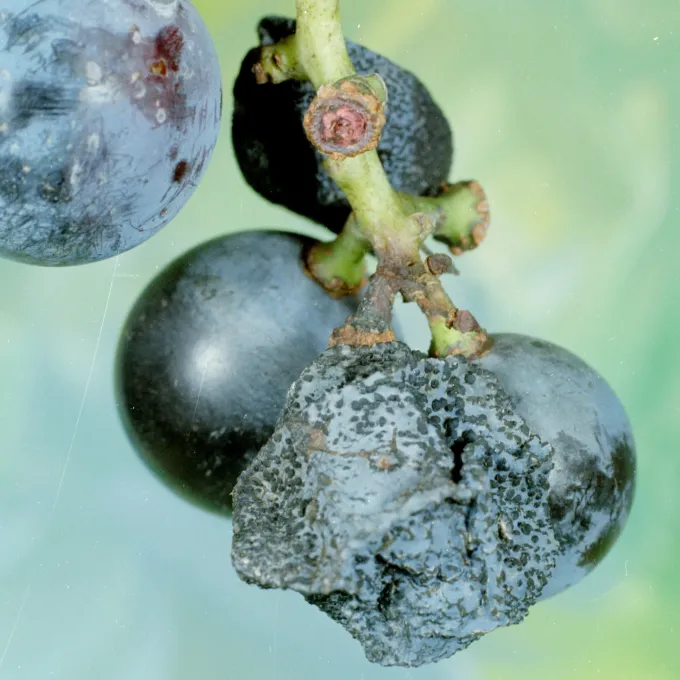
Description
Symptoms
Initial symptoms include the appearance of small, brown, circular spots on the grape berries. These spots expand rapidly, eventually covering the entire fruit, which becomes wrinkled and shriveled.
As the name suggests, the defining characteristic is the bitter taste of the infected berries. Even a low incidence of disease within a bunch can render the entire cluster unfit for winemaking or fresh consumption.
Black pycnidia appear on the surface of the rotted berries, often arranged in concentric circles. These structures are diagnostic, distinguishing this disease from other types of berry rots that may present with different fruiting patterns.
The fungus can also attack the rachis (stem of the cluster) and shoots, causing necrosis. This leads to the drying out of clusters and can prevent the translocation of nutrients to the berries, resulting in poor crop quality.
Under dry conditions, berries may dry up completely, turning into hard, persistent mummies. Unlike gray mold, this disease does not typically produce a thick, fuzzy gray mycelial mat on the berries.
Pathogen
The disease is caused by the fungus Greeneria uvicola (formerly known as Melanconium fuligineum). It is a pathogenic fungus that specifically targets grapevines, particularly during the berry maturation phase, leading to significant fruit decay.
The fungus develops by penetrating the skin of the grape berry. It produces large numbers of conidia within fruiting bodies called pycnidia, which emerge as small black specks on the surface of infected berries, facilitating the rapid spread of the disease.
In addition to Vitis vinifera, this pathogen has a host range that includes other fruit species such as apples, pears, and cranberries, making it a multifaceted threat in agricultural ecosystems where multiple crops are grown.
The pathogen overwinters as dormant mycelium or pycnidia in mummified berries, infected canes, and leaf debris left in the vineyard. When spring arrives, these sources become the primary inoculum for new infections.
The biological success of Greeneria uvicola lies in its ability to remain latent during early vine development and trigger rapid infection once the sugar content in the berries rises, creating a nutrient-rich environment for the fungus.
Conditions for development
High relative humidity and warm temperatures (25–30°C) are the primary environmental drivers for the development of bitter rot. Frequent rainfall is critical for spreading spores from infected debris to healthy clusters.
The most vulnerable stage for the vines is the period from veraison to harvest. During this time, the cuticle of the grape berry may become compromised, and the increasing sugar levels provide an ideal growth medium for the fungus.
Vineyard management practices, such as dense canopy architecture, significantly increase the risk by trapping humidity. Poor airflow prevents the rapid evaporation of moisture, extending the period during which spores can germinate.
Mechanical damage is a key factor; injuries from hail, insect feeding, or previous infections (like powdery mildew) create entry points for Greeneria uvicola, drastically accelerating the infection process.
Nitrogen-rich soils or excessive fertilization can promote lush, succulent growth that is more susceptible to fungal penetration, emphasizing the need for balanced nutrient management.
Why it matters
The direct economic impact stems from significant crop loss, which can reach 50–80% in years with severe weather conditions. This makes bitter rot a major concern for both table grape and wine grape producers.
Contamination of the grape supply causes undesirable bitter off-flavors in juice and wine. Because the fungus alters the chemical composition of the berries, affected fruit cannot be easily salvaged or processed.
The disease drains the vine's resources, impeding the proper hardening of canes before winter dormancy. This reduction in vigor leads to lower yield and cold sensitivity in the following growing season.
The presence of this pathogen in a multi-crop farm represents a risk to other fruit trees. Managing Greeneria uvicola requires a cross-commodity approach to prevent the movement of spores between different blocks of crops.
Increased expenditure on protective fungicides and additional labor for canopy management adds significantly to the production costs, impacting the overall profitability of the vineyard enterprise.
Protection
Effective control relies on an integrated pest management (IPM) strategy. Cultural practices, such as canopy thinning and shoot positioning, are essential to improve air circulation and sunlight penetration, keeping berries dry.
Rigorous sanitation is paramount. All infected fruit, mummified clusters, and necrotic wood must be removed from the vines and the orchard floor and destroyed, as these are the primary sources of overwintering inoculum.
Chemical control involves the timely application of fungicides during the growing season. Copper-based compounds or systemic products effective against Coelomycetes are used to protect the clusters during critical infection windows.
- Promote airflow through canopy management and leaf removal;
- Remove and destroy infected berries and plant debris;
- Control insects that damage berry skins;
- Monitor weather patterns to time fungicide applications precisely.
Integrating biological control agents that compete with the fungus, alongside a responsible fungicide rotation program, helps in maintaining healthy vines while preventing the development of resistant pathogen strains.
Pathogens and affected parts
Affects crops · 4
Discussion
No discussions yet — be the first.