
Betanucleorhabdovirus venasonchi
Betanucleorhabdovirus venasonchi
Description
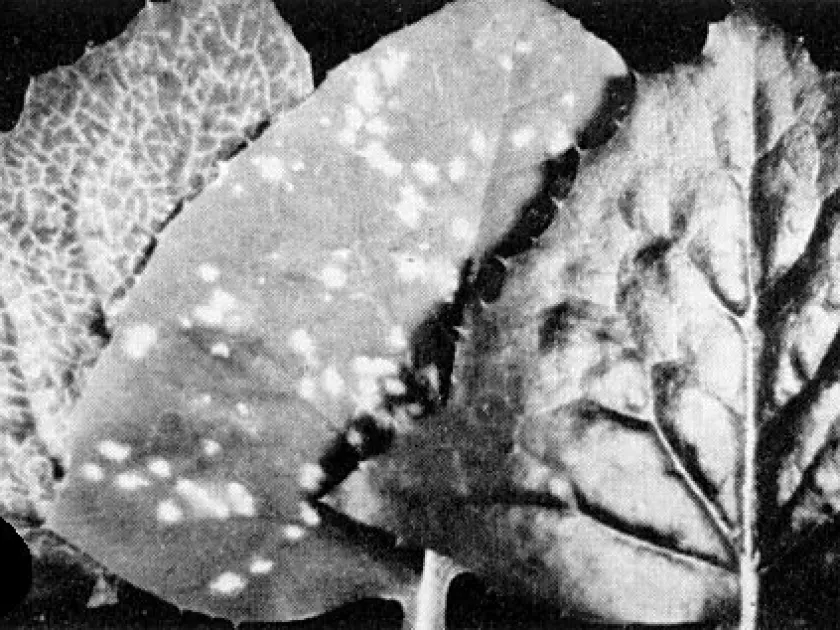
Symptoms
The first symptoms typically appear as chlorotic stripes or mottling on the leaf blades. Over time, these patterns may become more pronounced and result in widespread yellowing.
Stunted growth is a hallmark of this infection, as the virus severely limits the developmental potential of the plant. Shortened internodes and reduced plant height are common manifestations.
Leaf curling, twisting, or abnormal crinkling may occur as the infection progresses, reflecting the systemic interference with plant hormone regulation and metabolic processes.
Reproductive development is frequently impaired, leading to poor head filling, spikelet sterility, or the formation of underdeveloped, shriveled seeds that significantly lack viability.
Visual identification requires careful observation, as similar symptoms can sometimes be caused by nutrient deficiencies, necessitating lab-based molecular testing to confirm the diagnosis.
Pathogen
Betanucleorhabdovirus venasonchi is a virus belonging to the genus Betanucleorhabdovirus, within the family Rhabdoviridae. As an RNA virus, it specifically replicates within the nucleus of the infected host cells.
This pathogen primarily targets monocotyledonous plants, particularly members of the Poaceae family. It induces a systemic infection, moving through the plant's phloem to reach various tissues and organs.
The transmission of the virus is strictly dependent on insect vectors, such as leafhoppers or aphids. Once an insect feeds on an infected plant, it acquires the virus and becomes a long-term carrier, capable of transmitting it to healthy plants during subsequent feedings.
The viral particles exhibit a characteristic bacilliform morphology. Its genome consists of a single-stranded negative-sense RNA molecule, which encodes the essential proteins required for replication and structural integrity.
The biological cycle of the virus is intricately linked to the feeding habits and life cycle of its insect vectors, which facilitates its persistence and distribution within agricultural ecosystems.
Conditions for development
The prevalence of the virus is directly influenced by the population dynamics of its insect vectors. Warmer temperatures and optimal humidity levels promote the multiplication of these vectors.
Weed populations in and around fields act as crucial reservoirs for the virus, allowing it to survive periods when the primary host crop is not being cultivated.
The intensity of disease spread is correlated with the duration of the vectors' feeding period on susceptible plants. Early-season infestation is usually the most detrimental for crop yield.
Agricultural practices that encourage mono-cropping or neglect field sanitation create an environment where the virus can easily accumulate and thrive over multiple seasons.
Environmental stress, such as water deficit or poor soil fertility, can render crops more susceptible to viral invasion by weakening their natural physiological resistance mechanisms.
Why it matters
The major impact of this disease is a substantial reduction in total crop yield. Infected plants often produce significantly less biomass and grain weight compared to healthy specimens.
Grain quality is negatively affected, leading to smaller, shriveled kernels that may fail to meet market standards for weight, protein content, or milling requirements.
The virus compromises the plant's ability to perform efficient photosynthesis and assimilate nutrients, causing systemic metabolic breakdown and increased susceptibility to other pathogens.
Field-wide infections can cause non-uniform maturity, which complicates harvesting operations and often leads to higher post-harvest losses and increased processing difficulties.
Economic damage stems from both direct yield loss and the increased costs of implementing mitigation strategies, vector control measures, and potential crop re-planting.
Protection
Managing the vector population is the primary strategy for disease control. Strategic application of insecticides during the initial stages of vector migration can effectively reduce infection rates.
Sanitation practices, including the removal of weeds and crop debris, are essential to eliminate the virus's survival reservoir during the off-season.
The use of certified, virus-free seed stock is crucial to preventing the introduction of the pathogen into new fields and protecting the overall crop health from the start.
Maintaining proper spatial isolation between fields and avoiding overlapping planting dates for susceptible crops helps to restrict the movement of insect vectors.
- Breeding and planting resistant crop varieties.
- Timed sowing to avoid peak insect activity periods.
- Field monitoring and regular scouting for vectors.
- Effective destruction of post-harvest residues.
- Utilization of diagnostic assays like ELISA or PCR for early detection.
Discussion
No discussions yet — be the first.