
Beet necrotic yellow vein virus
Betanecrovirus betae
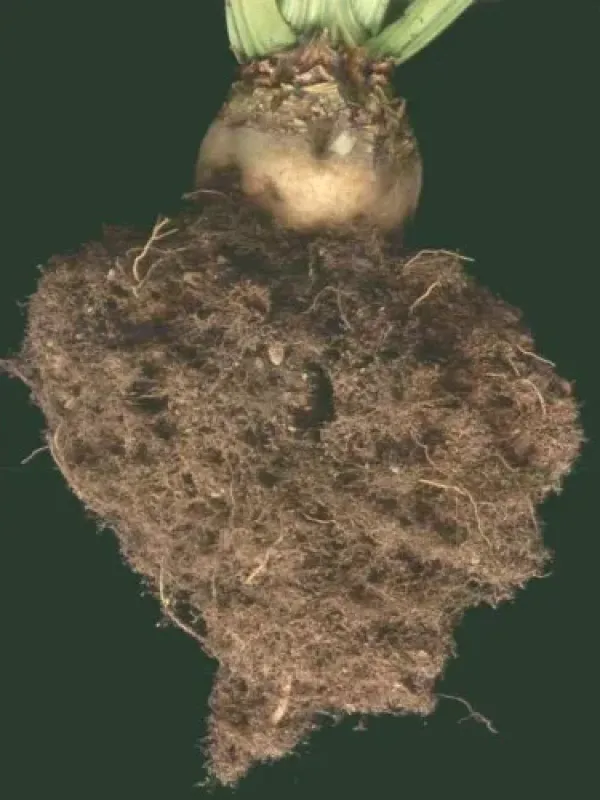
Description
Symptoms
Early symptoms of the infection appear as chlorotic spots on the leaves, which eventually turn bright yellow. Affected areas of the leaf blade progressively die, creating distinct necrotic lesions of various shapes.
Infected plants show significant growth retardation, often resulting in a deformed rosette of leaves. The leaf margins frequently curl inwards or upwards, which drastically reduces the total photosynthetic surface area of the crop.
In field conditions, the disease spreads in patches, which is directly linked to the activity of virus vectors in the soil. Visually, the disease may resemble nutrient deficiencies, but the characteristic tissue necrosis helps to differentiate the viral origin.
Root development in infected plants is significantly stunted, leading to a substantial decrease in mass compared to healthy plants. During later stages of the growing season, premature wilting and drying of the entire canopy may occur.
Upon examination of the root system during the growing season, a reduced development of lateral rootlets is often observed. The final stages of infection are characterized by a total loss of commercial quality and reduced technological processing value.
Pathogen
The causative agent of the disease is the Beet necrotic yellow vein virus (BNYVV), belonging to the genus Benyvirus. It is a soil-borne pathogen known for its high stability in the environment and long-term persistence in crop residues.
The virus is transmitted primarily through soil biota, specifically via the motile zoospores of the soil-borne fungus Polymyxa betae, which inhabits the upper soil layers. Interaction between the pathogen and plant roots occurs under sufficient moisture conditions.
The fungus Polymyxa betae acts as the primary vector for the virus, infecting the beet root system. Viral particles enter plant cells through micro-wounds caused by the fungal infection process.
This virus is characterized by a narrow host range, primarily affecting members of the Amaranthaceae family. The rapid rate of replication within host tissues allows the virus to spread systematically through the plant's vascular system.
Genomic studies highlight the virus's ability to adapt quickly to diverse agro-climatic conditions. Its resistance to temperature fluctuations makes it a highly resilient pathogen that can persist in the soil for many years.
Conditions for development
Optimal conditions for disease development are found in heavy, waterlogged soils with poor drainage. High water tables promote the movement of vector zoospores and ensure intensive root infection.
Soil temperatures between 15 and 22 degrees Celsius are highly favorable for active viral invasion of the root system. It is during this period that the greatest number of new infection patches appear in the field.
Breaches in crop rotation and continuous cultivation of sugar beet provoke the accumulation of the inoculum in the soil. Over time, the density of the pathogen in the topsoil increases, worsening the phytosanitary situation.
Mechanical damage to the root system during cultivation practices facilitates virus entry. Root damage caused by soil pests also creates entry portals for the pathogen.
Inadequate soil aeration and surface crust formation contribute to water stagnation, creating ideal conditions for the lifecycle of the soil-borne vector. In dry years, the activity and spread of the infection are noticeably reduced.
Why it matters
The economic impact of BNYVV primarily manifests as a significant reduction in root yield. Marketable yield in heavily infested areas can drop by 20–40% compared to the cultivar's full genetic potential.
The virus negatively influences sugar accumulation in the roots, which is critical for sugar beet production. Reduced sugar content leads to lower yields of refined product during industrial processing.
Infection compromises the storage quality of beets, as weakened plants are more susceptible to secondary bacterial rots. This leads to massive losses during long-term storage in piles.
Reduced biological resistance to other diseases, such as Cercospora leaf spot or powdery mildew, is a common indirect consequence of viral infection, leading to complex field management problems.
Financial losses also include the costs of additional chemical interventions and the potential need to write off the most severely affected fields. Patchy infection patterns make mechanical harvesting more difficult and lower the overall quality of the harvest.
Protection
The primary control method is strict adherence to a long-term crop rotation, avoiding sugar beet on the same field for at least 4–5 years. This practice helps to significantly reduce the population of soil-borne vectors.
Weed management is a crucial preventive measure, as weeds can act as reservoirs for the viral infection. Maintaining clean fields minimizes the risks of pathogen transfer via insects and mechanical contact.
Using resistant or tolerant sugar beet hybrids is the most promising strategy. Modern breeding programs focus on creating varieties capable of restricting viral replication within plant tissues.
Implementing land reclamation measures, such as improving drainage and soil structure, prevents water stagnation. Optimizing the soil water regime effectively hinders the spread of the fungus-vector's zoospores.
- Thorough destruction of plant residues after harvest.
- Monitoring and control of soil pests that damage roots.
- Timely application of balanced mineral fertilizers to boost plant immunity.
- Use of certified, high-quality seed material free from latent infections.
Discussion
No discussions yet — be the first.