
Rice transitory yellowing virus
Betacytorhabdovirus oryzae
Description
Symptoms
Symptoms typically begin with the yellowing of the leaf blades, starting from the tips and progressing towards the base of the leaf.
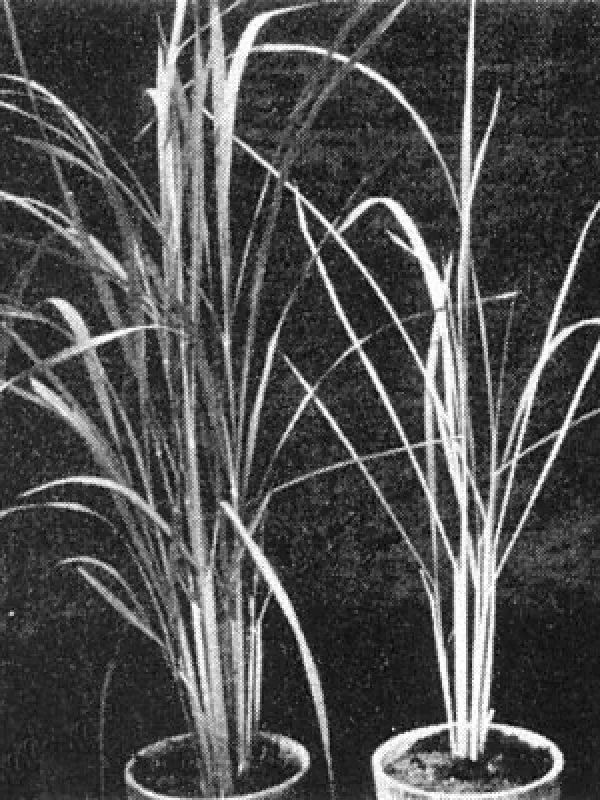
Infected rice plants exhibit severe dwarfing, significantly reduced tiller numbers, and an overall stunted appearance compared to healthy crops.
The leaves may turn a distinct bright golden-yellow color, and in later stages, they may become brittle and roll inwards along the margins.
Reproductive growth is severely hampered, often resulting in plants failing to produce panicles or producing only sterile, underdeveloped ones.
The appearance of yellowing patches in the field is a classic sign of the virus spreading from initial infection foci via insect vectors.
Pathogen
The causative agent of the disease is the Rice transitory yellowing virus (RTYV), officially classified as Betacytorhabdovirus oryzae.
It is a member of the Rhabdoviridae family, known for its distinct bullet-shaped or bacilliform morphology under electron microscopy.
The virus infects the plant's vascular tissue, primarily the phloem, where it replicates and disrupts the movement of essential nutrients and photosynthates.
This systemic infection leads to long-term physiological changes in the host plant, resulting in significant growth stunting and metabolic failure.
The virus is transmitted in a persistent, propagative manner by green rice leafhoppers, specifically Nephotettix apicalis and Nephotettix cincticeps.
Conditions for development
The prevalence of the virus is directly linked to the population dynamics of its insect vectors, which thrive in humid and warm climates.
High insect activity during the early tillering stage of the rice crop creates a high risk for rapid transmission throughout the field.
Weed hosts surrounding the rice paddies often act as reservoirs for both the virus and the leafhopper vectors during the off-season.
Over-fertilization with nitrogen can lead to lusher vegetation, which attracts more leafhoppers, thereby increasing the probability of vector-to-plant transmission.
Staggered planting dates within a region can facilitate the movement of viruliferous insects from older, infected fields to younger, more susceptible ones.
Why it matters
Rice transitory yellowing disease causes substantial yield losses, sometimes resulting in complete crop failure in severe epidemic years.
Grain quality is drastically compromised, leading to lower milling recovery, increased percentage of chalky grains, and reduced market value.
The stunted growth and reduced vigor make infected plants more susceptible to secondary infestations by pests and other soil-borne diseases.
The economic burden on farmers is increased due to the need for continuous insecticide application and potential replanting of severely damaged areas.
Beyond individual losses, the widespread presence of the virus can destabilize local food security in rice-dependent regions.
Protection
Management of the virus relies primarily on controlling the vector population through timely and targeted insecticide applications.
Field sanitation, including the destruction of weeds and volunteer rice plants, is crucial to eliminate the reservoir of the virus.
Utilizing resistant or tolerant rice varieties is considered the most sustainable long-term solution for managing RTYV in endemic areas.
Implementing synchronous planting over large areas can help minimize the exposure of young, vulnerable crops to peak leafhopper populations.
- Regular scouting for leafhopper populations using yellow sticky traps.
- Strategic irrigation management to limit vector breeding environments.
- Promoting healthy soil nutrient balance to improve plant resistance to stress.
Discussion
No discussions yet — be the first.