
Barley stripe mosaic virus
Betacytorhabdovirus hordei
Description
Symptoms
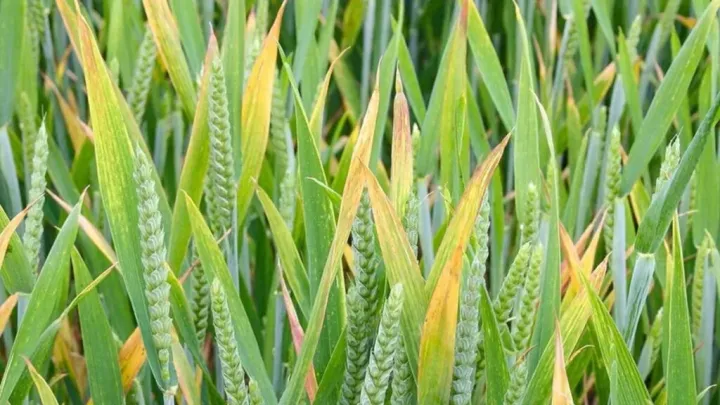
The primary symptom of this viral disease is the emergence of intermittent light green or yellow stripes on the barley leaf blades.
As the infection progresses, these stripes may coalesce into large chlorotic areas, leading to premature yellowing and necrosis of the lower leaves.
Infected barley plants exhibit stunted growth, often appearing as dwarfs compared to healthy plants, with a significantly reduced number of tillers.
The heads of affected plants are often small, deformed, and may exhibit sterility, which directly contributes to a substantial reduction in yield.
Field observation shows infected plants typically appear in patchy, irregular zones, highlighting the systemic spread of the virus within the crop stand.
Pathogen
The causative agent is the Betacytorhabdovirus hordei, a virus classified within the Rhabdoviridae family, which is transmitted by specific insect vectors.
While barley is the primary host, this virus can also affect various wild grasses, which serve as natural reservoirs for the pathogen throughout the year.
The disease is characterized by systemic infection, meaning the virus moves through the vascular tissues to affect all parts of the developing plant.
Transmission occurs through insect vectors, specifically leafhoppers, which acquire the virus while feeding on infected sap and transmit it to healthy tissues.
The viral particles exhibit a distinct bacilliform shape, a typical morphological trait for the genus, allowing the virus to persist within the plant cells.
Conditions for development
Disease development is highly dependent on the population dynamics of insect vectors, which thrive under warm and dry climatic conditions.
Early-season infection is facilitated when vector insects migrate from weeds or alternative hosts to young emerging barley seedlings in the spring.
Environmental factors, particularly temperature, influence both the life cycle of the leafhoppers and the rate of viral replication within the barley host.
Poor weed management and the presence of wild grass reservoirs near agricultural fields significantly increase the probability of early crop colonization.
Agricultural practices that promote high densities of insect populations or fail to address early weed infestation create a favorable environment for rapid spread.
Why it matters
The harmful impact is primarily realized through yield loss, which can range from 10% to 50% depending on the infection timing and severity.
By disrupting photosynthesis through leaf chlorosis, the virus reduces the plant's ability to produce grains, resulting in smaller and lighter kernels.
Infected plants display lower vigor and reduced tolerance to environmental stressors like drought, heat, or competition from weeds.
Secondary infections by fungal pathogens are more common in virus-infected plants due to compromised natural defense mechanisms.
The cumulative effect leads to lower grain quality, rendering the harvest less suitable for industrial processing or seed production purposes.
Protection
The most effective management strategy is the use of resistant or tolerant barley varieties developed through modern plant breeding programs.
Insecticide applications targeted at controlling leafhopper populations during peak migration periods can effectively reduce the primary spread of the virus.
Implementing strict sanitation practices, such as controlling grassy weeds and maintaining field borders, is essential to minimize virus transmission.
Strategic planting dates help to ensure that the most vulnerable growth stages of barley do not coincide with the peak activity of insect vectors.
- Monitor insect vector populations consistently
- Utilize certified disease-free seed stock
- Practice crop rotation to break the pest cycle
- Maintain robust soil fertility to support plant immunity
Discussion
No discussions yet — be the first.