
Cardamine mosaic virus
Betacarmovirus cardaminis
Description
Symptoms
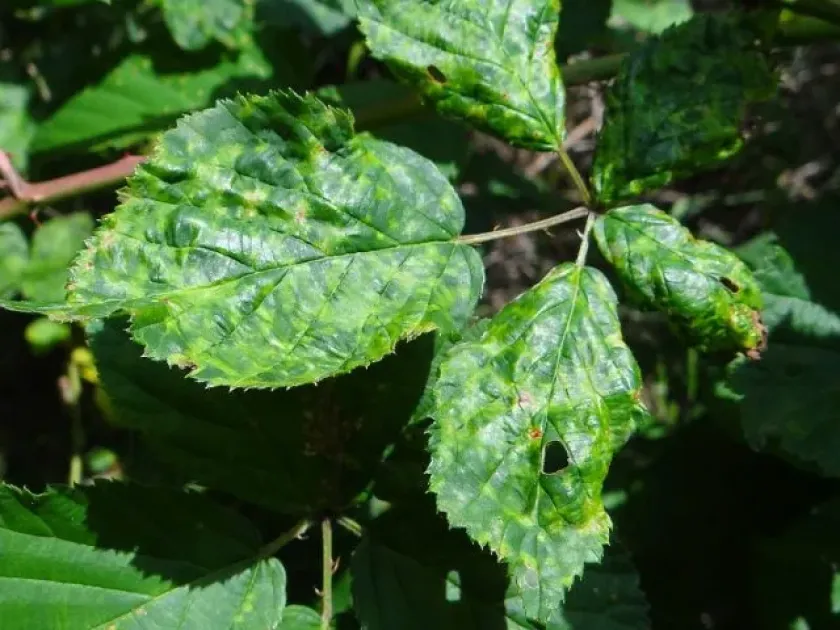
Initial infection symptoms typically manifest as chlorotic spotting on younger foliage. Over time, this spotting evolves into a classic mosaic pattern, featuring alternating light-green and dark-green tissue patches.
Affected plants often show severe leaf deformation, characterized by crinkling, curling, or significant stunting of the leaf blades compared to healthy specimens.
Systemic infection leads to overall plant dwarfing, with noticeably shortened internodes. This retarded growth prevents the plant from developing a healthy canopy, thereby limiting its photosynthetic capacity.
Reproductive stages are also impacted, with flowers often becoming deformed or failing to set fruit correctly. Any fruit that does develop is typically small, misshapen, and of inferior market quality.
In advanced stages, necrotic tissue may form on stems, potentially leading to wilting and the gradual dieback of specific branches or the entire plant.
Pathogen
Cardamine mosaic virus (Betacarmovirus cardaminis) is a viral pathogen classified within the Betacarmovirus genus. As an obligate parasite, it relies entirely on the metabolic machinery of host plants to complete its replication cycle.
The viral genome consists of a positive-sense single-stranded RNA molecule. The viral particles exhibit icosahedral symmetry, which is a characteristic feature of the Tombusviridae family.
Wild plants, particularly those in the Brassicaceae family such as bittercress (Cardamine spp.), serve as the primary natural reservoirs. From these hosts, the virus can spread to economically important vegetable crops.
The virus demonstrates significant environmental stability, allowing it to persist in soil and crop debris for extended durations, which complicates traditional sanitation efforts.
Recent molecular analysis has refined its taxonomy, confirming its classification within the group of betacarmoviruses, distinct from other plant-infecting viral families.
Conditions for development
Virus transmission is primarily facilitated by sap-sucking insects, such as aphids, which acquire the virus while feeding on infected plant tissues and introduce it to healthy hosts.
Favorable weather conditions, especially warmer temperatures, accelerate viral replication rates within the plant host and promote the rapid expression of systemic symptoms.
High crop planting density significantly increases the risk of transmission via mechanical contact, especially during agricultural maintenance or incidental damage to leaves.
The presence of weeds surrounding agricultural fields ensures a persistent infection source, as many wild hosts act as asymptomatic carriers throughout the year.
Environmental factors, including humidity levels, indirectly impact the spread by supporting the population dynamics of the insect vectors that drive the secondary infection cycles.
Why it matters
The primary economic consequence is the substantial loss of crop quality. Distorted fruit and stunted foliage result in significant yield reductions and diminished market value for fresh produce.
Disruption of photosynthesis causes a lack of sugar and nutrient accumulation in the fruit, negatively affecting flavor, storage life, and overall nutritional profile.
If early-season infection occurs, losses can be total, as the plant lacks the energy reserves required to produce a marketable yield before systemic decline sets in.
Managing viral diseases is costly, requiring strict labor-intensive efforts to rogue and dispose of infected plants, which reduces the overall profitability of the farming enterprise.
Fields with a history of the virus become long-term sources of inoculum, necessitating extensive quarantine measures and long-term crop rotation changes to prevent re-infection.
Protection
Effective management begins with rigorous weed control, specifically targeting wild Brassicaceae species that serve as primary reservoirs for the virus.
Implementing a proactive integrated pest management (IPM) program to control aphid populations is essential to reducing the viral load in the field throughout the growing season.
The use of virus-free planting stock and varieties bred for genetic resistance offers the most sustainable and efficient long-term solution for protecting crops from infection.
Maintaining adequate spatial separation between fields can significantly reduce the risk of primary viral introduction and limit the secondary spread to healthy crops.
- Sanitizing pruning tools between individual plants to prevent mechanical transmission.
- Prompt roguing and destruction of symptomatic plants including the root zone.
- Rotation to non-host crop species to interrupt the viral infection cycle in the soil.
Discussion
No discussions yet — be the first.