
Bermuda grass
Bermuda grass
Description
Symptoms
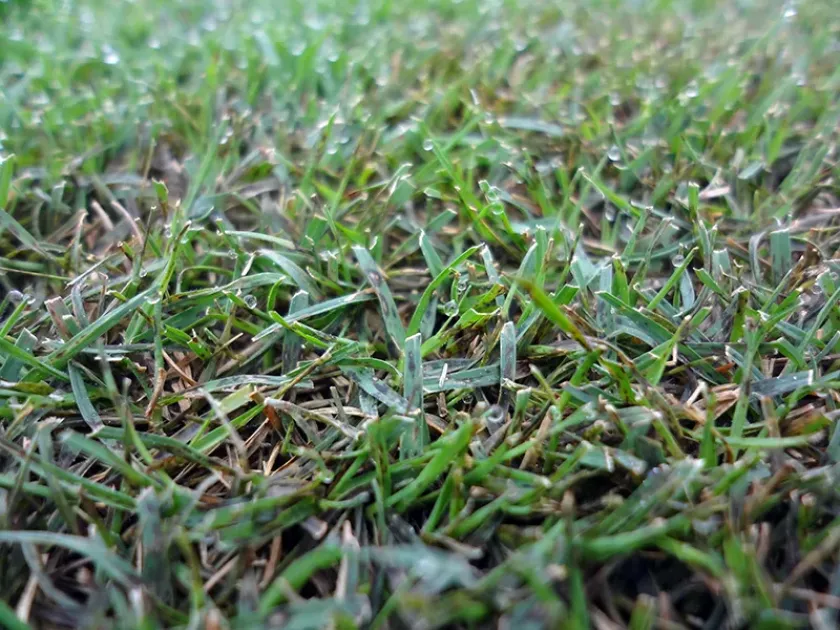
Early signs of infestation include the appearance of dense, low-growing mats of fine-textured, gray-green grass appearing within crop rows.
The stems are prostrate and creeping, forming a thick, interlocked mat that creates significant physical resistance for the roots of agricultural crops.
During the flowering stage, the plant develops characteristic inflorescences consisting of 3 to 7 finger-like spikes clustered at the top of the stalks.
Below ground, the signs are marked by a thick, tangled web of light-colored rhizomes that penetrate the topsoil layer deeply.
Affected crops typically show visible signs of nutrient stress, stunting, and yellowing, especially during periods of limited moisture.
Pathogen
Bermuda grass (scientifically known as Cynodon dactylon) is a highly aggressive perennial grass often categorized as a persistent weed in agricultural systems, acting similarly to a biological pest.
It belongs to the Poaceae family. While it is used as turf grass or forage in some tropical regions, in row crops, it is considered a major invasive threat due to its rapid growth.
The plant thrives primarily through its extensive underground rhizome and stolon system, allowing it to colonize large areas effectively and rapidly.
Its impact on cultivated crops is severe, as it competes for space, nutrients, and water, effectively "choking out" preferred agricultural plants.
Biologically, Bermuda grass is extremely difficult to eradicate because even small pieces of its rhizomes can regenerate into new, fully developed plants.
Conditions for development
Bermuda grass is a warm-season perennial that requires high temperatures for optimal development, with growth accelerating at temperatures above 20°C.
It is remarkably drought-tolerant and can survive in saline soils where other plants fail, making it a dominant species in stressed environments.
It prefers well-drained, sandy, or light textured soils, but its high adaptability allows it to thrive in almost any soil type or moisture condition.
Dispersal is driven by human activity, such as moving soil with rhizome fragments, as well as natural seed dispersal by wind and heavy rain.
Lack of frequent mechanical disruption during the early growing season allows this grass to form a persistent, almost indestructible subterranean network.
Why it matters
The primary harm is intense resource competition, which can lead to significant yield losses in corn, cotton, and other valuable broad-leaf crops.
Bermuda grass exhibits allelopathic properties, releasing chemical substances into the soil that inhibit the germination and growth of neighboring crops.
It serves as an important host and reservoir for various plant viruses and insect pests, which then migrate to and damage surrounding healthy crops.
The presence of dense root mats increases tillage resistance, leading to higher fuel consumption and increased wear on farm machinery.
Because it grows so rapidly, it can take over an entire field within one or two seasons if not managed with immediate and rigorous control strategies.
Protection
Control requires a combination of intensive tillage to expose rhizomes and chemical management to kill the plant's metabolic center.
Deep plowing combined with mechanical harrowing is essential for bringing the root network to the surface for desiccation by the sun.
- Application of systemic herbicides (e.g., glyphosate) when the grass is in active growth to ensure translocation to the roots.
- Implementing crop rotations that include dense-canopy crops to shade out Bermuda grass.
- Strict sanitation protocols for farm equipment moving between fields to prevent rhizome transport.
Regular monitoring and spot-treating infested areas early in the season are critical to preventing the spread of the weed to non-infested zones.
Long-term control is rarely achieved in a single year and requires consistent pressure to deplete the energy reserves stored in the extensive rhizome system.
Discussion
No discussions yet — be the first.