
Beet necrotic yellow vein virus
Benyvirus necrobetae
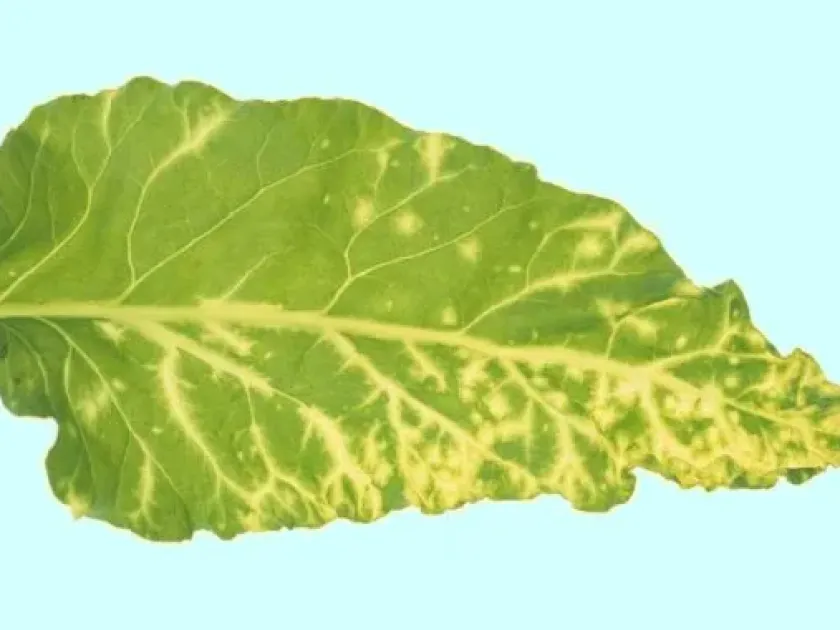
Description
Symptoms
The primary symptom, as the name suggests, is the yellowing of the leaf veins. This chlorosis often creates a distinctive pattern along the leaf venation system.
As the infection advances, necrotic lesions develop around the veins, often giving the leaf a scorched or shredded appearance. In severe cases, the entire leaf blade may die.
Above-ground symptoms are accompanied by dramatic root changes, often referred to as "root bearding." This involves an excessive proliferation of lateral roots and a constriction of the main taproot.
Affected plants are typically stunted and exhibit signs of severe physiological stress. In the field, symptoms usually appear in distinct patches that correspond to moisture-rich zones.
The stunted growth and reduced leaf area result in significantly impaired photosynthetic capacity, preventing the plant from developing a healthy, harvestable root.
Pathogen
The causal agent of this disease is the Beet necrotic yellow vein virus (BNYVV), which is the type species of the genus Benyvirus. It is a major pathogen of sugar beet globally.
The virus possesses a multi-partite genome and relies entirely on a biological vector for its movement and transmission between plant hosts in the field.
The soil-borne plasmodiophorid Polymyxa betae acts as the obligate vector for the virus. The virus persists within the resting spores of this protist for many years in the soil.
Infection occurs when the zoospores of Polymyxa betae penetrate the root hairs of the host plant, introducing the viral particles into the vascular system of the beet.
Due to the long-term survival of the vector's resting spores, the pathogen is extremely persistent, making it one of the most challenging diseases for beet growers.
Conditions for development
The development of the disease is highly dependent on high soil moisture levels. The vector, Polymyxa betae, requires water to release its zoospores and infect the roots.
Temperature plays a key role, with moderate soil temperatures favoring the activity of the vector and the subsequent rapid replication of the virus within the plant tissue.
Repeated cultivation of sugar beet in the same fields facilitates the accumulation of inoculum, as the virus can survive in the soil for over a decade in the absence of a host.
Poor soil structure and compaction, which prevent proper water drainage, create the perfect microenvironment for the vector to flourish and infect the crop.
Fields with a history of irrigation or those located in low-lying areas with a high water table are at the greatest risk for severe outbreaks of the disease.
Why it matters
The economic impact is severe, primarily manifesting as a massive loss in root weight and a significant decrease in sucrose content, making the crop unfit for processing.
The proliferation of lateral roots caused by the virus makes harvesting difficult and results in high levels of soil tare, further reducing the value of the delivered harvest.
Plants weakened by the virus are more susceptible to secondary infections, such as root rot pathogens, which can destroy the crop entirely during the growing season.
The viral infection disrupts the plant's nutrient uptake, leading to overall physiological decline and low-quality produce that does not meet industrial standards.
Large-scale outbreaks can force farmers to abandon sugar beet production in heavily infested fields, leading to long-term changes in land-use and crop management strategies.
Protection
The most effective strategy for managing the disease is the use of resistant or tolerant sugar beet varieties, which have been specifically bred to withstand BNYVV infection.
Implementing long-term crop rotation cycles (minimum 4-5 years) is crucial to help reduce the population density of the Polymyxa betae vector in the soil.
Improving field drainage and avoiding excessive irrigation are essential preventative measures to create conditions unfavorable for the zoospores of the vector.
Strict sanitation protocols must be followed to prevent the movement of infested soil between fields via agricultural machinery, which is a major contributor to spread.
- Utilizing clean, certified seed and avoiding contaminated fields.
- Regular monitoring of fields to detect patches of stunted plants.
- Soil management techniques to enhance drainage and air circulation.
- Balancing soil nutrition to help plants cope with stress.
Discussion
No discussions yet — be the first.