
Mung bean yellow mosaic virus
Begomovirus vignaradiataindiaense
Description
Symptoms
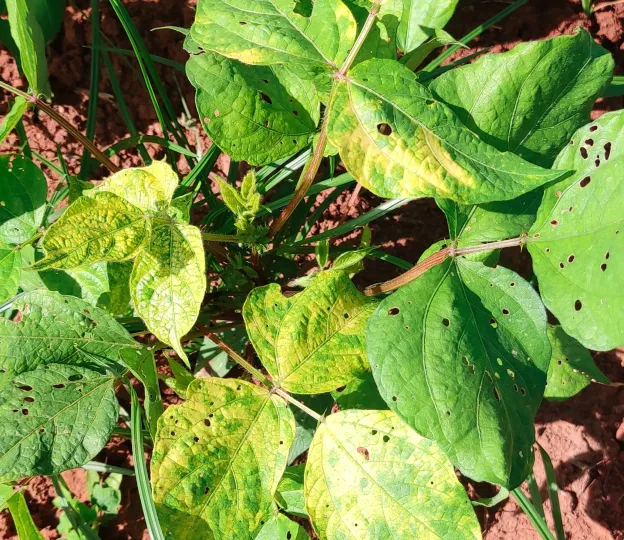
The primary symptom is the appearance of bright yellow or pale green mosaic patterns on the leaves, which contrast sharply with the healthy green tissue.
In advanced stages, the leaves may become completely yellow or white, severely limiting the plant's photosynthetic capacity and energy production.
Affected plants often exhibit significant stunting, reduced internode length, and malformed leaves that can look crumpled or puckered.
Floral abortion is a common consequence of infection, leading to a drastic reduction in pod formation and final seed yield per plant.
- Bright yellow mosaic symptoms on foliage
- Stunted plant growth and shortened internodes
- Reduced flower production and pod set
- Chlorotic patches spreading across the leaf surface
- Overall loss of plant vigor
Pathogen
Mung bean yellow mosaic disease is caused by a virus belonging to the genus Begomovirus within the Geminiviridae family.
The virus is characterized by a bipartite circular single-stranded DNA genome, which is enclosed within geminate viral particles.
It is transmitted in a persistent manner by the whitefly Bemisia tabaci, an insect vector that feeds on the plant's phloem sap.
The pathogen does not replicate within the vector but is carried and transmitted to healthy plants during the insect's subsequent feeding sessions.
Genetic diversity within these viral strains poses a significant challenge for plant breeders attempting to develop durable resistant cultivars.
Conditions for development
The incidence of the disease is highly correlated with the population density of the whitefly vector, which thrives in warm and humid conditions.
High temperatures accelerate both the lifecycle of the whitefly and the rate of viral replication within the host plants, leading to rapid outbreaks.
Weedy fields and the presence of alternative host plants serve as reservoirs for the virus, allowing it to survive between cropping seasons.
Planting dates that coincide with high migration peaks of whiteflies are particularly dangerous and often result in widespread crop failure.
Improper field hygiene, such as leaving debris or host weeds, significantly contributes to the persistent infection cycles within farming areas.
Why it matters
Mung bean yellow mosaic virus is considered one of the most destructive diseases affecting legume production throughout Southeast Asia and India.
Early-season infections can lead to near-total yield losses, as plants stop growing and fail to produce viable seeds or pods.
Beyond quantity, the infection degrades the quality of harvested grains, rendering them unsuitable for market or future planting efforts.
The economic burden is significant, requiring continuous investment in insecticide applications to manage the vector population.
Widespread outbreaks can disrupt local food supplies and reduce the income of smallholder farmers who rely on mung beans as a primary crop.
Protection
Integrated Pest Management (IPM) focusing on whitefly suppression is the most effective approach to limiting the spread of the virus.
Deploying resistant or tolerant cultivars remains the cornerstone of sustainable disease management and is highly recommended for endemic regions.
Field sanitation, including the aggressive removal of weed hosts surrounding the crop, helps reduce the local reservoir of both the virus and its vector.
The use of yellow sticky traps is an essential tool for monitoring the whitefly population to ensure timely insecticide application.
Adjusting the sowing window to avoid the peak whitefly migration periods can drastically decrease the initial infection rate in a new crop.
Discussion
No discussions yet — be the first.