
Tomato yellow leaf curl virus
Begomovirus solanumvulgarismusivi
Description
Symptoms
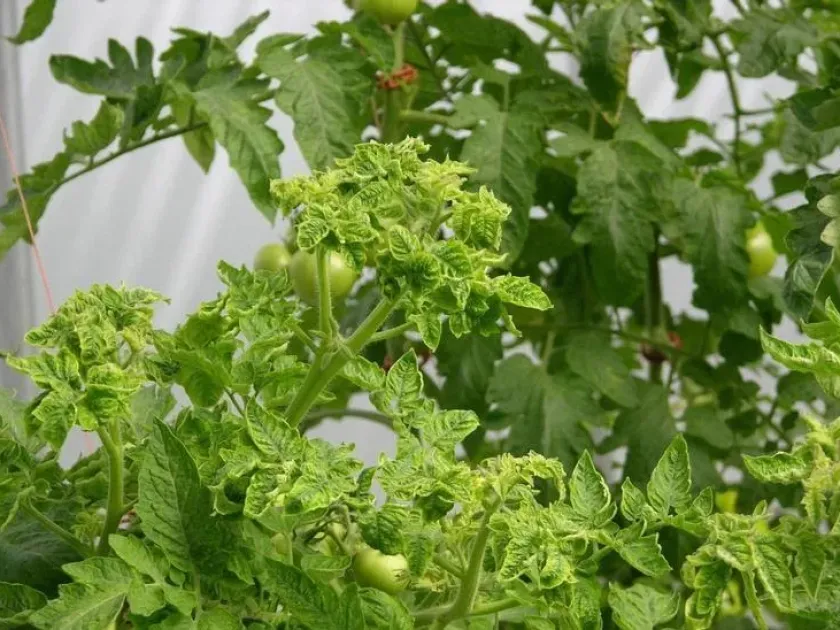
Symptoms typically begin with yellowing of the leaf margins and upward curling of the leaflets. The leaves become thickened, leathery, and significantly reduced in size.
Plants infected at an early growth stage show severe stunting and shortened internodes. This gives the plant a distinct, bushy, or rosette-like appearance that severely limits growth.
Flower drop is a common symptom, leading to total or partial fruit set failure. If fruit is produced, it is often undersized, deformed, and lacks commercial value.
The severity of symptoms depends on the plant variety and the age at which it was inoculated. Older plants may show milder symptoms, acting as latent reservoirs of the infection.
Discoloration often starts at the apical leaves, which is why monitoring the top portion of the tomato plant is crucial for early detection of the disease in greenhouse operations.
Pathogen
The causal agent is the Tomato yellow leaf curl virus (TYLCV), a member of the Begomovirus genus within the Geminiviridae family. It is a single-stranded DNA virus known for its genetic diversity and rapid adaptability.
The primary vector for the virus is the silverleaf whitefly, Bemisia tabaci. The insect acquires the virus by feeding on the phloem of infected plants and remains a carrier for the rest of its lifespan.
The transmission process is circulative and persistent. After ingestion, the virus must navigate the insect's gut and reach the salivary glands, requiring a specific latency period before it can be transmitted to healthy plants.
TYLCV has a broad host range, including tomatoes, peppers, beans, and various nightshade weeds. This widespread host range makes eradication efforts particularly difficult in agricultural landscapes.
There is no evidence of mechanical transmission or seed transmission for this virus, which confirms that whitefly population control is the absolute cornerstone of any disease management plan.
Conditions for development
The virus thrives under conditions that favor the rapid reproduction and movement of Bemisia tabaci. Warm, dry weather with temperatures exceeding +25°C is ideal for both the vector and the virus's spread.
In greenhouse settings, TYLCV can persist year-round if there is no break in the crop cycle. Continuous cropping provides a permanent supply of plant hosts for the whitefly population.
Weeds surrounding the production area are major reservoirs. Many weeds serve as hosts where whiteflies can acquire the virus before migrating into commercial greenhouses or fields.
Wind patterns facilitate the long-distance dispersal of viruliferous whiteflies, which can lead to sudden outbreaks even in areas that were previously considered free of the virus.
Poor greenhouse hygiene, such as leaving old crop debris inside, provides a habitat for whiteflies and potential virus reservoirs, increasing the infection risk for new seedlings.
Why it matters
TYLCV is considered one of the most destructive tomato diseases globally, capable of causing up to 100% yield loss if not managed properly during the initial stages of plant development.
The disease causes significant economic burden, forcing growers to invest heavily in insecticides to keep whitefly populations below the threshold required to trigger virus transmission.
Photosynthetic capacity is drastically reduced in infected plants, leading to poor sugar accumulation and fruit development, which renders the produce unfit for market.
Managing the disease often requires strict quarantine and sanitary protocols, which can disrupt logistics and market access for commercial tomato producers.
The inability to grow susceptible varieties in high-pressure regions necessitates the breeding of resistant cultivars, which represents a continuous, long-term cost for the industry.
Protection
Integrated Pest Management (IPM) is essential, with a focus on controlling Bemisia tabaci through the rotation of insecticides with different modes of action to prevent resistance.
Growing resistant tomato hybrids is the most effective and sustainable management strategy. Varieties with Ty-1, Ty-2, and Ty-3 genes have demonstrated high effectiveness in limiting damage.
Installing insect-proof screens (fine-mesh netting) over greenhouse openings is a critical physical barrier that prevents whiteflies from entering and introducing the virus.
Regular sanitation, including the removal of weeds around the greenhouse and immediate destruction of any symptomatic plants, is crucial to reduce the local infection pressure.
Monitoring the whitefly population using yellow sticky traps allows for early intervention, ensuring that insecticide applications are timed correctly to prevent the spread of the virus.
Discussion
No discussions yet — be the first.