
Tomato yellow leaf curl virus
Begomovirus solanumtoliaraense
Description
Symptoms
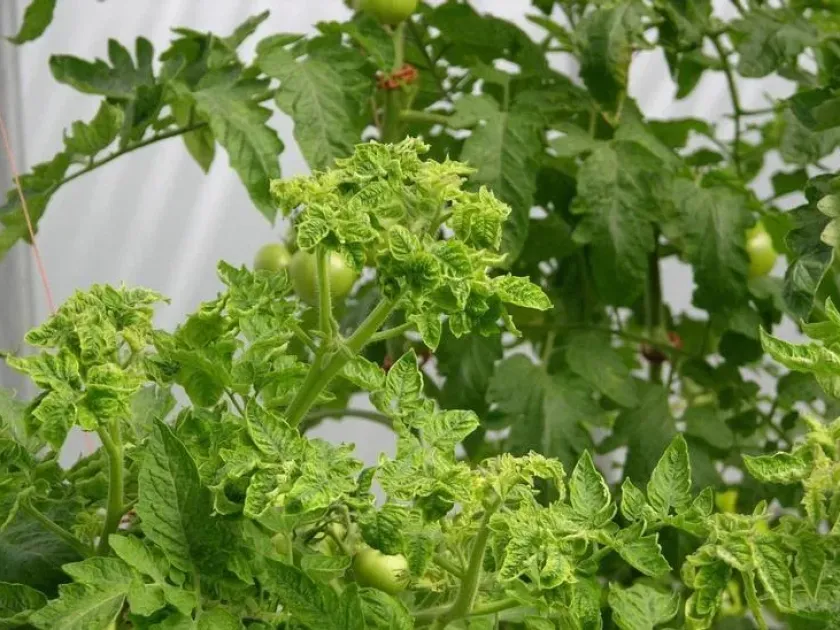
Typical symptoms include the upward curling of leaflets, which often start yellowing at the margins. As the disease progresses, the leaflets decrease significantly in size and develop a crinkled, brittle appearance.
Infected plants exhibit severe stunting, characterized by shortened internodes. The plant adopts a bushy or shrub-like growth habit, as lateral buds develop prematurely, creating a dense cluster of deformed, chlorotic foliage.
Flower drop is a common and serious consequence of TYLCV infection. When fruit formation does occur, the fruits are typically small, misshapen, and may have uneven ripening, rendering them unsuitable for commercial market sale.
Visual identification is most reliable during periods of active plant growth. Early-stage infection, particularly in seedlings or young transplants, can result in total crop failure as the plant remains stunted for the duration of its growth cycle.
While the symptoms are distinct, they can sometimes be confused with physiological disorders or damage caused by other pests like spider mites. Molecular diagnostic methods, such as PCR, are necessary for definitive identification.
Pathogen
Tomato yellow leaf curl virus (TYLCV) is a highly destructive plant virus belonging to the genus Begomovirus within the Geminiviridae family. It is characterized by a circular single-stranded DNA genome and causes systemic infection in many important solanaceous crops.
The virus is exclusively transmitted by the whitefly Bemisia tabaci in a persistent-circulative manner. The whitefly acquires the virus after feeding on infected plants and retains the ability to transmit it for the rest of its lifespan.
The pathogen is not transmitted through seeds, pollen, or mechanical sap contact during routine agricultural practices. Instead, it relies entirely on the movement of its vector, which can travel long distances via wind currents or human-assisted transport.
Once inside the plant, TYLCV particles move rapidly through the phloem. The virus interferes with the host plant's gene expression, leading to severe alterations in plant development, hormone balance, and overall morphology.
Due to its high evolutionary potential and the existence of multiple strains (such as the Israel and mild strains), TYLCV remains a significant challenge for researchers and farmers seeking durable resistance in commercial cultivars.
Conditions for development
The spread of TYLCV is heavily dependent on the environmental suitability for the Bemisia tabaci whitefly. Warm and dry conditions are ideal for whitefly reproduction, leading to massive population surges that facilitate rapid viral transmission.
Presence of alternative host plants, particularly weeds such as Solanum nigrum, plays a crucial role in maintaining the virus throughout the year. These weeds serve as "green bridges" that harbor the virus during the off-season.
In greenhouse environments, poor management of ventilation and insect screening allows whiteflies to thrive. The enclosed space protects the population from external factors, leading to high-intensity infection rates for the crop.
Heavy use of nitrogen fertilizers often results in rapid development of lush green foliage. This tender growth is highly preferred by whiteflies, which increases the likelihood of them settling and feeding, thereby spreading the virus.
Geographic proximity to uncontrolled fields or gardens with high whitefly populations significantly elevates the risk of viral introduction to commercial plots, even if the grower employs strict internal sanitation protocols.
Why it matters
TYLCV is considered one of the most economically damaging diseases for tomato production globally. Yield losses in susceptible varieties can reach 100% if the infection occurs shortly after planting, causing absolute devastation for farmers.
The marketable quality of the crop is destroyed. Even if the plant survives, the lack of fruit set and the poor aesthetic quality of the remaining produce mean that the harvest is often unsalable, leading to total financial loss.
The virus compromises the plant's physiological efficiency by reducing the photosynthetic area. This energy deficit weakens the plant, making it more susceptible to secondary fungal or bacterial pathogens that would otherwise be manageable.
Managing the disease imposes heavy financial burdens on growers, including the costs of constant insecticide applications, specialized exclusion netting, and the higher price of resistant seed varieties.
On a macro scale, the presence of the virus in a region necessitates strict phytosanitary regulations and quarantine measures, which can hinder local and international trade of agricultural products.
Protection
- Cultivating TYLCV-resistant or tolerant hybrids developed through modern breeding programs.
- Installing fine-mesh exclusion screens on greenhouse vents and doors to prevent vector entry.
- Implementing regular monitoring programs using yellow sticky cards to track whitefly population density.
- Applying systemic and contact insecticides as part of an Integrated Pest Management (IPM) strategy.
- Eradicating reservoir weeds in and around the farm perimeter to reduce inoculum sources.
Successful control begins with obtaining healthy, virus-free transplants. Buying seedlings from certified nurseries that practice strict vector control is the most effective way to prevent the initial introduction of the virus to a new site.
Cultural practices, such as crop rotation with non-host species, are vital. By ensuring that consecutive plantings are not attractive to the whitefly, farmers can disrupt the pest's life cycle and reduce the local viral load.
Biological control agents, such as the parasitoid wasp Encarsia formosa, can be used to manage whitefly populations in protected cultivation, reducing the reliance on chemical pesticides and promoting an ecological balance.
Collaboration among neighboring farmers is essential. Because the virus is vector-borne, controlling the disease requires a landscape-level approach; if a neighbor's field remains a source of whiteflies, the entire region remains at risk.
Discussion
No discussions yet — be the first.