
Solanum yellow leaf curl Thailand begomovirus
Begomovirus solanumflavusthailandense
Description
Symptoms
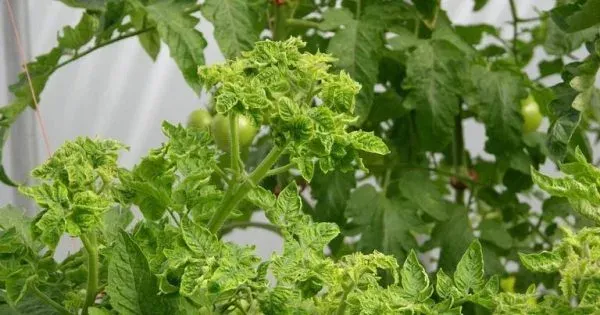
Symptoms typically begin as yellowing on the younger leaves at the apex of the plant. Over time, this progresses to severe interveinal chlorosis, which eventually covers the entire leaf surface.
Affected plants exhibit distinct leaf curling, distortion, and crinkling. The leaves become smaller and leathery, which significantly reduces the plant's photosynthetic efficiency and growth vigor.
Stunting is a major clinical sign of the infection. Internodes become shortened, leading to a compact, bush-like appearance that prevents the plant from reaching its full potential size.
Flowering is usually inhibited or interrupted. Many infected plants show a reduced number of flowers, and those that do form often undergo abscission, leading to poor fruit set and significant yield loss.
Fruits that do develop on infected plants are often small, misshapen, and may show mosaic patterns or uneven ripening, which renders them unmarketable for fresh consumption.
Pathogen
The causative agent is the Begomovirus solanumflavusthailandense, a member of the Begomovirus genus within the Geminiviridae family. It is a single-stranded DNA virus primarily distributed in Southeast Asia.
The virus is transmitted by the whitefly Bemisia tabaci in a persistent circulative manner. Once the insect acquires the virus by feeding on infected phloem, it remains infectious for the rest of its life cycle.
The viral genome consists of DNA components that facilitate replication and encapsulation. This virus infects the plant's vascular system, disrupting the transport of photosynthates and vital nutrients.
Given its high potential for mutation and genetic recombination, the virus can quickly adapt to new varieties, complicating breeding efforts for resistance in tomato and pepper crops.
While insect transmission is the primary route, the movement of infected plant material or seedlings over long distances is a significant factor in the transcontinental spread of the disease.
Why it matters
The economic impact of this begomovirus is severe, often resulting in widespread crop failure. In endemic areas, it is a limiting factor for the commercial production of various Solanaceae crops.
By compromising the plant's immune system, the virus makes crops more susceptible to opportunistic pathogens and environmental stresses, leading to further secondary damage to the harvest.
Large-scale infestations often necessitate the total destruction of fields to prevent further spread, representing a total loss of investment for farmers and agricultural producers.
The virus acts as a major barrier to international trade, as many countries impose strict phytosanitary regulations to prevent the introduction of such destructive viral pathogens.
The cost of intensive pest management programs, required to keep whitefly populations below economic threshold levels, significantly inflates production costs and reduces profit margins.
Protection
Managing the whitefly vector is the most crucial strategy. This involves a rotation of systemic insecticides to control populations and minimize the probability of virus transmission.
In greenhouses, the use of insect-proof nets and high-quality screening is effective in preventing the entry of whiteflies, which is the primary defense against viral entry.
Good agricultural practices, such as maintaining weed-free fields and removing alternate hosts, are essential to break the infection cycle of the virus between cropping seasons.
The integration of resistant or tolerant cultivars into the crop management program provides a long-term solution to mitigate the effects of the virus on overall farm productivity.
Monitoring the fields with yellow sticky traps is a standard procedure to detect early signs of whitefly colonization, allowing for timely application of protective measures before viral spread.
Discussion
No discussions yet — be the first.