
Tomato leaf curl virus
Begomovirus solanumdelhiquinti
Description
Symptoms
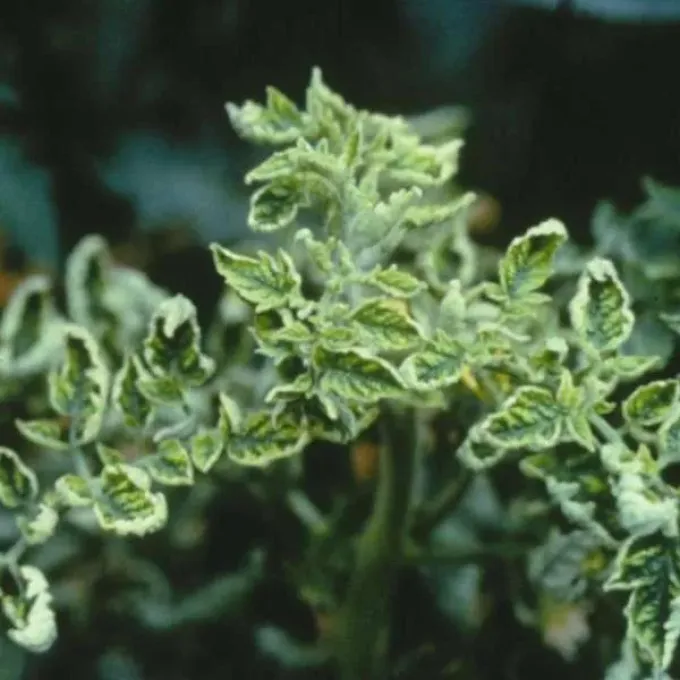
The hallmark symptom is the upward curling of leaflets, which often become crinkled and stunted in size. The leaf margins may become wavy, and the entire canopy takes on an upward-cupped appearance.
Infected tomato plants display severe stunting due to shortened internodes, leading to a bushy, rosette-like growth habit. The development of lateral shoots is often abnormally increased, giving the plant a deformed look.
Chlorosis is a common manifestation, with yellowing appearing along the leaf veins and spreading across the leaf blade. This yellowing severely impacts the plant's ability to perform photosynthesis efficiently.
Reproductive success is severely compromised. Flowers often abscise before fruit set, or if fruit does develop, it is typically small, misshapen, and commercially unmarketable.
- Upward curling and distortion of leaves.
- Severe stunting and short internodes.
- Yellowing and chlorosis of foliage.
- Flower drop and failed fruit set.
- Deformed, stunted fruit development.
Pathogen
The causal agent of this disease is the Begomovirus solanumdelhiquinti, a member of the Geminiviridae family. These viruses are characterized by their small, twin-icosahedral capsid structure and a circular single-stranded DNA genome.
The virus is classified as a plant pathogen causing systemic infection. It is transmitted horizontally by the whitefly Bemisia tabaci in a circulative, persistent manner, meaning the virus must circulate through the insect's gut into the salivary glands.
Once introduced into the plant tissue, the virus replicates within the phloem cells, causing systemic physiological disruption. It does not possess a mechanical transmission pathway like some other mosaic viruses.
The environmental stability of the virus is relatively low outside of the host plant or the vector. Survival between growing seasons depends primarily on the continuous presence of reservoir hosts or adult whiteflies.
Diagnosis requires molecular techniques such as polymerase chain reaction (PCR) or rolling circle amplification (RCA) due to the high genetic diversity and complexity of geminiviruses infecting solanaceous crops.
Conditions for development
The epidemiology of the disease is strictly tied to the life cycle of the whitefly vector. Warm and arid climates provide optimal conditions for the explosive growth of whitefly populations.
Greenhouse environments offer year-round shelter for both the virus and the vector, making it a critical site for potential outbreaks. Insufficient screening of greenhouse structures is a major vulnerability.
High humidity and optimal temperatures accelerate the developmental rate of the vector, leading to a shorter generation time and more rapid spread of the virus across the crop canopy.
The presence of wild solanaceous weeds in the vicinity of production areas provides a year-round reservoir for the virus, ensuring a constant supply of inoculum for the primary infestation of new crops.
Agricultural practices, such as excessive fertilization, can sometimes create lush, susceptible growth that attracts higher populations of whiteflies, indirectly facilitating a higher rate of viral transmission.
Why it matters
The economic impact of Tomato leaf curl virus is devastating, with potential yield losses reaching 100% in unprotected fields. It is a major limiting factor for tomato production worldwide.
The reduction in fruit quality renders the harvest unacceptable for both fresh market and processing. The loss of marketability results in a direct financial loss for the producer.
High costs are associated with the constant need for intensive chemical control of whiteflies. These inputs increase production costs while often providing only temporary relief from the disease pressure.
The persistence of the virus in the environment necessitates long-term management strategies. Growers often have to shift to resistant cultivars or change their crop timing to avoid peak vector activity.
Total crop failure in early stages forces replanting, which involves additional costs for labor, materials, and potential delays in reaching the market, further undermining business viability.
Protection
Integrated Pest Management (IPM) is the primary strategy for control. The most critical component is managing the whitefly population through the timely application of systemic and contact insecticides.
Exclusion is the most effective preventative measure. Installing insect-proof screens with fine mesh on greenhouse vents prevents vectors from entering and initiating an infection cycle.
Sanitation is essential; removing and destroying infected plants promptly reduces the local viral load. Maintaining weed-free margins around fields limits the availability of alternative virus hosts.
Genetic resistance is a cornerstone of modern control. Breeders have developed various tomato hybrids that exhibit tolerance or resistance to the virus, significantly reducing the impact of outbreaks.
Implementing quarantine and inspection protocols for seedlings is vital. Ensuring that only certified, virus-free plants are introduced into the growing facility prevents the introduction of the pathogen.
Discussion
No discussions yet — be the first.