
African cassava mosaic
Begomovirus manihotisafricaense
Description
Symptoms
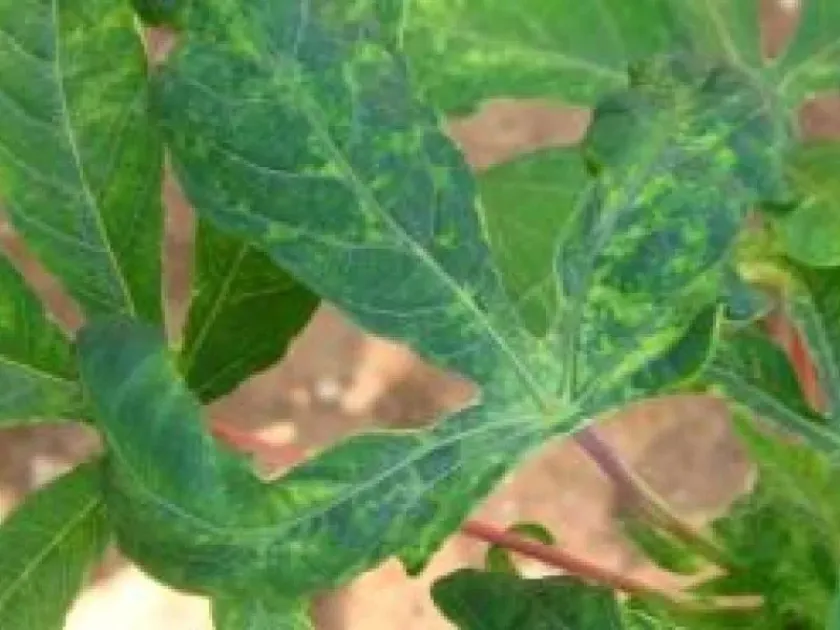
The primary symptom of the disease is a characteristic chlorotic mosaic on the leaves, appearing as yellow or light-green patterns. Affected leaves often become deformed, crinkled, and reduced in size compared to healthy ones.
Plants infected with the virus exhibit marked stunting and poor development. Shortened internodes are commonly observed, giving the cassava plant a stunted, bushy appearance that deviates significantly from healthy growth.
In severe cases, the disease leads to near-total discoloration of the leaf blades. This inhibits photosynthesis, severely limiting the plant's ability to store starch and nutrients in the tubers.
In early stages, symptoms may be localized to specific branches or a few leaves. However, the pathogen eventually spreads systemically throughout the entire plant, affecting all new growth.
Visual diagnosis can be challenging as the severity of symptoms depends heavily on the specific cassava cultivar and the prevailing environmental conditions.
Pathogen
The disease is caused by the African cassava mosaic virus (ACMV), a member of the genus Begomovirus within the Geminiviridae family. These are small, single-stranded DNA viruses.
The main natural vector for the transmission of the virus in field conditions is the whitefly, specifically the species Bemisia tabaci. The insect acquires the virus while feeding on infected sap and transmits it to healthy shoots.
The disease also spreads extensively through the use of infected vegetative cuttings. Using stem cuttings from infected mother plants ensures the new plantation is contaminated from the very beginning.
The virus is known for high genetic variability, which complicates the development of resistant cassava varieties. Different viral isolates can cause varying levels of symptom severity.
Mechanical transmission of the virus through contaminated agricultural tools during pruning or the preparation of planting material also plays a critical role in the dissemination of the pathogen.
Conditions for development
The development of epidemics is directly correlated with whitefly population densities. High humidity and warm weather foster the rapid reproduction of vectors, triggering disease outbreaks.
Temperatures ranging from 25 to 30 degrees Celsius are optimal for both the replication of the virus within plant tissues and the activity of the whitefly vectors.
Failure to maintain proper spatial isolation between older infected plantations and new plots significantly increases the risk of rapid virus transmission to young plants.
The lack of crop rotation and the practice of long-term monocropping lead to a high accumulation of infectious inoculum in the soil and surrounding vegetation.
During dry seasons, whiteflies may migrate from desiccating wild vegetation to irrigated cassava fields, effectively introducing the virus to healthy plants.
Why it matters
The primary impact of the disease is a significant reduction in crop yield. Tuber weight can decrease by 30 to 70 percent in heavily infected plants, causing substantial economic losses.
Crop quality is also severely compromised; the tubers become small, fibrous, and lose their processing and nutritional value, rendering them unsuitable for market or consumption.
Infected plants exhibit increased susceptibility to other diseases and pests, as their physiological immunity is undermined by the chronic viral load.
Extensive outbreaks of African cassava mosaic can result in total crop failure across large areas, posing a serious threat to food security in regions heavily reliant on cassava.
Continued use of infected planting material leads to the degeneration of varieties, necessitating the replacement of entire plantations with certified disease-free clones.
Protection
The most crucial preventive measure is the exclusive use of clean, virus-free planting material, often produced through laboratory-based meristem tissue culture.
Regular monitoring of plantations is essential for early detection of symptoms, followed by immediate roguing (removal and destruction) of infected plants to limit further spread.
Controlling whitefly populations through the application of insecticides or biological control agents (natural predators) is a vital component of integrated pest management.
The breeding and deployment of cassava varieties with genetic resistance to the virus is recognized as the most effective and sustainable strategy for long-term disease management.
Adhering to strict phytosanitary protocols, such as disinfecting tools and establishing buffers between infected and healthy fields, is necessary to mitigate the risk of pathogen spread.
Discussion
No discussions yet — be the first.