
Jatropha nigerian begomovirus
Begomovirus jatrophanigeriaense
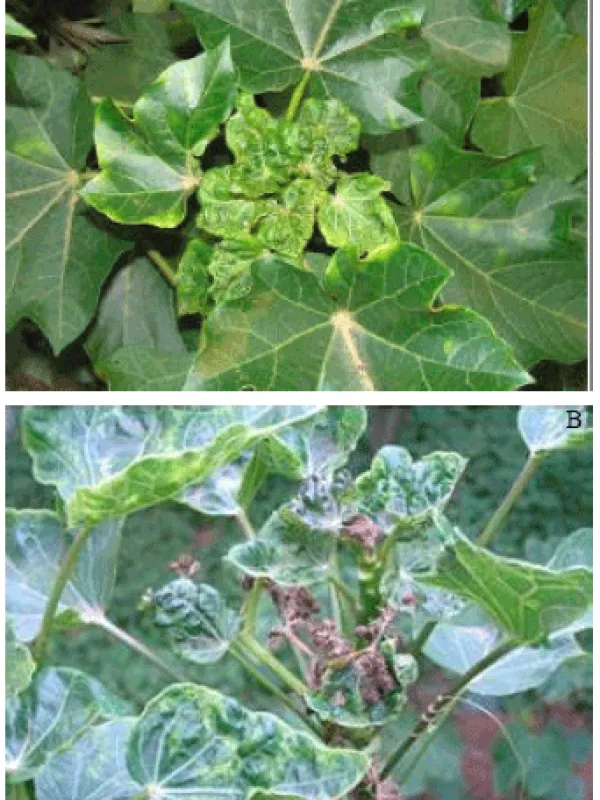
Description
Symptoms
The primary symptom of this infection is a distinct mosaic pattern on the leaves, characterized by yellowing spots and streaks that disrupt the plant's photosynthetic efficiency.
Deformation and leaf curling are commonly observed, leading to stunted foliage and a reduction in the overall surface area of the leaves available for growth.
Shoots often exhibit twisting, and the entire plant shows signs of stunted growth and overall physiological stress compared to healthy specimens.
The reproductive development is severely impacted, often resulting in flower drop or the formation of malformed, non-viable fruits that fail to mature properly.
In chronic stages, plants may experience premature leaf senescence, which leaves them highly susceptible to secondary pathogens and further environmental stress.
Pathogen
The pathogen is a virus belonging to the genus Begomovirus within the Geminiviridae family, known for its small, circular, single-stranded DNA genome.
The virus primarily targets Jatropha curcas, a vital feedstock crop for biodiesel, although it can infect other related species within the Euphorbiaceae family.
The virus is transmitted by the whitefly Bemisia tabaci, which acts as a vector by acquiring the virus during feeding and transferring it to healthy plants.
Transmission is persistent, meaning the whitefly remains capable of infecting healthy plants for a significant duration after initial exposure to an infected host.
While seed transmission is currently considered unlikely, infected plant material and the movement of insect vectors remain the primary drivers of disease spread.
Conditions for development
Virus outbreaks are highly dependent on the population dynamics of the whitefly vector, which thrives in warm and humid tropical climates.
The presence of alternative weed hosts near plantations provides a reservoir for the virus and the whitefly, ensuring a continuous cycle of infection throughout the year.
Intensive farming practices that lack proper crop rotation and spatial isolation between old and new plantations facilitate the rapid movement of the virus across fields.
Drought conditions often drive whiteflies to congregate on irrigated, lush crops, leading to localized, high-intensity outbreaks of the virus within specific fields.
Poor agricultural management, such as failing to control insect populations during the early stages of crop establishment, significantly increases the risk of systemic infection.
Why it matters
The economic impact of the virus is significant, primarily due to the sharp reduction in seed yield and oil content, which compromises the feasibility of biofuel production.
Chronic infection stunts the growth of the plant, shortening its lifespan and necessitating early replanting of the affected crop areas, which adds to operational costs.
Plants weakened by the virus are increasingly susceptible to opportunistic infections by bacteria and fungi, making the disease profile more complex to manage.
A loss in biomass and photosynthetic capacity results in lower harvest quality, which negatively affects the market value of the crop in the biofuel industry.
The need for eradication of infected plants to prevent spread represents a direct loss of resources and labor for agricultural enterprises.
Protection
Effective management relies on a multifaceted approach, with the primary focus on controlling the whitefly vector population through the use of systemic insecticides.
- Planting certified, virus-free nursery stock to ensure disease-free beginnings.
- Strict removal of weeds in and around fields to eliminate alternate hosts.
- Implementation of physical barriers like nets for seedlings in the initial growth phase.
- Monitoring whitefly populations using yellow sticky traps to time pesticide applications accurately.
- Maintaining adequate spatial distance between older, potentially infected stands and new plantings.
Developing and deploying Jatropha varieties with genetic resistance or tolerance to the virus is the most sustainable long-term strategy for managing the disease.
Promptly rogueing (removing and destroying) symptomatic plants is critical to preventing the virus from spreading throughout the entire plantation.
Integrated Pest Management (IPM) practices, combining biological control agents with selective, low-impact chemical treatments, are essential to sustainable plantation health.
Discussion
No discussions yet — be the first.