
Description
Symptoms
The presence of a distinct, musty odor in the storage facility is often the first indicator that barn rot is developing.
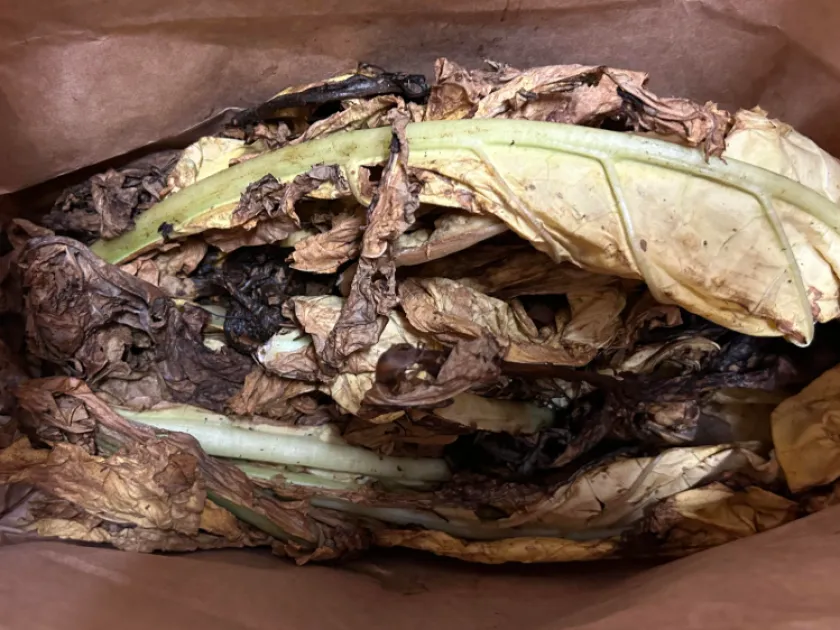
Visually, the disease manifests as fluffy, powdery, or felt-like patches of mold on the leaf surface, appearing white, green, yellow, or black.
Infected leaf tissue loses its natural elasticity and structure, becoming extremely brittle and easily turning into dust when touched.
Discoloration is a common symptom, where affected areas turn dull gray, dark brown, or black, spreading irregularly across the leaf blades.
Damage frequently occurs in the center of tobacco bales or piles, meaning the severity is often masked until the product is handled.
Pathogen
Tobacco barn rot is primarily caused by a range of saprophytic and weakly parasitic fungi, most notably species of Aspergillus, Penicillium, and Rhizopus.
These organisms are natural inhabitants of the storage environment and become opportunistic pathogens when the environment deviates from ideal conditions.
The disease affects harvested tobacco leaves during the curing, fermentation, or long-term storage stages of production.
Pathogen spores are ubiquitous in barns and warehouses, settling on surfaces and waiting for favorable moisture levels to initiate growth.
The biological nature of these fungi allows them to break down plant tissues, consuming cellulose and other organic components of the leaf.
Conditions for development
High relative humidity, typically exceeding 75-80%, is the single most important factor promoting the growth of barn rot fungi.
Inadequate airflow within the barn prevents the evaporation of residual moisture, creating stagnant zones ideal for fungal reproduction.
Fluctuating temperatures can lead to the condensation of water vapor on leaves, even in otherwise well-ventilated storage areas.
Storing tobacco that has not been properly dried or cured increases the likelihood of rapid microbial colonization of the mass.
Poor sanitation of storage facilities, including the presence of old debris or contaminated packing materials, provides a ready source of inoculum.
Why it matters
The primary economic consequence is the total loss of commercial value, as moldy tobacco is considered unfit for manufacturing purposes.
Fungal enzymes produce undesirable chemical changes, resulting in permanent off-flavors and odors that cannot be rectified.
The structural integrity of the leaf is destroyed, rendering it useless for processing and reducing the yield of high-quality tobacco products.
Health risks may arise from the inhalation of fungal spores or the consumption of tobacco contaminated with fungal mycotoxins.
Once established, the rot spreads rapidly, potentially causing the loss of an entire seasonal inventory if containment measures are not taken.
Protection
Maintain strictly controlled moisture levels throughout the drying and storage processes, ensuring the tobacco remains below critical humidity thresholds.
Ensure robust ventilation systems are in place to facilitate continuous air circulation and prevent the buildup of moisture in storage rooms.
Clean and disinfect all barn surfaces, equipment, and storage containers thoroughly before the start of each harvest season to eliminate spores.
Store tobacco bales on raised pallets or racks to avoid direct contact with cold, potentially damp floor surfaces and to promote airflow beneath.
Regular inspections are essential to identify early outbreaks, allowing for the immediate removal of affected material to prevent wider contamination.
Pathogens and affected parts
Affects crops · 1
Discussion
No discussions yet — be the first.