
Banana streak virus
Badnavirus zetavirgamusae
Description
Symptoms
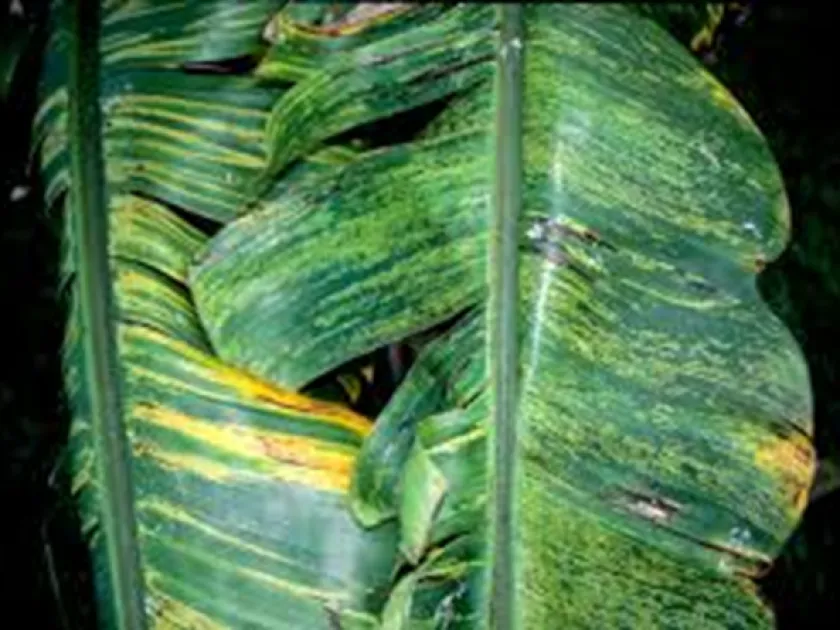
The primary symptom is the development of yellow, chlorotic streaks on the leaves, which often transition to dark brown or necrotic patches over time.
As the infection progresses, leaves may become distorted, and leaf margins might tear, resulting in stunted overall plant growth and reduced leaf area.
Infected plants often exhibit shortened pseudostems and reduced bunch size, which are characteristic signs of severe viral infection and physiological distress.
The fruit quality is significantly degraded; in many cases, bunches may fail to fill properly or remain small and distorted, rendering them unsuitable for sale.
Symptoms can fluctuate greatly due to temperature, plant age, and the specific strain of the virus, making early diagnosis challenging for farmers.
Pathogen
The causal agent of this disease is the Banana streak virus (BSV), belonging to the genus Badnavirus. It is a pararetrovirus with a circular double-stranded DNA genome.
A unique characteristic of BSV is its ability to integrate its genetic material into the banana genome, existing as endogenous viral sequences that can be activated under stress.
The virus affects a wide range of Musa species, including both dessert bananas and plantains, showing significant genetic diversity among different isolates globally.
Transmission occurs primarily through the activity of mealybug vectors, such as Planococcus citri, which acquire and transmit the virus while feeding on plant sap.
Additionally, the virus spreads through the distribution and planting of infected suckers, making the quality of planting stock critical for disease management.
Conditions for development
Viral activation is frequently triggered by environmental stressors, such as extreme heat, drought, or poor soil nutrient management, which stimulate the integrated viral DNA.
The presence of mealybug colonies is essential for the horizontal spread of the virus within a plantation, often favored by warm and humid tropical climates.
Poor quarantine practices and the movement of infected materials between regions facilitate the geographical spread of the virus to previously unaffected areas.
Greenhouse conditions, which provide a protected environment for insects, can lead to rapid transmission if infected plants are not promptly removed.
Inadequate field hygiene, such as failing to disinfect pruning tools, can contribute to the accidental transfer of contaminated sap between plants.
Why it matters
Banana streak virus causes substantial economic loss by reducing crop yields by up to 90% in susceptible cultivars, directly impacting the livelihood of growers.
The aesthetic damage to fruits and the reduction in size make the produce unfit for international export markets, which have strict phytosanitary standards.
Plants weakened by the virus become more susceptible to secondary pathogens, leading to further crop failure and higher costs for chemical interventions.
Increased mortality rates in infected banana stools necessitate the costly removal and replanting of large sections of plantation land.
The persistence of the virus in vegetative tissue forces long-term management changes and prevents the use of traditional propagation methods on affected farms.
Protection
The primary control measure is the use of virus-indexed, tissue-cultured plants sourced from reputable, certified nurseries to ensure initial stock is clean.
Rigorous management of mealybug populations using biological controls or targeted insecticides is crucial to break the virus transmission cycle.
Field sanitation protocols, including the prompt roguing and destruction of symptomatic plants, help to reduce the primary source of inoculum.
Maintaining optimal agronomic conditions, such as proper irrigation and balanced fertilization, helps mitigate plant stress and reduces the risk of latent virus activation.
- Implementation of strict quarantine for imported banana cultivars.
- Regular cleaning and sterilization of farm tools between plants.
- Promotion of resistant or tolerant banana varieties in high-risk areas.
Discussion
No discussions yet — be the first.