
Baculoviruses
Baculoviridae
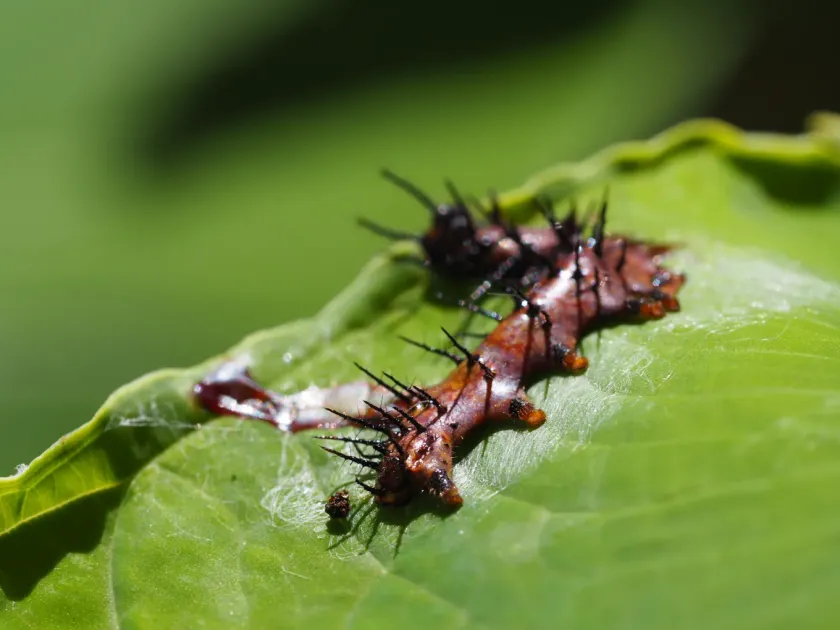
Description
Symptoms
A primary sign of baculovirus infection in the field is a noticeable change in pest behavior. Infected larvae stop feeding, become lethargic, and often move to the upper portions of the host plant.
A hallmark visual symptom is the liquefaction of the insect's internal tissues. The skin of the larva becomes extremely fragile, and a slight touch may cause it to rupture, releasing fluid containing millions of virus particles.
Mass mortality events often display a characteristic "wilt" symptom, where dead larvae remain attached to leaves or stems, often hanging in an inverted V-shape, a sight commonly recognized by pest management specialists.
Effective control can be evaluated by monitoring the density of infected, dying larvae within the crop canopy. The visual appearance of darkened, soft-bodied insects is a strong indicator of successful viral propagation.
Secondary spread can occur when the contents of a ruptured larva contaminate neighboring leaves, providing a natural continuous suppression effect throughout the pest generation cycle.
Pathogen
Baculoviruses (family Baculoviridae) are a group of entomopathogenic viruses that specifically infect insects and arthropods. They are not plant pathogens; instead, they serve as powerful biological agents used to suppress pest populations in agricultural ecosystems.
The virus consists of rod-shaped virions encased in a proteinaceous matrix called an occlusion body. This structure protects the virus from environmental stressors, such as UV radiation, allowing it to persist on plant surfaces until consumed by the target host.
The infection process begins when a larva ingests contaminated foliage. In the alkaline environment of the insect's midgut, the occlusion body dissolves, releasing the virions which then invade the epithelial cells.
Once inside, the virus hijacks the host's cellular machinery to replicate rapidly. This process culminates in the destruction of the insect's internal organs and tissues, leading to the host's death.
The high specificity of baculoviruses is a key advantage. Each virus strain is typically effective against only a narrow range of insect species, ensuring that beneficial organisms, such as pollinators and predators, remain unharmed.
Conditions for development
The efficacy of baculovirus infection is highly dependent on host density. Higher populations of pests facilitate easier transmission of the virus, leading to more rapid development of an epizootic within the colony.
Temperature plays a crucial role in the infection rate. The optimal range for viral replication is typically between 20°C and 28°C; significantly lower temperatures can slow down the process, extending the time until the pest dies.
Humidity is essential for maintaining the stability of the virus on leaf surfaces. Appropriate moisture levels prevent the rapid desiccation of the spray droplets, ensuring that the viral material remains viable for ingestion.
Solar radiation is the most limiting environmental factor. Direct UV light degrades the viral protein matrix, which is why applications are strongly recommended during dusk or dawn to maximize the residual effectiveness of the product.
The uniformity of spray coverage is critical. Since the virus must be ingested, thorough wetting of the foliage, especially in areas where larvae aggregate, significantly improves the overall performance of the biological control agent.
Why it matters
Baculoviruses pose zero threat to plants. They are strictly entomopathogenic and lack the biological capability to penetrate or replicate within plant cells, meaning they do not cause diseases or physiological stress to crops.
The "harm" caused by these viruses is exclusively directed at destructive pest species. By controlling these populations, baculoviruses help maintain crop yields and quality without the need for toxic chemicals.
Their application contributes to reducing the overall pesticide load in the environment. This shift toward biological solutions helps restore the natural ecological balance in agricultural fields and protects vital pollinators.
Baculoviruses do not accumulate in the food chain and are environmentally benign. They provide a safe, sustainable alternative for farmers aiming to produce organic or residue-free commodities.
Integrating baculoviruses into farming systems prevents the development of resistance that often occurs with traditional synthetic insecticides, ensuring long-term sustainability for growers.
Protection
The most effective strategy for utilizing baculoviruses is to apply them early in the pest's larval stage. Younger larvae are generally more susceptible to infection and consume less foliage before they succumb to the virus.
Care must be taken with the pH of the spray water. Highly alkaline water can degrade the occlusion bodies before they can reach the target, so checking and adjusting water pH is a recommended best practice.
Avoiding the co-application of incompatible fungicides is essential, as some chemical substances can interfere with the viral structure and significantly reduce the viability of the biological agent.
Using UV-protectants and sticking agents in the spray formulation can substantially extend the field-life of the virus. This leads to a more consistent and predictable control of pest infestations over time.
Effective scouting and monitoring programs are required to time applications correctly. Targeting the early stages of infestation ensures the virus has sufficient time to spread and collapse the pest population before significant economic damage occurs.
Discussion
No discussions yet — be the first.