
Babuvirus
Babuvirus
Description
Symptoms
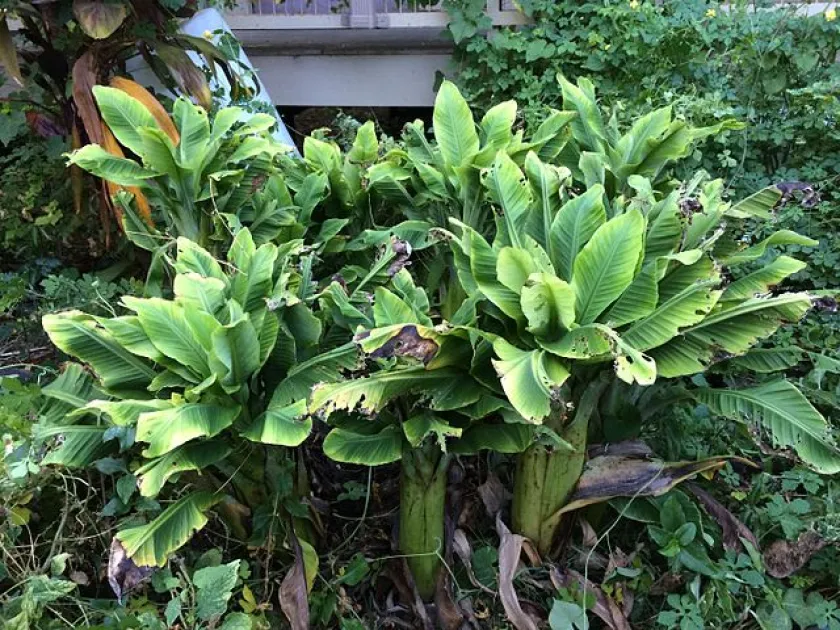
The most distinctive symptom is a pronounced chlorosis, appearing primarily along the margins of young leaves, which eventually turns necrotic.
Leaves become distorted, brittle, and tend to roll inwards, causing the crown of the plant to take on a stiff, fan-like or rosette appearance.
Affected plants exhibit significant growth retardation, with shortened internodes and thickened pseudostems, giving them a stunted, dwarfed habit.
The root system of infected plants often becomes weakened, reducing the plant's efficiency in nutrient uptake and overall vigor.
Fruit production is severely compromised; infected plants typically fail to produce bunches or yield fruit of extremely poor, unmarketable quality.
Pathogen
Babuvirus is a genus of viruses within the Nanoviridae family. These viruses are characterized by a genome consisting of multiple segments of circular, single-stranded DNA.
This pathogen specifically targets monocotyledonous plants, with banana and plantain (Musaceae family) being the primary agricultural hosts affected by this genus.
The disease is classified as a systemic viral infection, often resulting in severe stunting, leaf deformation, and metabolic disruption in the host.
Transmission occurs exclusively via insect vectors, specifically aphids (Aphididae family), which acquire the virus while feeding on infected plant sap.
Unlike some other plant viruses, the Babuvirus is not transmitted through physical contact, mechanical cutting, or contaminated pruning tools.
Conditions for development
The spread of the virus is heavily dependent on the population dynamics of its aphid vector, which thrives in warm, dry weather conditions.
High temperatures accelerate the life cycle of aphids, leading to increased pressure and a higher frequency of transmission events across the field.
Cultivation practices that result in high planting density create favorable corridors for aphids to migrate rapidly between neighboring banana plants.
The presence of wild vegetation and weeds surrounding the plantation acts as a reservoir, maintaining the aphid population even during the off-season.
Lack of rigorous quarantine protocols during the movement of plant materials is the primary cause of long-distance dissemination of the disease.
Why it matters
Babuvirus is considered highly destructive, often causing complete economic loss of the crop within the affected area of a plantation.
The infection leads to a systematic decline in plant health, making the banana plants highly susceptible to secondary environmental stresses.
Direct losses include not only the lack of harvestable fruit but also the significant expenditure required for the eradication of infected plant stock.
The presence of this virus can lead to severe trade restrictions and the loss of access to international markets due to phytosanitary requirements.
Long-term survival of the virus in vegetative propagules makes it an enduring challenge for sustainable commercial banana production.
Protection
The foundation of effective management is the use of certified virus-free plantlets produced through tissue culture and meristematic propagation.
Strict quarantine measures and careful inspection of incoming planting stock are essential to prevent the entry of the virus into new areas.
Integrated Pest Management (IPM) focusing on aphid control through systemic insecticides is crucial to reduce the primary transmission vector.
Early identification is vital; infected plants should be immediately rogued, removed with their root systems, and destroyed by burning.
Field sanitation, including the removal of nearby weed hosts and maintaining adequate spatial isolation between plantations, helps slow the spread of the virus.
Discussion
No discussions yet — be the first.