
Golden mosaic
Aureusvirus aurei
Description
Symptoms
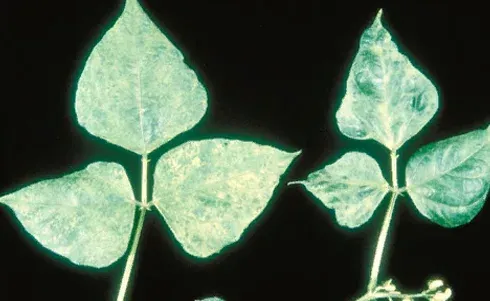
The primary symptom is a distinctive mosaic-like chlorosis on the leaves, characterized by striking golden or bright yellow patches.
As the infection progresses, these discolored areas often become necrotic or brittle, leading to the distortion and premature shedding of the foliage.
Infected plants typically show stunted growth, reduced height, and a compressed overall structure compared to healthy individuals.
Leaves may exhibit severe curling, crinkling, or other morphological deformities that clearly differentiate them from healthy, uniform foliage.
The reproductive development is severely hampered, resulting in flower abortion, poor fruit set, and the production of malformed, undersized harvest.
Pathogen
The causative agent of the disease is a virus belonging to the Aureusvirus genus, which primarily targets the vascular system of various plants.
The virus consists of a single-stranded RNA genome that forces host cells to replicate the pathogen, disrupting normal physiological and biochemical processes.
Infection is often introduced into the plant through mechanical damage or via vectors such as soil-borne fungi and nematodes found in contaminated fields.
Once inside the host, the virus travels systemically throughout the plant, colonizing the stems, leaves, and eventually the reproductive organs.
The resilience of the virus particles allows them to remain infectious in organic debris, soil, and agricultural equipment for extended periods of time.
Conditions for development
The development of the virus is favored by warm temperatures and high humidity, which create optimal conditions for both the virus and its biological vectors.
Poor field hygiene, including the presence of crop residues and dense weed populations, acts as a primary reservoir for the virus to overwinter.
High plant density and inadequate aeration contribute to the rapid spread of the disease through contact between neighboring plants.
Environmental stress, such as improper irrigation or soil nutrient imbalances, weakens the plant's natural defense mechanisms, making it susceptible to infection.
Seasonal weather fluctuations, particularly mild winters that allow vectors to survive, directly correlate with the severity of outbreaks in the following spring.
Why it matters
Golden mosaic causes severe yield losses by diverting the plant's metabolic energy toward viral replication instead of healthy development and fruit maturation.
The commercial value of the crop is significantly degraded, as infected fruits fail to meet market standards in terms of size, appearance, and shelf life.
Systemic viral infection increases the susceptibility of the plants to secondary fungal and bacterial attacks, further complicating crop health management.
The persistent nature of the virus in the soil environment poses a long-term threat, often forcing growers to rotate to non-host crops for many years.
In severe cases, total crop failure can occur, leading to major economic losses for farms and potential instability in the local agricultural sector.
Protection
The most effective strategy is the use of certified, virus-free seeds and planting material along with varieties that have documented genetic resistance.
Implementing rigorous crop rotation schedules is essential to break the lifecycle of the pathogen and reduce its population density in the soil.
Active management of vectors, including the control of soil-borne nematodes and insect pests, is critical to preventing the spread of the virus.
Aggressive sanitation measures, including the immediate removal and disposal of symptomatic plants, help to limit the size of disease outbreaks.
- Sanitizing tools and machinery after use in infected areas.
- Controlling weed hosts that harbor the virus during off-seasons.
- Applying balanced fertilizers to strengthen host plants.
Discussion
No discussions yet — be the first.