
Athelia arachnoidea
Athelia arachnoidea
Description
Symptoms
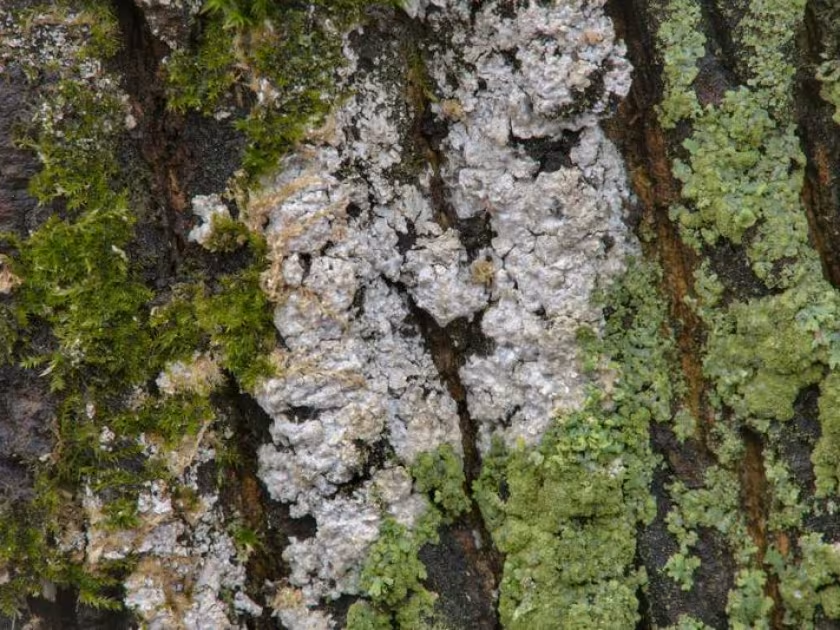
The primary symptom is the appearance of white, spider-web-like fungal threads on bark, leaves, or even on the surface of lichens. This mycelial network often appears fragile but can become dense over time.
A classic diagnostic sign is the rapid decline and discoloration of lichen colonies on tree trunks. The lichens lose their vitality, turn pale or yellowish, and eventually disintegrate into a powdery or degraded residue.
On affected plant organs, the fungus can induce localized necrosis, which looks like discolored patches. In severe cases, particularly on succulent or tender plants, the fungus can cause significant tissue collapse.
Under high humidity, the mycelium becomes more visible and may produce moisture-trapping droplets. Conversely, in dry conditions, the fungal mat might appear as a thin, crusty layer that adheres tightly to the surface.
Gardeners and foresters should watch for signs of premature bark surface degradation or an unusual whitish bloom that does not easily wash off, as these are strong indicators of an active Athelia infection.
Pathogen
The causal agent of this disease is the basidiomycete fungus Athelia arachnoidea. This pathogen is globally distributed and is particularly known for its association with lichens, which often serve as an initial host for its mycelial growth.
The fungus produces a delicate, web-like mycelium that can expand rapidly across surfaces. Its biological structure allows it to exist as both a saprotroph, decomposing organic matter, and a necrotrophic parasite on living plant tissues.
Reproduction occurs through basidiospores, which are microscopic and easily airborne. These spores allow the fungus to colonize new areas, especially when environmental conditions are conducive to germination and vegetative growth.
The pathogen's ability to remain dormant during unfavorable conditions makes it highly resilient. It can survive in cracks of tree bark or within organic debris, resuming activity as soon as humidity levels rise.
Scientific studies indicate that Athelia arachnoidea shows significant variation in its virulence depending on the host species and the local environmental conditions, making it a persistent concern in both forestry and horticulture.
Conditions for development
The development of Athelia arachnoidea is strictly dependent on high relative humidity. Frequent rainfall, morning dew, and persistent foggy conditions create an environment where the fungus can thrive.
Moderate temperatures ranging from 15°C to 22°C (59°F to 72°F) are ideal for the rapid extension of its mycelium. Within this range, the pathogen can cover large surface areas in just a few days if the host remains wet.
Poor aeration within the canopy is a critical factor favoring disease progression. Trees with dense, unpruned foliage tend to retain moisture for longer periods, providing a perfect refuge for the fungus.
Bark wounds, insect feeding sites, or areas previously colonized by lichens provide ideal entry points. The fungus uses these spots to establish a foothold before spreading to healthy tissues.
Lack of sanitary maintenance in garden environments, such as neglecting to clean tree trunks or allowing organic debris to accumulate, helps the fungus survive and spread during the growing season.
Why it matters
The damage caused by Athelia arachnoidea is primarily related to the obstruction of physiological processes. By forming a dense layer on the surface, it can interfere with bark respiration and gas exchange, stressing the plant.
The pathogen significantly alters the biodiversity on the bark by destroying lichens. While some lichens are harmless, their destruction exposes the bark to further secondary infections, including wood-decaying fungi.
In ornamental plants, the presence of the white fungal mat significantly reduces the aesthetic value, making plants look neglected and diseased, which is a major concern for landscape professionals.
Prolonged infection can contribute to the decline of overall plant vigor. While it may not kill a healthy, mature tree immediately, it acts as a stress factor that makes the tree susceptible to other environmental pressures.
For younger, more sensitive plants, the damage can be more severe, potentially causing localized dieback of twigs or preventing normal shoot development during the spring growth phase.
Protection
The most effective strategy for managing Athelia arachnoidea is to improve air circulation. Regular pruning of trees and shrubs to open up the canopy helps moisture evaporate quickly, preventing fungal growth.
Mechanical cleaning of tree trunks and major branches to remove dead bark and overgrown lichens significantly lowers the inoculum load. This should be done carefully to avoid causing fresh wounds on the tree.
Copper-based fungicides are effective in limiting the spread of this pathogen. Application during the dormant season (early spring or late autumn) provides a protective barrier against new infections.
Maintaining high plant health through proper fertilization and irrigation is crucial. A well-nourished tree is more resilient and can better cope with the presence of epiphytic fungi without suffering from significant decline.
Sanitation is key; all infected plant material or debris should be removed and disposed of correctly. Preventing the accumulation of moisture-retaining organic matter at the base of the plant is also a vital prophylactic measure.
Discussion
No discussions yet — be the first.