
Ascochyta leaf spot of sorghum
Ascochyta sorghina
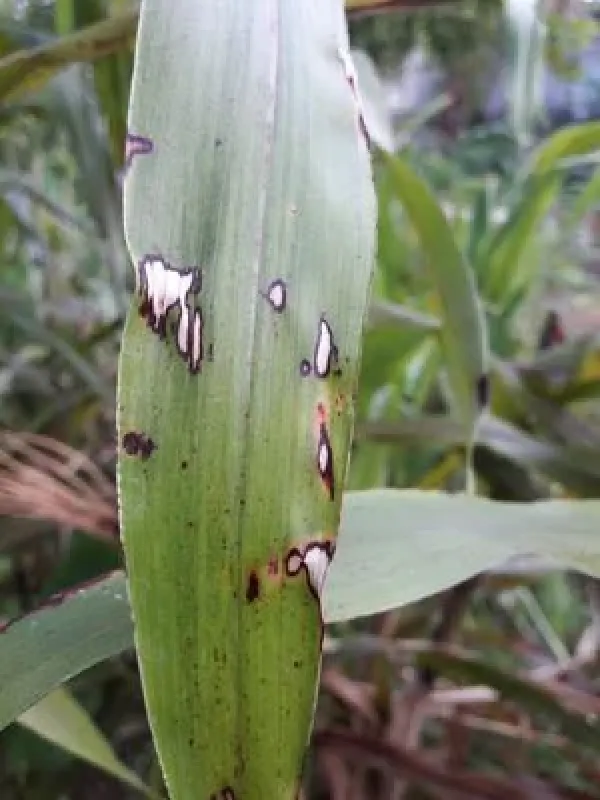
Description
Symptoms
The first signs of the disease appear as small, circular or oval spots on the leaves, characterized by a dark brown, reddish, or purple margin. In the center of the spot, the tissue gradually lightens, taking on a grayish or straw-colored appearance.
As the disease progresses, the spots can merge, covering a significant area of the leaf blade, which causes premature drying and dropping of the leaves. Under high humidity, numerous black dots — the fungal pycnidia — form on the surface of the affected areas.
The damage is not limited to the foliage. Elongated necrotic spots can appear on stalks and leaf sheaths, which, in cases of intense development, may encircle the stalk, leading to breakage and lodging.
When panicles are affected, the fungus causes a brown discoloration of the glumes, which negatively impacts grain quality. Seeds from infected panicles often show low germination rates and may be covered with a fungal spore layer.
Diagnosing the disease is often complicated by the fact that symptoms can resemble other leaf spots or Cercospora blight. Accurate identification requires microscopic examination of the affected tissues to confirm the presence of characteristic pycnidia.
Pathogen
The causal agent of the disease is the imperfect fungus Ascochyta sorghina (synonym: Phoma sorghina). This fungus belongs to the deuteromycete class and reproduces actively through pycnidia — specialized fruiting bodies.
The infection persists in the soil on crop residues, in seeds, and on alternative weed hosts from the grass family. Throughout the growing season, the fungus spreads via conidia, which are disseminated by wind or rain splashes.
The fungal mycelium penetrates plant tissues through stomata or mechanical wounds on the epidermis. Pathogen development occurs within the intercellular spaces, leading to tissue necrosis and the destruction of chlorophyll.
The biological cycle of the pathogen is closely tied to environmental humidity. Under favorable conditions, the fungus can form multiple generations of conidia per season, which drastically increases the infection pressure in the field.
The fungus exhibits high plasticity, adapting to various climatic zones where sorghum is grown. This makes managing Ascochyta leaf spot a complex task that requires a systemic approach to plant protection.
Conditions for development
The primary factor triggering outbreaks of Ascochyta leaf spot is high air and soil humidity combined with moderately warm weather. The optimal temperature range for fungal development is between +20 and +25 degrees Celsius.
Frequent rainfall, fog, and heavy dew during the active growth stages of sorghum facilitate the rapid germination of conidia and widespread infection of the crops. In dry periods, infection development slows down, although the pathogen remains viable.
Thickly planted crops create a microclimate with high humidity, which is ideal for the spread of the disease. Failure to follow agronomic standards during sowing significantly increases the risk of epiphytotics.
Imbalanced application of nitrogen fertilizers, leading to excessive vegetative growth and "loosening" of tissues, increases the plant's susceptibility to fungal infection.
Weakened plants, damaged by pests or hail, become entry points for primary infection. The presence of inoculum in the form of unharvested crop residues is a critical risk factor.
Why it matters
Ascochyta leaf spot causes serious damage to sorghum yield by reducing the photosynthetic activity of the leaves. Severe infection leads to the premature death of the foliage, which hinders proper grain filling.
Yield losses in grain and green matter during intense disease development can reach 20–30 percent. In addition to quantity losses, the quality characteristics of the produce are significantly degraded.
Infected seeds exhibit reduced germination vigor and lower emergence, leading to thin plant stands in the following season. Affected stalks lose their strength, which causes lodging and complicates mechanized harvesting.
The fungus can produce toxins during its metabolic process, which reduces the nutritional value of sorghum used for silage. Livestock are less inclined to consume infected green matter containing fungal spores.
Economic damage consists not only of direct yield losses but also of the costs associated with additional fungicide treatments, which become necessary during severe outbreaks.
Protection
The foundation of protection is crop rotation, which excludes growing sorghum on the same field for several consecutive years. It is important to return the crop to the same location no sooner than after 3–4 years.
- Thorough incorporation of crop residues into the soil through deep autumn plowing.
- Use of high-quality, treated seed material to reduce primary infection.
- Selection of resistant or tolerant sorghum hybrids adapted to local conditions.
- Optimization of plant density to ensure good ventilation within the canopy.
- Application of fungicides during phases of intense growth if early disease development is observed.
Controlling weeds within fields and along field margins is a crucial preventive measure, as weeds serve as infection reservoirs between seasons.
Monitoring crops during critical growth stages allows for the timely detection of infection foci and prevents the spread of the disease across the entire area. Timely implementation of agronomic measures significantly increases the overall resilience of the agroecosystem.
Discussion
No discussions yet — be the first.