
Chickpea Ascochyta Blight
Ascochyta rabiei
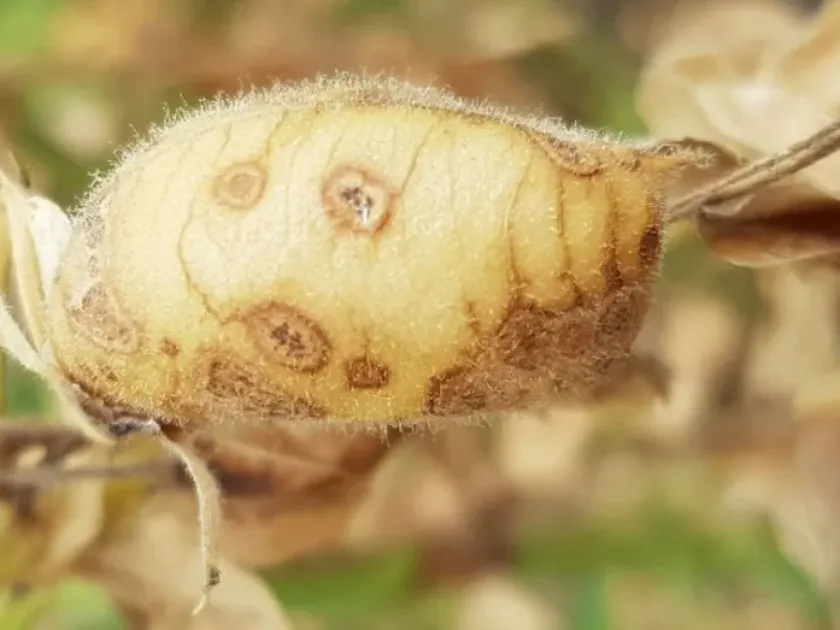
Description
Symptoms
The disease first manifests as small, circular or irregular spots on leaves, which gradually increase in size. These spots often feature a dark brown border surrounding a lighter central area.
A distinctive sign of Ascochyta blight is the presence of tiny, black, dot-like fruiting bodies called pycnidia. They are usually arranged in concentric rings within the infected lesion.
Infection on stems often causes girdling, leading to weak points where the plant may break or collapse. This disrupts the translocation of nutrients, causing the upper parts of the plant to wither.
Pods become infected with dark, sunken spots. The fungus often penetrates the pod wall to reach the seeds inside, resulting in discolored or shriveled seeds that carry the pathogen.
In severe cases, the entire plant may appear blighted or scorched, leading to premature senescence and a significant reduction in green biomass and seed yield.
Pathogen
The causative agent of this disease is the fungus Ascochyta rabiei. It belongs to the Deuteromycetes group and reproduces by forming pycnidia, which contain spores responsible for the primary and secondary infection cycles.
The pathogen survives in crop debris and infested seeds for several years. This ability to persist in the environment makes it a persistent threat to chickpea production in many regions globally.
The fungus penetrates plant tissues, leading to the formation of necrotic lesions. It can infect all above-ground parts of the plant, including stems, leaves, flowers, and pods, throughout the growing season.
Genetic diversity within Ascochyta rabiei populations is high, with various pathogenic races existing in different fields. This diversity complicates the breeding of resistant chickpea varieties.
Once the infection is established in a field, the fungus can rapidly multiply under favorable conditions, producing high concentrations of spores that are easily spread by rain and wind.
Conditions for development
The development of Ascochyta blight is heavily favored by cool to moderate temperatures and high humidity. Optimal conditions for spore germination and infection are between 15°C and 25°C.
Rain splashes are the primary mechanism for the dispersal of spores from the soil and infected debris onto the lower leaves and stems of the growing chickpea plants.
High planting density contributes to the rapid spread of the disease by creating a humid microclimate within the canopy. Improved air circulation is essential for reducing the risk of a severe outbreak.
The disease tends to be more severe in regions with frequent rainfall during the flowering and pod-filling stages. High moisture levels allow the fungus to infect reproductive organs effectively.
Mechanical damage to plants, whether caused by insects or field operations, creates entry points for the fungal spores, accelerating the onset of the infection within the crop stand.
Why it matters
Ascochyta blight is considered the most destructive disease of chickpea, capable of causing yield losses ranging from 50% up to total crop failure under severe epidemic conditions.
The disease significantly reduces the quality of the harvested grain, making it unsuitable for market or food use. Contaminated seeds show poor germination rates and low seedling vigor.
Beyond quantity, the disease negatively impacts the nutritional value and appearance of the pulse. Infected fields incur substantial losses due to lower grading and reduced marketability.
The cost of managing this disease, through fungicide applications and labor-intensive agronomic practices, adds significant financial pressure on producers.
Infected fields remain a source of inoculum, limiting the land's utility for chickpea cultivation for several years unless strict management measures are followed.
Protection
Integrated pest management is vital for the control of Ascochyta blight. A long-term crop rotation strategy, typically excluding chickpeas for 3-4 years, is highly recommended to reduce soil inoculum.
Using disease-free, certified seeds is the most fundamental step in preventing the introduction of the fungus to new fields. Seed treatment with appropriate fungicides is strongly advised.
- Implementing 3-4 year crop rotation programs.
- Planting resistant or tolerant chickpea cultivars.
- Using high-quality, fungicide-treated seeds.
- Managing crop debris through deep plowing.
- Applying systemic fungicides at the onset of favorable weather for the disease.
Proactive field monitoring during the growing season is crucial. If weather conditions favor the disease, protective fungicide sprays should be applied before symptoms become widespread.
Effective management requires a combination of chemical control, such as using triazoles or strobilurins, and strictly adhering to agronomic guidelines to minimize disease pressure.
Discussion
No discussions yet — be the first.