
Ascochyta leaf spot of clover
Ascochyta necans
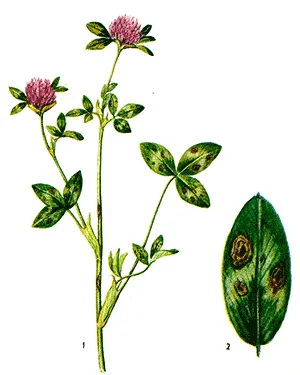
Description
Symptoms
Symptoms of Ascochyta leaf spot typically appear on leaves, petioles, and stems of clover as distinct necrotic spots. These lesions are usually light gray or brownish, often surrounded by a darker margin.
As the disease progresses, small black structures known as pycnidia develop in the center of these spots. These are the fruiting bodies of the fungus, clearly visible to the naked eye upon close inspection.
Severe infections lead to premature yellowing and necrosis of leaflets. When stems are infected, they may become brittle and break, which significantly complicates harvesting operations.
The disease usually spreads in patches, eventually covering larger areas of the field. Lesions on petioles often become elongated, causing visible distortion and weakening of the plant structure.
Diagnostic accuracy is essential, as the presence of pycnidia within necrotic tissues serves as a key identifier for this specific fungal pathogen compared to other leaf spot diseases.
Pathogen
The causative agent of this disease is the anamorphic fungus Ascochyta necans, classified within the Coelomycetes group. It is a highly specialized parasite of clover species.
The fungus reproduces via pycniospores released from pycnidia under high humidity. These spores are disseminated primarily through rainfall splashing, wind currents, and plant debris.
The fungal mycelium penetrates plant tissue through stomata or mechanical wounds. Once inside, the pathogen consumes cellular contents, causing tissue death and lesion expansion.
The pathogen overwinters as pycnidia on crop residues remaining on the soil surface and can also be seed-borne. Consequently, the use of clean seeds is a vital preventive step.
The lifecycle of the fungus is tightly linked to weather patterns and clover growth stages, often allowing multiple infection cycles throughout a single growing season.
Conditions for development
Ascochyta leaf spot thrives under conditions of high relative humidity and moderate temperatures. Frequent rains, heavy fog, and dew provide the optimal moisture required for spore germination.
Temperature ranges between 18°C and 25°C are most favorable for the rapid growth of Ascochyta necans mycelium and subsequent sporulation.
Dense clover stands with poor airflow create a localized microclimate where moisture persists longer, drastically increasing the risk of rapid disease spread.
Nutrient deficiencies, particularly low potassium levels, reduce the natural defense mechanisms of the host plants, making them more susceptible to fungal colonization.
Extended periods of rainy weather in late summer frequently trigger epiphytotic outbreaks in second and third-year clover fields.
Why it matters
The primary impact of this disease is a significant reduction in green mass yield and a decrease in the overall nutritional quality of the forage.
Early leaf drop reduces the photosynthetic capacity of the plants, weakening the root system and negatively affecting the crop's winter hardiness and long-term viability.
Yield losses in hay production can reach 15–30% during outbreak years. Additionally, affected clover plants show reduced regrowth potential after mechanical harvesting.
The pathogen may also infect the generative organs, which impacts seed production and decreases the overall germination quality of harvested seeds.
As the disease accelerates the physiological aging of the stand, it often results in the premature abandonment or rotation of clover fields.
Protection
The most effective strategy for managing Ascochyta leaf spot involves the selection of resistant or tolerant clover varieties adapted to the specific region.
Implementing a robust crop rotation strategy, where clover is planted in the same field no more than once every 3–4 years, helps break the pathogen's infection cycle.
Deep plowing of crop residues is a critical management practice, as it removes the primary reservoir of Ascochyta necans inoculum from the soil surface.
- Use of certified, disease-free seed lots.
- Timely harvesting to reduce the accumulation of fungal spores.
- Balanced fertilization, particularly adequate potassium and phosphorus.
- Spatial isolation of new clover stands from infected older fields.
While chemical control with fungicides is possible in high-value seed crops, preventative agronomic management remains the cornerstone of sustainable disease control.
Discussion
No discussions yet — be the first.